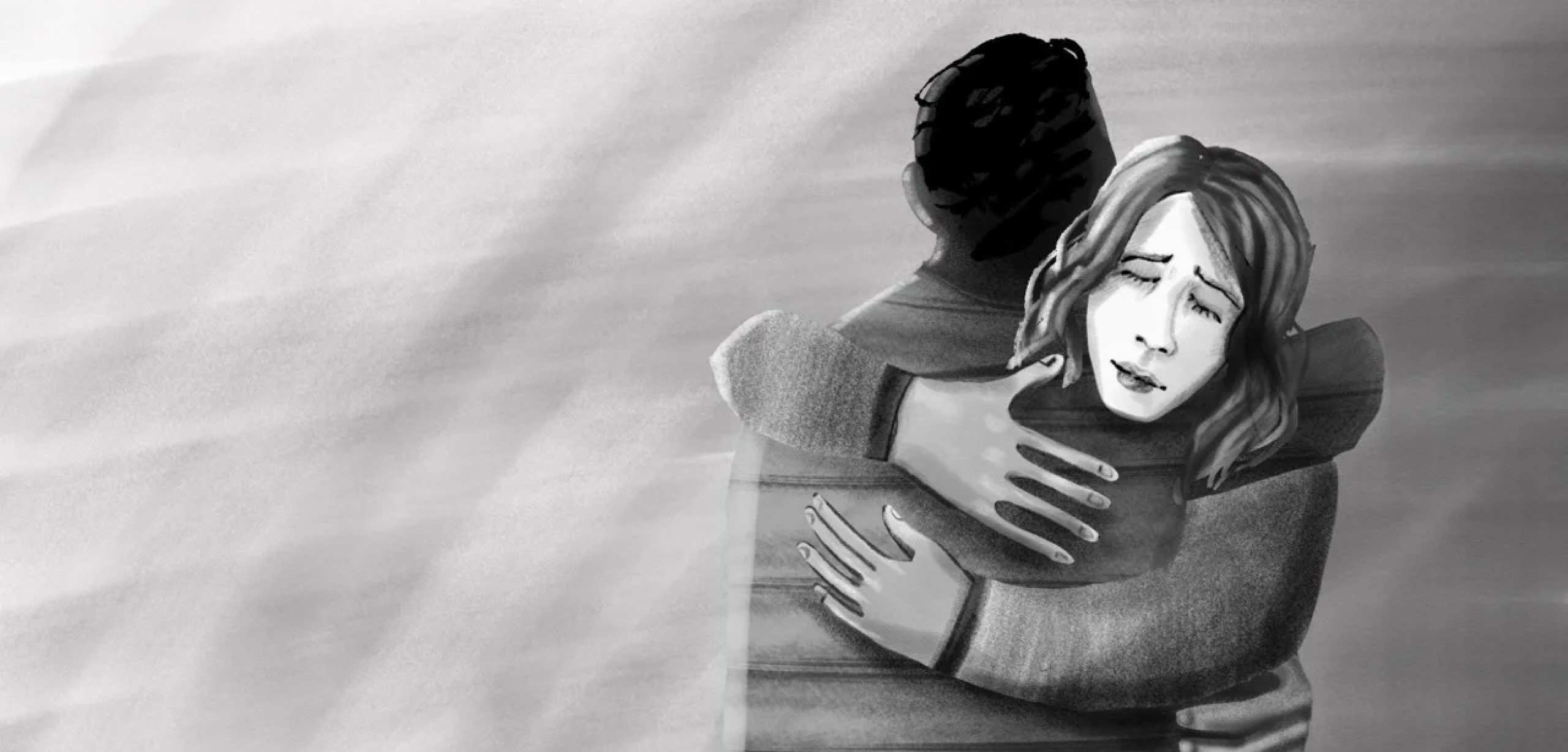
Torture, exile and escape across the front line. How a Ukrainian lawyer escaped from the occupation after being captured in an FSB torture chamber
Source: Grunt
Authors: Yaroslava Shlapatska / Ivan Antypenko
Authors: Yaroslava Shlapatska / Ivan Antypenko
The Russian occupation is a constant and ever-present threat. Forty-year-old Olga [name changed for security reasons] experienced this firsthand when, just hours before New Year’s Eve, FSB agents stormed into her home and then threw her into a cell. She was torn away from her bedridden parents and soon expelled from the occupied part of the Kherson region. Her symbolic expulsion was filmed and used for propaganda.
She walked several dozen kilometers to free territory, sometimes under the barrel of an automatic rifle, sometimes through Russian military checkpoints. Today, Olga lives in a relatively quiet town in western Ukraine. She still feels the effects of her captivity and the violence she endured, but she is trying to gradually recover and return to her legal practice.
Olga’s testimony is shared by The Reckoning Project in collaboration with the media outlet GRUNT. This is a story not only of intimidation under occupation, but also of civilian resistance—even in the most dangerous conditions.
The first "call" from the FSB
The Russian army captured the village near Crimea where Olga lived in the early hours of the full-scale invasion.
She couldn’t leave the occupied area—she had to care for her sick mother. This is one of the most common reasons why people remain in regions occupied by Russia.
“I had a court hearing scheduled for February 24. That morning, I didn’t hear any explosions; I was only woken up by numerous phone calls. People were shouting ‘war’ into the receiver, but I didn’t understand anything,” she recalls.
She remembers the first months of the Russian occupation of the village for the empty shelves in stores, the severe food shortages, and “just one pack of pasta per person.”
Olga worked as a lawyer. Since 2014, she had been helping Crimeans renew their passports and other documents. The occupation administration, aware of Olga’s education, offered her a job several times. But she refused every time. “I didn’t tell them off directly, because I understood the consequences. But I never intended to work for collaborators,” she explains.
Her husband joined the Territorial Defense of Ukraine in March 2022. During his missions, he crossed the front line several times, traveling to Crimea and Kherson, but eventually had to leave for free Ukrainian territory. For safety reasons, Olga had to remove or destroy all of Serhiy’s [name changed for security reasons] belongings, as the occupiers could come to search their home at any moment.
In fact, that’s exactly what happened on December 31, 2022. Around 6:00 p.m., a loud bang rang out in the woman’s apartment. Armed men were standing at the door—it later turned out that they were two FSB officers and a “police major” from the occupied part of Donetsk Oblast.
“Documents! Can’t you see we’re military?” the uninvited guests demanded from the doorway.
“I don’t understand who you are. “Only fishermen and hunters wear clothes like that around here,” Olga replied.
After an argument in the entryway and a document check, the men realized they had come to the right address. They shoved Olga inside the apartment and took her phone. In her messaging apps, they found correspondence with Crimeans and pro-Ukrainian Telegram channels.
“I’ve written to clients more than once that I’m now also in the occupied territory. The FSB agents saw this and started saying, ‘What occupation are you talking about? We’ve come to free you. What did they free me from? From my job and my relatives?” the woman recounts.
During the search, her husband called her. His number was not displayed, so they let Olga answer the phone—she replied in a dry voice that she couldn’t talk right now.
The search lasted four hours. Finally, they told her to wait for a summons and not to “go anywhere.” Before the summons to the “police,” her husband called Olga again.
— Did you realize who it was?
— I knew right away.
— Well, they were looking for you.
She couldn’t leave the occupied area—she had to care for her sick mother. This is one of the most common reasons why people remain in regions occupied by Russia.
“I had a court hearing scheduled for February 24. That morning, I didn’t hear any explosions; I was only woken up by numerous phone calls. People were shouting ‘war’ into the receiver, but I didn’t understand anything,” she recalls.
She remembers the first months of the Russian occupation of the village for the empty shelves in stores, the severe food shortages, and “just one pack of pasta per person.”
Olga worked as a lawyer. Since 2014, she had been helping Crimeans renew their passports and other documents. The occupation administration, aware of Olga’s education, offered her a job several times. But she refused every time. “I didn’t tell them off directly, because I understood the consequences. But I never intended to work for collaborators,” she explains.
Her husband joined the Territorial Defense of Ukraine in March 2022. During his missions, he crossed the front line several times, traveling to Crimea and Kherson, but eventually had to leave for free Ukrainian territory. For safety reasons, Olga had to remove or destroy all of Serhiy’s [name changed for security reasons] belongings, as the occupiers could come to search their home at any moment.
In fact, that’s exactly what happened on December 31, 2022. Around 6:00 p.m., a loud bang rang out in the woman’s apartment. Armed men were standing at the door—it later turned out that they were two FSB officers and a “police major” from the occupied part of Donetsk Oblast.
“Documents! Can’t you see we’re military?” the uninvited guests demanded from the doorway.
“I don’t understand who you are. “Only fishermen and hunters wear clothes like that around here,” Olga replied.
After an argument in the entryway and a document check, the men realized they had come to the right address. They shoved Olga inside the apartment and took her phone. In her messaging apps, they found correspondence with Crimeans and pro-Ukrainian Telegram channels.
“I’ve written to clients more than once that I’m now also in the occupied territory. The FSB agents saw this and started saying, ‘What occupation are you talking about? We’ve come to free you. What did they free me from? From my job and my relatives?” the woman recounts.
During the search, her husband called her. His number was not displayed, so they let Olga answer the phone—she replied in a dry voice that she couldn’t talk right now.
The search lasted four hours. Finally, they told her to wait for a summons and not to “go anywhere.” Before the summons to the “police,” her husband called Olga again.
— Did you realize who it was?
— I knew right away.
— Well, they were looking for you.
"Come in, you're here for a long time": detention and exile
Shortly after Olga’s father learned about the searches, he suffered a stroke. It was a miracle that he survived, as the village lacked both medicine and doctors due to the occupation. From then on, Olga was responsible for two paralyzed parents and twice as many responsibilities.
In January, a local police officer who had defected to the occupiers called the woman. He threatened to put a warrant out for Olga’s arrest if she didn’t come to them on her own. She had no choice.
“Olga Viktorivna, how could you do this? Didn’t you know you had to wipe the phone clean?” said Ivanov [name changed for security reasons], who had known her long before the interrogation. “Well, I understand if a girl didn’t know, but you? We’ll send the materials to the military-civilian administration. They’ll summon you.”
For the next two weeks, the woman stayed with her parents. They were supposed to be under round-the-clock surveillance, and she thought her relatives’ home might be safer. At the end of January, Olga decided to pop home for a few minutes to grab some personal belongings. At that moment, five people in military uniforms broke into her home.
They shoved her back inside, waving a document from the occupation administration in her face. It stated that Olga “poses a threat to the security of the Russian Federation” and must therefore be expelled from the region. With her hands tied behind her back, the woman was led to the district police station.
Her shoelaces were removed from her shoes, and her jewelry was taken from her. On the way to the cell, Kherson Mayor Ihor Kolykhaiev—who had been abducted by Russian troops in June 2022—peered out from a barred window in the corridor and greeted the woman. Olga was led into a cell whose floor was completely covered with mattresses.
“They told me, ‘Come in, you’re here for a long time.’ And I told them, ‘No,’ and started kicking the door with my foot; I screamed and called for the warden,” the woman recalls. “But it was all in vain. So I took off my shoes—because that’s where the girls slept—and walked on. There were six of us; in that tiny cell, we had to sleep in a “stacked” position.”
A pregnant woman was held in the detention center with Olga. Tetyana was detained for a Facebook post that read “Glory to Ukraine.” Later, due to beatings by Russian soldiers and the stress of her arrest, she lost the baby.
The next morning, the same “boss” whom Olga had called came to the cell. “He was a nobody and became everything,” is how Olga describes him. She began begging the collaborator to tell her parents where she was, but he refused: “I can’t help you, Olga Viktorivna. You were being handled by counterintelligence.”
The women figured out a way to send a message to their families. Several of them complained of feeling unwell, so an ambulance was called. During the examination, Olga whispered to the medics to send a signal to her relatives. Anna did the same, slipping a note into their pockets.
A few days later, without any explanation, Olga was ordered to pack her things and say goodbye to her family. She was escorted by two armed Russian soldiers. Her father was crying, barely able to speak after his stroke.
In the morning, she and another detainee—a childhood friend and fellow villager—were put into an armored personnel carrier and taken away. No one answered their questions along the way. “This is my first time here; I don’t know anything,” said one of the guards.
Once they were in the Zaporizhzhia region, Olga got into an argument with the collaborator in charge of the deportation.
“You should have been shot on the spot, you spotter!” the occupier snapped.
“What kind of spotter am I? I refused to work for your Russia, and that’s why they’re deporting me,” Olga replied calmly.
After these words, a man in a Russian military uniform struck her with the butt of his rifle. A few hours later, they were taken to a checkpoint where a Russian flag was flying. There, the detainees were read the occupation authorities’ expulsion order one by one, while the process was filmed. They were asked to walk as if toward Ukraine, but in reality, after the recording, they were turned back.
All those “expelled” were put back in the car and driven away. Soon they stopped and ordered us to walk along the road in an unknown direction.
“Just a few kilometers from where we got out, soldiers got out of the vehicle. They shouted, ‘Stop, where are you going?’ We replied that we were going to our side, to the territory under our control. They started laughing at us like we were fools, saying we weren’t going anywhere. And at gunpoint, they led us to a farm,” the woman recounts.
Olga saw her friend for the last time. Russian soldiers sent him to dig trenches, she says. That’s how she ended up on the front lines in the Zaporizhzhia region.
In January, a local police officer who had defected to the occupiers called the woman. He threatened to put a warrant out for Olga’s arrest if she didn’t come to them on her own. She had no choice.
“Olga Viktorivna, how could you do this? Didn’t you know you had to wipe the phone clean?” said Ivanov [name changed for security reasons], who had known her long before the interrogation. “Well, I understand if a girl didn’t know, but you? We’ll send the materials to the military-civilian administration. They’ll summon you.”
For the next two weeks, the woman stayed with her parents. They were supposed to be under round-the-clock surveillance, and she thought her relatives’ home might be safer. At the end of January, Olga decided to pop home for a few minutes to grab some personal belongings. At that moment, five people in military uniforms broke into her home.
They shoved her back inside, waving a document from the occupation administration in her face. It stated that Olga “poses a threat to the security of the Russian Federation” and must therefore be expelled from the region. With her hands tied behind her back, the woman was led to the district police station.
Her shoelaces were removed from her shoes, and her jewelry was taken from her. On the way to the cell, Kherson Mayor Ihor Kolykhaiev—who had been abducted by Russian troops in June 2022—peered out from a barred window in the corridor and greeted the woman. Olga was led into a cell whose floor was completely covered with mattresses.
“They told me, ‘Come in, you’re here for a long time.’ And I told them, ‘No,’ and started kicking the door with my foot; I screamed and called for the warden,” the woman recalls. “But it was all in vain. So I took off my shoes—because that’s where the girls slept—and walked on. There were six of us; in that tiny cell, we had to sleep in a “stacked” position.”
A pregnant woman was held in the detention center with Olga. Tetyana was detained for a Facebook post that read “Glory to Ukraine.” Later, due to beatings by Russian soldiers and the stress of her arrest, she lost the baby.
The next morning, the same “boss” whom Olga had called came to the cell. “He was a nobody and became everything,” is how Olga describes him. She began begging the collaborator to tell her parents where she was, but he refused: “I can’t help you, Olga Viktorivna. You were being handled by counterintelligence.”
The women figured out a way to send a message to their families. Several of them complained of feeling unwell, so an ambulance was called. During the examination, Olga whispered to the medics to send a signal to her relatives. Anna did the same, slipping a note into their pockets.
A few days later, without any explanation, Olga was ordered to pack her things and say goodbye to her family. She was escorted by two armed Russian soldiers. Her father was crying, barely able to speak after his stroke.
In the morning, she and another detainee—a childhood friend and fellow villager—were put into an armored personnel carrier and taken away. No one answered their questions along the way. “This is my first time here; I don’t know anything,” said one of the guards.
Once they were in the Zaporizhzhia region, Olga got into an argument with the collaborator in charge of the deportation.
“You should have been shot on the spot, you spotter!” the occupier snapped.
“What kind of spotter am I? I refused to work for your Russia, and that’s why they’re deporting me,” Olga replied calmly.
After these words, a man in a Russian military uniform struck her with the butt of his rifle. A few hours later, they were taken to a checkpoint where a Russian flag was flying. There, the detainees were read the occupation authorities’ expulsion order one by one, while the process was filmed. They were asked to walk as if toward Ukraine, but in reality, after the recording, they were turned back.
All those “expelled” were put back in the car and driven away. Soon they stopped and ordered us to walk along the road in an unknown direction.
“Just a few kilometers from where we got out, soldiers got out of the vehicle. They shouted, ‘Stop, where are you going?’ We replied that we were going to our side, to the territory under our control. They started laughing at us like we were fools, saying we weren’t going anywhere. And at gunpoint, they led us to a farm,” the woman recounts.
Olga saw her friend for the last time. Russian soldiers sent him to dig trenches, she says. That’s how she ended up on the front lines in the Zaporizhzhia region.
Dozens of kilometers on foot to the free territory
During her first few days on the farm, Olga was beaten and raped. Soon after, a Russian military officer whom everyone called “Major Sever” came by to inspect the place.
“Why are you here?” the major asked Olga.
“I’m a lawyer; I refused to cooperate.”
“And that’s it?”
“And that’s it.”
“Sever” allowed the woman to go to the bathhouse and clean herself up. During the day, the Russian soldiers forced her to clean and wash dishes.
“Don’t leave me with these monsters,” Olga pleaded with the major, knowing he would be leaving soon. He agreed to secretly take her to a neighboring village, where he placed her with a lonely elderly man.
Why did “Sever” offer to help? He explained that lately he had been dreaming of his deceased wife—also named Olga—who was begging for help.
A few days later, the major told Olga that people had started looking for her. Around three in the morning, “Sever” and several other soldiers took her away—this time in an unknown direction—only repeating the instruction to stay in the middle of the road so as not to step onto the mined shoulders.
For long hours in the darkness, she moved toward the unknown. The woman reached a blown-up bridge, where she saw a blue-and-yellow flag in the distance. She rejoiced, realizing that home was near. From the opposite bank, people shouted at her to turn back. “I won’t go back to the orcs; I’m one of you, guys, one of you,” Olga said to herself.
She went downhill, and then had to make her way back up.
“Total darkness. Not a dog, not a bird, not a single light. Darkness—it was as if everything had died out. Only when the moon peeked out did I see that I was walking through some ruined town. I walked and recited the ‘Our Father,’ then called out, ‘Guys, answer me,’—the woman recalls. —I don’t know where the strength came from. But finally, silhouettes began to appear, approaching me. It was such a relief.”
The soldiers at the checkpoint were shocked that Olga had made it to them alive. “We only periodically collect the bodies of the dead from this road,” they said. Olga was immediately taken for a checkup to the evacuation center in Zaporizhzhia. There, it turned out that her husband had been searching for her the whole time.
“They told me I had walked up to forty kilometers. They wondered how that was possible given the tripwires, mines, and the front line in general. I told them that my guardian angel must be a serious one,” Olga recalls. “And I didn’t expect such a warm welcome. They provided me with temporary housing, bought me a phone, and a ticket to my husband. Such warmth from strangers.”
Soon, the woman’s legs gave out. Even after treatment, she can still fall. Since 2023, Olga has been undergoing physical and psychological rehabilitation.
Some of her relatives are still under occupation. All documents were removed from Olga’s office, and they are trying to confiscate her apartment, citing “deportation laws.” Relatives who remained in the occupied territory are being pressured to reveal Olga’s current whereabouts and what she is doing.
Olga is now trying to resume her legal practice and is collaborating with a civil society organization that assists women affected by the war.
This text was prepared in collaboration with The Reckoning Project, a global team of journalists and lawyers dedicated to documenting, reporting on, and gathering evidence for the investigation of war crimes.
This publication was produced with the support of the European Union. Its content is the sole responsibility of the authors/The Reckoning Project and does not necessarily reflect the views of the EU.
This is an automatic translation generated by DeepL.
“Why are you here?” the major asked Olga.
“I’m a lawyer; I refused to cooperate.”
“And that’s it?”
“And that’s it.”
“Sever” allowed the woman to go to the bathhouse and clean herself up. During the day, the Russian soldiers forced her to clean and wash dishes.
“Don’t leave me with these monsters,” Olga pleaded with the major, knowing he would be leaving soon. He agreed to secretly take her to a neighboring village, where he placed her with a lonely elderly man.
Why did “Sever” offer to help? He explained that lately he had been dreaming of his deceased wife—also named Olga—who was begging for help.
A few days later, the major told Olga that people had started looking for her. Around three in the morning, “Sever” and several other soldiers took her away—this time in an unknown direction—only repeating the instruction to stay in the middle of the road so as not to step onto the mined shoulders.
For long hours in the darkness, she moved toward the unknown. The woman reached a blown-up bridge, where she saw a blue-and-yellow flag in the distance. She rejoiced, realizing that home was near. From the opposite bank, people shouted at her to turn back. “I won’t go back to the orcs; I’m one of you, guys, one of you,” Olga said to herself.
She went downhill, and then had to make her way back up.
“Total darkness. Not a dog, not a bird, not a single light. Darkness—it was as if everything had died out. Only when the moon peeked out did I see that I was walking through some ruined town. I walked and recited the ‘Our Father,’ then called out, ‘Guys, answer me,’—the woman recalls. —I don’t know where the strength came from. But finally, silhouettes began to appear, approaching me. It was such a relief.”
The soldiers at the checkpoint were shocked that Olga had made it to them alive. “We only periodically collect the bodies of the dead from this road,” they said. Olga was immediately taken for a checkup to the evacuation center in Zaporizhzhia. There, it turned out that her husband had been searching for her the whole time.
“They told me I had walked up to forty kilometers. They wondered how that was possible given the tripwires, mines, and the front line in general. I told them that my guardian angel must be a serious one,” Olga recalls. “And I didn’t expect such a warm welcome. They provided me with temporary housing, bought me a phone, and a ticket to my husband. Such warmth from strangers.”
Soon, the woman’s legs gave out. Even after treatment, she can still fall. Since 2023, Olga has been undergoing physical and psychological rehabilitation.
Some of her relatives are still under occupation. All documents were removed from Olga’s office, and they are trying to confiscate her apartment, citing “deportation laws.” Relatives who remained in the occupied territory are being pressured to reveal Olga’s current whereabouts and what she is doing.
Olga is now trying to resume her legal practice and is collaborating with a civil society organization that assists women affected by the war.
This text was prepared in collaboration with The Reckoning Project, a global team of journalists and lawyers dedicated to documenting, reporting on, and gathering evidence for the investigation of war crimes.
This publication was produced with the support of the European Union. Its content is the sole responsibility of the authors/The Reckoning Project and does not necessarily reflect the views of the EU.
This is an automatic translation generated by DeepL.