"You have guerrillas". How a Crimean defied Russia
Source: Radio Free Europe/Radio
Liberty Author: Anzhelika Brushevska
Nervous, wearing a torn T-shirt, apologizing and saying that he is “ready to face punishment and atone for his guilt through backbreaking labor”—this is how Oleksandra Barkova saw her cousin Bohdan Zizu—Oleksandr Barkov—in a video posted on a Crimean website on May 18, 2022. Prior to this, her brother had not responded to messages on messaging apps for several days, and she did not know where he was. The last thing she sent him was a photo of the Russian administration building in Yevpatoria, the facade of which someone had splashed with blue and yellow paint.
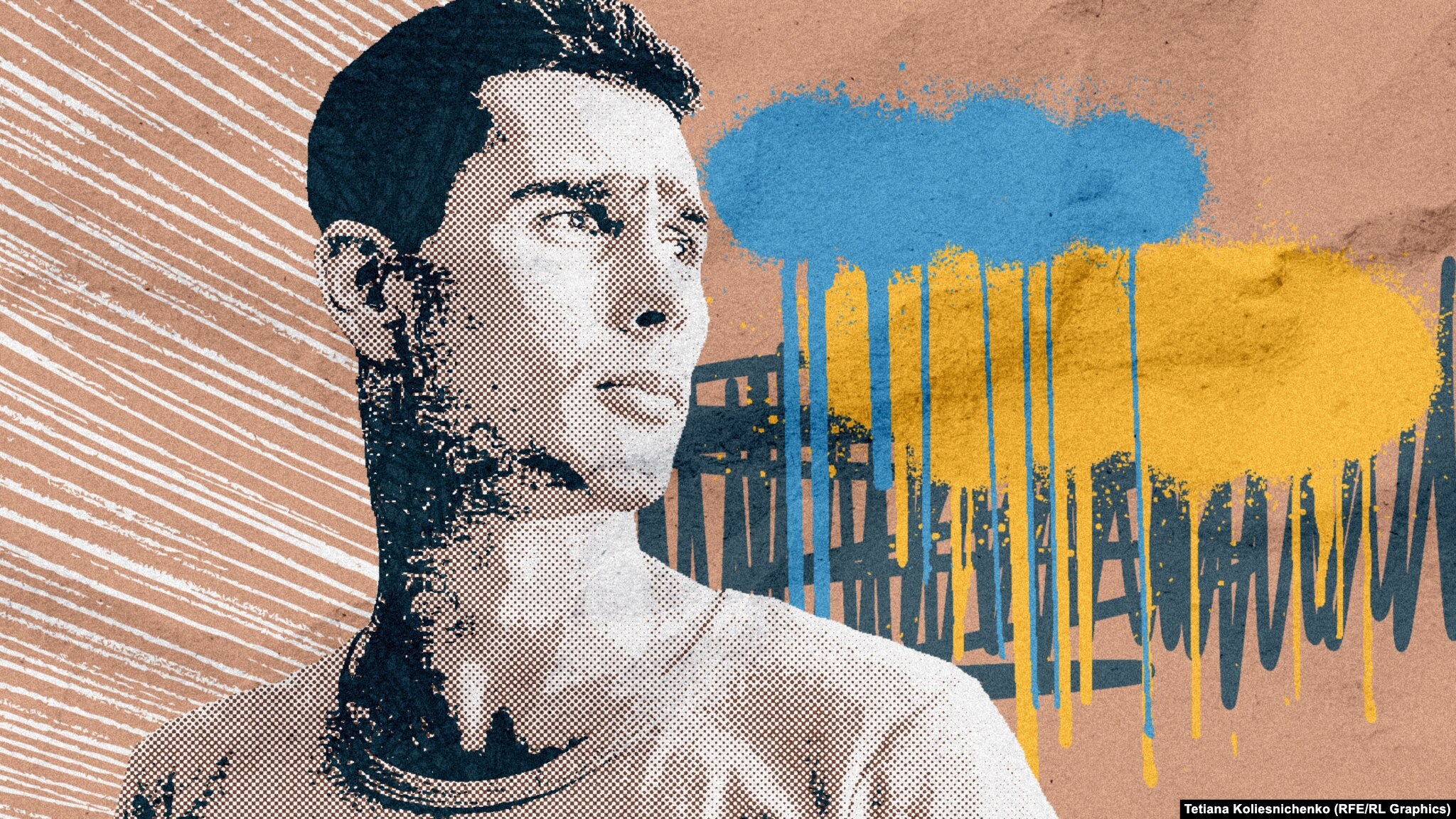
Oleksandra came across the photo online and decided to show it to her brother, captioning it: “You’ve got partisans on your hands.” The yellow and blue paint on the facade of the Russian administration building in Yevpatoria on the city’s Teatralna Square appeared on the night of May 15. Almost immediately, Russian security forces detained and accused 27-year-old local artist Bogdan Zizu of carrying out this act and attempting to set the building on fire. As part of the special project “11 Years of Occupation. 11 Stories of Resistance," Krym.Realii continues to tell the stories of Crimeans who have faced repression by the Russian authorities because of their civic stance.
In June 2023, a Russian court sentenced Bohdan Zizu to 15 years in prison on terrorism charges. Human rights activists have recognized the Crimean as a political prisoner and assert that he received such a severe sentence because of his civic stance. In court, Bohdan did not renounce his convictions.
“Do I regret what I did? I regret that I went too far and my actions provided grounds for violating the terrorism law. I regret that my grandmother will be left without the care she needs. She has no one else but me. I regret that I don’t have the opportunity to help my loved ones who are currently in Ukraine. Otherwise, I acted according to my conscience,” Bohdan Ziza stated in his speech at the time.
Bohdan is currently being held at the “Vladimir Central” — a Russian prison for particularly dangerous criminals in the city of Vladimir. Oleksandra can communicate with her brother through letters, which are rarely delivered—once every two weeks “at best.” She looks forward to every letter from her brother. Although she lived in Kyiv and Bohdan in Crimea, they were always close and constantly communicated online.
Bogdan Ziza is an orphan. His only relatives are his grandmother in Yevpatoria, whom he cared for, and Oleksandra’s family, with whom they have been friends since childhood. Bogdan himself rarely traveled outside Crimea. While living in Yevpatoria, he posted photos on his social media—he had been passionate about photography for a long time. Among his other hobbies were graffiti and parkour. Bogdan also wrote poetry and filmed videos on philosophical topics.
In 2021, he traveled to northern Russia for several months in search of work. There, he filmed a series of videos, in one of which he explained that he had “ended up here, in the north—where it’s cold” because it was difficult to find a well-paying job in Crimea.
Liberty Author: Anzhelika Brushevska
Nervous, wearing a torn T-shirt, apologizing and saying that he is “ready to face punishment and atone for his guilt through backbreaking labor”—this is how Oleksandra Barkova saw her cousin Bohdan Zizu—Oleksandr Barkov—in a video posted on a Crimean website on May 18, 2022. Prior to this, her brother had not responded to messages on messaging apps for several days, and she did not know where he was. The last thing she sent him was a photo of the Russian administration building in Yevpatoria, the facade of which someone had splashed with blue and yellow paint.
Oleksandra came across the photo online and decided to show it to her brother, captioning it: “You’ve got partisans on your hands.” The yellow and blue paint on the facade of the Russian administration building in Yevpatoria on the city’s Teatralna Square appeared on the night of May 15. Almost immediately, Russian security forces detained and accused 27-year-old local artist Bogdan Zizu of carrying out this act and attempting to set the building on fire. As part of the special project “11 Years of Occupation. 11 Stories of Resistance," Krym.Realii continues to tell the stories of Crimeans who have faced repression by the Russian authorities because of their civic stance.
In June 2023, a Russian court sentenced Bohdan Zizu to 15 years in prison on terrorism charges. Human rights activists have recognized the Crimean as a political prisoner and assert that he received such a severe sentence because of his civic stance. In court, Bohdan did not renounce his convictions.
“Do I regret what I did? I regret that I went too far and my actions provided grounds for violating the terrorism law. I regret that my grandmother will be left without the care she needs. She has no one else but me. I regret that I don’t have the opportunity to help my loved ones who are currently in Ukraine. Otherwise, I acted according to my conscience,” Bohdan Ziza stated in his speech at the time.
Bohdan is currently being held at the “Vladimir Central” — a Russian prison for particularly dangerous criminals in the city of Vladimir. Oleksandra can communicate with her brother through letters, which are rarely delivered—once every two weeks “at best.” She looks forward to every letter from her brother. Although she lived in Kyiv and Bohdan in Crimea, they were always close and constantly communicated online.
“He is an empathetic person”
Bogdan Ziza is an orphan. His only relatives are his grandmother in Yevpatoria, whom he cared for, and Oleksandra’s family, with whom they have been friends since childhood. Bogdan himself rarely traveled outside Crimea. While living in Yevpatoria, he posted photos on his social media—he had been passionate about photography for a long time. Among his other hobbies were graffiti and parkour. Bogdan also wrote poetry and filmed videos on philosophical topics.
In 2021, he traveled to northern Russia for several months in search of work. There, he filmed a series of videos, in one of which he explained that he had “ended up here, in the north—where it’s cold” because it was difficult to find a well-paying job in Crimea.
On February 23, 2022, as tensions escalated along the border between Ukraine and Russia, Bogdan posted a video on his YouTube channel in which he reads a poem with a clearly anti-war tone.
“Let’s grab our assault rifles and shoot, killing both women and children. We’ll humiliate, rob, conquer, and destroy. We’ll slit throats, rip open bellies. We’ll think this leads to peace. After all, He said: ‘We’re alone here, surrounded by nothing but enemies’”—an excerpt from what Bohdan read at the time.
“He’s like this: a person with a keen sense of justice. He’s a very empathetic person; he gives so much of himself, his time,” Oleksandra says of her brother.
After Russia’s full-scale invasion of Ukraine began, it was Bohdan who became Oleksandra’s pillar of support. Her parents and sister spent several months in the Zaporizhzhia region, which was occupied by Russian troops. Bohdan supported her 24/7. When evidence of the Russian army’s crimes in Bucha emerged, Bohdan took it hard. Later, in one of his letters from prison, he would write that it was “difficult for him to be there, where the missiles were coming from.”
In May 2022, Bohdan decided to stage an anti-war protest. He doused the facade of the Russian administration building in Yevpatoria with blue and yellow paint, then threw a bottle of Molotov cocktail at it. He filmed the entire incident on video, accompanying it with the message: “This is the first warning to the Yevpatoria city administration. Until you speak out against the war.” No one was injured as a result of the protest, but Bohdan Zizu was detained almost immediately. For several days, his family did not know what had happened to him.
For English subtitles, please enable captions in the video settings and select Auto-translate → English.
“Let’s grab our assault rifles and shoot, killing both women and children. We’ll humiliate, rob, conquer, and destroy. We’ll slit throats, rip open bellies. We’ll think this leads to peace. After all, He said: ‘We’re alone here, surrounded by nothing but enemies’”—an excerpt from what Bohdan read at the time.
“He’s like this: a person with a keen sense of justice. He’s a very empathetic person; he gives so much of himself, his time,” Oleksandra says of her brother.
After Russia’s full-scale invasion of Ukraine began, it was Bohdan who became Oleksandra’s pillar of support. Her parents and sister spent several months in the Zaporizhzhia region, which was occupied by Russian troops. Bohdan supported her 24/7. When evidence of the Russian army’s crimes in Bucha emerged, Bohdan took it hard. Later, in one of his letters from prison, he would write that it was “difficult for him to be there, where the missiles were coming from.”
In May 2022, Bohdan decided to stage an anti-war protest. He doused the facade of the Russian administration building in Yevpatoria with blue and yellow paint, then threw a bottle of Molotov cocktail at it. He filmed the entire incident on video, accompanying it with the message: “This is the first warning to the Yevpatoria city administration. Until you speak out against the war.” No one was injured as a result of the protest, but Bohdan Zizu was detained almost immediately. For several days, his family did not know what had happened to him.
For English subtitles, please enable captions in the video settings and select Auto-translate → English.
On May 18, Oleksandra typed her brother’s name—Bogdan Ziza—into Google and came across a video released by the Russian-controlled TV channel “Crimea 24.” It was the very video in which her brother, visibly nervous, confesses to the crime and expresses remorse. Watching this video came as a shock to Oleksandra, and she is certain that it was recorded under duress. After his confession, Bohdan spent nearly a year in the Simferopol pretrial detention center.
Russia wants to crush any resistance
It was in the Simferopol pretrial detention center that Nariman Dzhelial, deputy chairman of the Mejlis of the Crimean Tatar People, met Bogdan. Dzhelial is a former political prisoner of the Kremlin who returned home in June 2024 as part of a prisoner exchange.
Nariman Dzhelial was detained by Russian security forces in September 2021 at his home in annexed Crimea, shortly after returning from the founding summit of the “Crimean Platform” in Kyiv. He was accused of allegedly organizing a sabotage operation on a gas pipeline in the village of Perevalne in the Simferopol district. In September 2022, the Russian-controlled Supreme Court of Crimea sentenced the politician to 17 years in a maximum-security prison.
During their first meeting, Bohdan was “a bit confused, scared,” Jelal recalls.
“We’ve all been through this. We offered to help, told him what Ukraine is doing, which agencies are providing support, what kind of legal aid is available, and so on. ‘We’ll get in touch with the right people in Kyiv so that certain legal advocacy efforts can begin to unfold around you,’ and so on,” says Dzhelal.
At first, Bohdan was cautious and spoke little. “I remember his cell—number 102—where he was held. Every time I left my cell, I’d walk past his. And I’d always say hello to him. In the detention center, there’s a specific person at every cell who sits by the door and watches the hallway—what’s happening, who’s walking by—to warn if the authorities are coming or if it’s just a staff member handing out food. And every door has a small window for ventilation or so a staff member can peek in and see what’s inside the cell. Often they aren’t glassed in, just holes in the metal. So you walk by, see it, and say, “Cell 102, say ‘hello.’” Of course, they’d scold you. But they weren’t too strict about it,” Nariman recalls his time in the Simferopol pretrial detention center.
A short while later, they met again, and Nariman saw a “completely different” Bohdan.
“He was so inspired; there was a sparkle in his eyes. He had met Irina Danilovich (another Crimean woman whom human rights activists recognized as a political prisoner—KR), who had also already been arrested. He corresponded with her. I found out that he had, after all, become involved in the process of defending himself, in the struggle for the truth,” says Dzhelal.
In court, Bohdan spoke in Ukrainian several times, demanded that his Russian passport be revoked, and after the verdict was announced—15 years in prison—he demanded that the Russian authorities release political prisoners and went on a hunger strike. Bohdan ended his hunger strike after 17 days. During that time, he lost 10 kilograms, and his health deteriorated. Oleksandra says that “he was literally exhausted; he couldn’t climb the stairs.” During his hunger strike, Bohdan was placed in solitary confinement, which also negatively affected his condition.
Dzhelal recalls why it was important for him personally, while in prison, not to give up and to take action—as much as was possible in his situation.
“Someone might ask why Leni Umerova shouted ‘Glory to Ukraine’ (referring to the former political prisoner whom Russian security forces detained while she was traveling to Crimea to visit her sick father—Ed.), since she should have been thinking of herself. Absolutely not. People need to understand that you’re already in the clutches of these monsters. Whether you speak up or not—it makes absolutely no difference. I know guys who didn’t stand out in any way, who were calm and didn’t show any defiance. They were beaten just as much as anyone else. And then, you know, it’s a kind of psychological tactic. So, in the Minusinsk prison, I met a fellow Ukrainian from the Kherson region. He was sentenced, if I’m not mistaken, to 22 years. They pinned one violation on him. So they call him in for a hearing and don’t bring him back. We find out they’re giving him three days in solitary. I already understand why. After three days, he returns, and I say, “Yurchik, why did you tell them anything in there?” I already understand that if he had said, “Yes, yes, you’re right,” he might have avoided the punishment. If they put him in there, then he must have done something. “He looks at me and says, ‘Nariman, yeah, but at least I stood my ground,’” recalls Dzhelal.
Human rights activists explain the extremely long sentences for Ukrainians from Russian-occupied territories as a desire to “stop any pro-Ukrainian resistance.” “And to intimidate other people. If they do something similar—whether it’s splashing paint on a local administration building, getting a yellow-and-blue manicure, or any other pro-Ukrainian act—it will be punished,” says Viktoria Nesterenko, project manager at the ZMINA Human Rights Center.
Oleksandra shows a copy of a drawing that Bohdan managed to send from prison for the first time. Previously, all of Bohdan’s attempts to send his sketches to his family were blocked by Russian security forces.
That sheet of paper depicts one of the streets of Bakhchysarai.
“He loves Crimea very much: he’s probably traveled all over it and, I suppose, drew what he misses. He reads and draws. And since he is an artist, he continues to do this every day. It seems to me that the fact that he was able to send this drawing, and we saw that he is alive there, that he continues to create, is a sign for us. That he continues to hope for an exchange, to hope for life after imprisonment. And this is disadvantageous for the Russians, unfortunately. Perhaps it’s also a form of moral pressure: when a person draws something, writes something, and tries to convey a message, but it’s constantly blocked. But it’s a miracle, really, that this drawing managed to get through,” says Barkova. She says she will continue to fight for her brother’s return.
Russia wants to crush any resistance
It was in the Simferopol pretrial detention center that Nariman Dzhelial, deputy chairman of the Mejlis of the Crimean Tatar People, met Bogdan. Dzhelial is a former political prisoner of the Kremlin who returned home in June 2024 as part of a prisoner exchange.
Nariman Dzhelial was detained by Russian security forces in September 2021 at his home in annexed Crimea, shortly after returning from the founding summit of the “Crimean Platform” in Kyiv. He was accused of allegedly organizing a sabotage operation on a gas pipeline in the village of Perevalne in the Simferopol district. In September 2022, the Russian-controlled Supreme Court of Crimea sentenced the politician to 17 years in a maximum-security prison.
During their first meeting, Bohdan was “a bit confused, scared,” Jelal recalls.
“We’ve all been through this. We offered to help, told him what Ukraine is doing, which agencies are providing support, what kind of legal aid is available, and so on. ‘We’ll get in touch with the right people in Kyiv so that certain legal advocacy efforts can begin to unfold around you,’ and so on,” says Dzhelal.
At first, Bohdan was cautious and spoke little. “I remember his cell—number 102—where he was held. Every time I left my cell, I’d walk past his. And I’d always say hello to him. In the detention center, there’s a specific person at every cell who sits by the door and watches the hallway—what’s happening, who’s walking by—to warn if the authorities are coming or if it’s just a staff member handing out food. And every door has a small window for ventilation or so a staff member can peek in and see what’s inside the cell. Often they aren’t glassed in, just holes in the metal. So you walk by, see it, and say, “Cell 102, say ‘hello.’” Of course, they’d scold you. But they weren’t too strict about it,” Nariman recalls his time in the Simferopol pretrial detention center.
A short while later, they met again, and Nariman saw a “completely different” Bohdan.
“He was so inspired; there was a sparkle in his eyes. He had met Irina Danilovich (another Crimean woman whom human rights activists recognized as a political prisoner—KR), who had also already been arrested. He corresponded with her. I found out that he had, after all, become involved in the process of defending himself, in the struggle for the truth,” says Dzhelal.
In court, Bohdan spoke in Ukrainian several times, demanded that his Russian passport be revoked, and after the verdict was announced—15 years in prison—he demanded that the Russian authorities release political prisoners and went on a hunger strike. Bohdan ended his hunger strike after 17 days. During that time, he lost 10 kilograms, and his health deteriorated. Oleksandra says that “he was literally exhausted; he couldn’t climb the stairs.” During his hunger strike, Bohdan was placed in solitary confinement, which also negatively affected his condition.
Dzhelal recalls why it was important for him personally, while in prison, not to give up and to take action—as much as was possible in his situation.
“Someone might ask why Leni Umerova shouted ‘Glory to Ukraine’ (referring to the former political prisoner whom Russian security forces detained while she was traveling to Crimea to visit her sick father—Ed.), since she should have been thinking of herself. Absolutely not. People need to understand that you’re already in the clutches of these monsters. Whether you speak up or not—it makes absolutely no difference. I know guys who didn’t stand out in any way, who were calm and didn’t show any defiance. They were beaten just as much as anyone else. And then, you know, it’s a kind of psychological tactic. So, in the Minusinsk prison, I met a fellow Ukrainian from the Kherson region. He was sentenced, if I’m not mistaken, to 22 years. They pinned one violation on him. So they call him in for a hearing and don’t bring him back. We find out they’re giving him three days in solitary. I already understand why. After three days, he returns, and I say, “Yurchik, why did you tell them anything in there?” I already understand that if he had said, “Yes, yes, you’re right,” he might have avoided the punishment. If they put him in there, then he must have done something. “He looks at me and says, ‘Nariman, yeah, but at least I stood my ground,’” recalls Dzhelal.
Human rights activists explain the extremely long sentences for Ukrainians from Russian-occupied territories as a desire to “stop any pro-Ukrainian resistance.” “And to intimidate other people. If they do something similar—whether it’s splashing paint on a local administration building, getting a yellow-and-blue manicure, or any other pro-Ukrainian act—it will be punished,” says Viktoria Nesterenko, project manager at the ZMINA Human Rights Center.
Continues to draw in prison
Oleksandra shows a copy of a drawing that Bohdan managed to send from prison for the first time. Previously, all of Bohdan’s attempts to send his sketches to his family were blocked by Russian security forces.
That sheet of paper depicts one of the streets of Bakhchysarai.
“He loves Crimea very much: he’s probably traveled all over it and, I suppose, drew what he misses. He reads and draws. And since he is an artist, he continues to do this every day. It seems to me that the fact that he was able to send this drawing, and we saw that he is alive there, that he continues to create, is a sign for us. That he continues to hope for an exchange, to hope for life after imprisonment. And this is disadvantageous for the Russians, unfortunately. Perhaps it’s also a form of moral pressure: when a person draws something, writes something, and tries to convey a message, but it’s constantly blocked. But it’s a miracle, really, that this drawing managed to get through,” says Barkova. She says she will continue to fight for her brother’s return.
This is an automatic translation generated by DeepL.