"We have dug up about 800 bodies" - a military man tells how Russians forced prisoners to exhume civilian bodies in Mariupol
Source: SlidstvoInfo
Author: Karina Bugaychenko
Russian occupiers forced Ukrainian prisoners of war to exhume the bodies of civilians killed during the fighting in Mariupol in the spring of 2022. This was reported to Slidstvo.Info by Sergey Gritsiv, a marine who was released from captivity.
For a month, the prisoners were taken at 4 a.m. from the Olenivska colony to the ruined city, where they dug up mass graves and retrieved bodies from under the rubble.
According to Hrytsiv, the prisoners unearthed about 800 bodies and witnessed looting by Russian guards. Later, these same prisoners of war were tortured and tried on trumped-up charges—Serhiy Hrytsiv himself received a 25-year prison sentence.
This is reported in an article by “Slidstvo.Info.”
If you prefer to watch the video with subtitles in another language, go to YouTube Settings → Subtitles → Auto-translate and select the desired language.
Author: Karina Bugaychenko
Russian occupiers forced Ukrainian prisoners of war to exhume the bodies of civilians killed during the fighting in Mariupol in the spring of 2022. This was reported to Slidstvo.Info by Sergey Gritsiv, a marine who was released from captivity.
For a month, the prisoners were taken at 4 a.m. from the Olenivska colony to the ruined city, where they dug up mass graves and retrieved bodies from under the rubble.
According to Hrytsiv, the prisoners unearthed about 800 bodies and witnessed looting by Russian guards. Later, these same prisoners of war were tortured and tried on trumped-up charges—Serhiy Hrytsiv himself received a 25-year prison sentence.
This is reported in an article by “Slidstvo.Info.”
If you prefer to watch the video with subtitles in another language, go to YouTube Settings → Subtitles → Auto-translate and select the desired language.
PRISONERS OF WAR WERE FORCED TO EXHUME THE BODIES OF MARIUPOL RESIDENTS
The Russians destroyed and occupied Mariupol four years ago. On the site of the ruined buildings, beneath whose rubble people remained trapped, new housing is now being built—but not for the people of Mariupol. No one is systematically searching for the bodies of the city’s deceased residents. Except for their relatives.
Ukrainian prisoners of war were forced to participate in the exhumation of civilians. One of them was Marine Serhiy Hrytsiv, who was held at the Olenivka penal colony. In the spring of 2022, he and other prisoners were taken to the ruined city of Mariupol every day at 4 a.m.
“They took us out at four or five in the morning. We were divided into groups of five. Over four weeks, we dug up about 800 civilians,” Serhiy says.
According to him, the bodies were retrieved from under the rubble of destroyed buildings, from yards, gardens, and makeshift graves. Among the dead were children and the elderly—many died from shelling, starvation, the cold, or a lack of medical care during the city’s siege.
“There were a great many mangled bodies after the shelling. We tried to dig them all out. But sometimes you just couldn’t reach them with your hands, and the occupiers were reluctant to provide equipment. For example, we had information that an entire family was supposed to be under the rubble of a building, but we found only one woman’s body; the rest remained under the concrete slabs. A week passed, and we saw heavy machinery already clearing that building,” adds the former prisoner.
Prisoners were also taken to the Starokrymske Cemetery, where civilians had already been buried. There they saw relatives of the deceased who were opposed to further exhumations. Investigators told the relatives that these burials had taken place under Ukrainian rule, and they needed to verify whether civilians had been killed. As they removed the bodies, the occupiers assigned numbers to the deceased, and often threw the documents back into the dug-out trench.
“We saw the guards dividing among themselves the money and valuables they found during the exhumation,” recalls Serhiy Hrytsiv.
The bodies were placed in black bags, assigned numbers, and transported to an “improvised” morgue set up in the parking lot of the “Metro” supermarket.
As journalists from “Slidstvo.Info” discovered from documents obtained exclusively from people searching for their relatives, the Investigative Committee of the Russian Federation officially acknowledges that the bodies of civilians killed in Mariupol were “lost,” and burial sites were not always recorded. Investigators continue to send refusals to open criminal cases to the relatives of the missing, or inform them that there is no information about their loved ones in the morgue’s databases.
“TODAY YOU ARE A WITNESS, TOMORROW YOU ARE THE DEFENDANT”
After participating in the exhumations, Russian security forces began using Ukrainian prisoners of war as defendants in fabricated criminal cases. According to Serhiy Hrytsiv, he and other captives were subjected to torture and forced to sign so-called “sincere confessions” regarding the murders of Mariupol civilians.
“If you didn’t want to sign the ‘sincere confession,’ the guards would lock you in solitary confinement. Sooner or later, after three months, when your health is already on the brink, you sign,” says Hrytsiv.
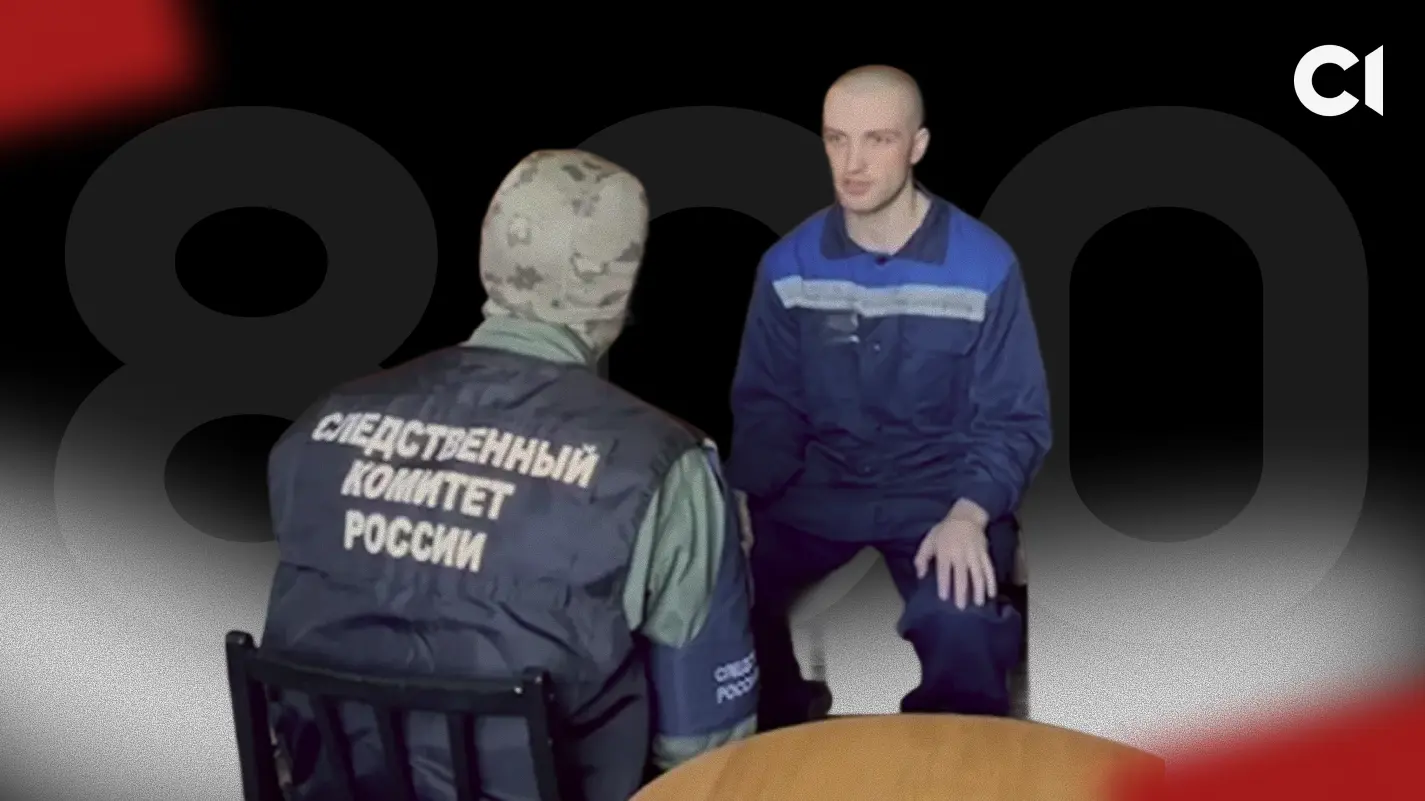
Serhiy Hrytsiv also appears in a video released to the public by the Investigative Committee of the Russian Federation featuring Ukrainian prisoners of war who allegedly “confess” to crimes in Mariupol. He is asked to introduce himself and state what he is accused of; he says: “Carrying out a criminal order.” In a conversation with journalists, he explains: “There’s a long preparation process leading up to this recording. And if a prisoner’s face looks intact, that doesn’t mean everything below the neck—what remains under the clothes—isn’t bruised.”
The court proceedings, he says, were a formality. Four defendants were assigned a single lawyer. Once, a lawyer sat through about five minutes of a hearing, someone called him, and he left. Most of the hearings were held online. The same prisoners of war often served as witnesses in the cases.
“The absurdity is that those witnesses later became defendants with sentences. It was a vicious cycle. Today you’re in the dock, and I’m a witness, and tomorrow—the other way around. If you read what’s written in the ‘sentences’… the Russians won’t allow that. And our words are just words. There is no evidence,” says Serhiy.
The Russians sentenced Serhiy Hrytsiv to 27 years in prison on fabricated charges of terrorism and extremism. After an appeal, the sentence was reduced to 25 years. Serhiy spent two and a half years in captivity and endured numerous forms of torture: electric shocks to his genitals, being suspended by his feet, a bag of bleach over his head, torn-out fingernails, and broken ribs. During transfers and before the prisoner exchange, all copies of the verdicts were confiscated from the captives.
“It would be absurd if you read what’s written there. They won’t allow that. And our words are just words. There is no evidence,” says Serhiy.
Four years after the occupation of Mariupol, the families of the deceased still do not know where their loved ones are buried, and the exact number remains unknown. While people are sent formal replies, Russian investigators are fabricating sentences against Ukrainian soldiers, accusing them of killing “unidentified” civilians.
The Russians destroyed and occupied Mariupol four years ago. On the site of the ruined buildings, beneath whose rubble people remained trapped, new housing is now being built—but not for the people of Mariupol. No one is systematically searching for the bodies of the city’s deceased residents. Except for their relatives.
Ukrainian prisoners of war were forced to participate in the exhumation of civilians. One of them was Marine Serhiy Hrytsiv, who was held at the Olenivka penal colony. In the spring of 2022, he and other prisoners were taken to the ruined city of Mariupol every day at 4 a.m.
“They took us out at four or five in the morning. We were divided into groups of five. Over four weeks, we dug up about 800 civilians,” Serhiy says.
According to him, the bodies were retrieved from under the rubble of destroyed buildings, from yards, gardens, and makeshift graves. Among the dead were children and the elderly—many died from shelling, starvation, the cold, or a lack of medical care during the city’s siege.
“There were a great many mangled bodies after the shelling. We tried to dig them all out. But sometimes you just couldn’t reach them with your hands, and the occupiers were reluctant to provide equipment. For example, we had information that an entire family was supposed to be under the rubble of a building, but we found only one woman’s body; the rest remained under the concrete slabs. A week passed, and we saw heavy machinery already clearing that building,” adds the former prisoner.
Prisoners were also taken to the Starokrymske Cemetery, where civilians had already been buried. There they saw relatives of the deceased who were opposed to further exhumations. Investigators told the relatives that these burials had taken place under Ukrainian rule, and they needed to verify whether civilians had been killed. As they removed the bodies, the occupiers assigned numbers to the deceased, and often threw the documents back into the dug-out trench.
“We saw the guards dividing among themselves the money and valuables they found during the exhumation,” recalls Serhiy Hrytsiv.
The bodies were placed in black bags, assigned numbers, and transported to an “improvised” morgue set up in the parking lot of the “Metro” supermarket.
As journalists from “Slidstvo.Info” discovered from documents obtained exclusively from people searching for their relatives, the Investigative Committee of the Russian Federation officially acknowledges that the bodies of civilians killed in Mariupol were “lost,” and burial sites were not always recorded. Investigators continue to send refusals to open criminal cases to the relatives of the missing, or inform them that there is no information about their loved ones in the morgue’s databases.
“TODAY YOU ARE A WITNESS, TOMORROW YOU ARE THE DEFENDANT”
After participating in the exhumations, Russian security forces began using Ukrainian prisoners of war as defendants in fabricated criminal cases. According to Serhiy Hrytsiv, he and other captives were subjected to torture and forced to sign so-called “sincere confessions” regarding the murders of Mariupol civilians.
“If you didn’t want to sign the ‘sincere confession,’ the guards would lock you in solitary confinement. Sooner or later, after three months, when your health is already on the brink, you sign,” says Hrytsiv.
Serhiy Hrytsiv also appears in a video released to the public by the Investigative Committee of the Russian Federation featuring Ukrainian prisoners of war who allegedly “confess” to crimes in Mariupol. He is asked to introduce himself and state what he is accused of; he says: “Carrying out a criminal order.” In a conversation with journalists, he explains: “There’s a long preparation process leading up to this recording. And if a prisoner’s face looks intact, that doesn’t mean everything below the neck—what remains under the clothes—isn’t bruised.”
The court proceedings, he says, were a formality. Four defendants were assigned a single lawyer. Once, a lawyer sat through about five minutes of a hearing, someone called him, and he left. Most of the hearings were held online. The same prisoners of war often served as witnesses in the cases.
“The absurdity is that those witnesses later became defendants with sentences. It was a vicious cycle. Today you’re in the dock, and I’m a witness, and tomorrow—the other way around. If you read what’s written in the ‘sentences’… the Russians won’t allow that. And our words are just words. There is no evidence,” says Serhiy.
The Russians sentenced Serhiy Hrytsiv to 27 years in prison on fabricated charges of terrorism and extremism. After an appeal, the sentence was reduced to 25 years. Serhiy spent two and a half years in captivity and endured numerous forms of torture: electric shocks to his genitals, being suspended by his feet, a bag of bleach over his head, torn-out fingernails, and broken ribs. During transfers and before the prisoner exchange, all copies of the verdicts were confiscated from the captives.
“It would be absurd if you read what’s written there. They won’t allow that. And our words are just words. There is no evidence,” says Serhiy.
Four years after the occupation of Mariupol, the families of the deceased still do not know where their loved ones are buried, and the exact number remains unknown. While people are sent formal replies, Russian investigators are fabricating sentences against Ukrainian soldiers, accusing them of killing “unidentified” civilians.
This is an automatic translation generated by DeepL.