"The guys were burning, screaming, someone was torn in half." The terrorist attack in Olenivka and life after it in the memoirs of Azov soldiers
Source: Ukrainska Pravda
Author: Olena Barsukova
"I ran up to 'Kosmos.' I started shouting—'Bodia, Bodia!' But Bodia showed no signs of life," says 32-year-old scout Ostap Shved (Ostapchik).
Ostap now has only memories of his comrade, because "Kosmos" is one of the 54 Azov fighters who died in "Barrack 200" in Olenivka.
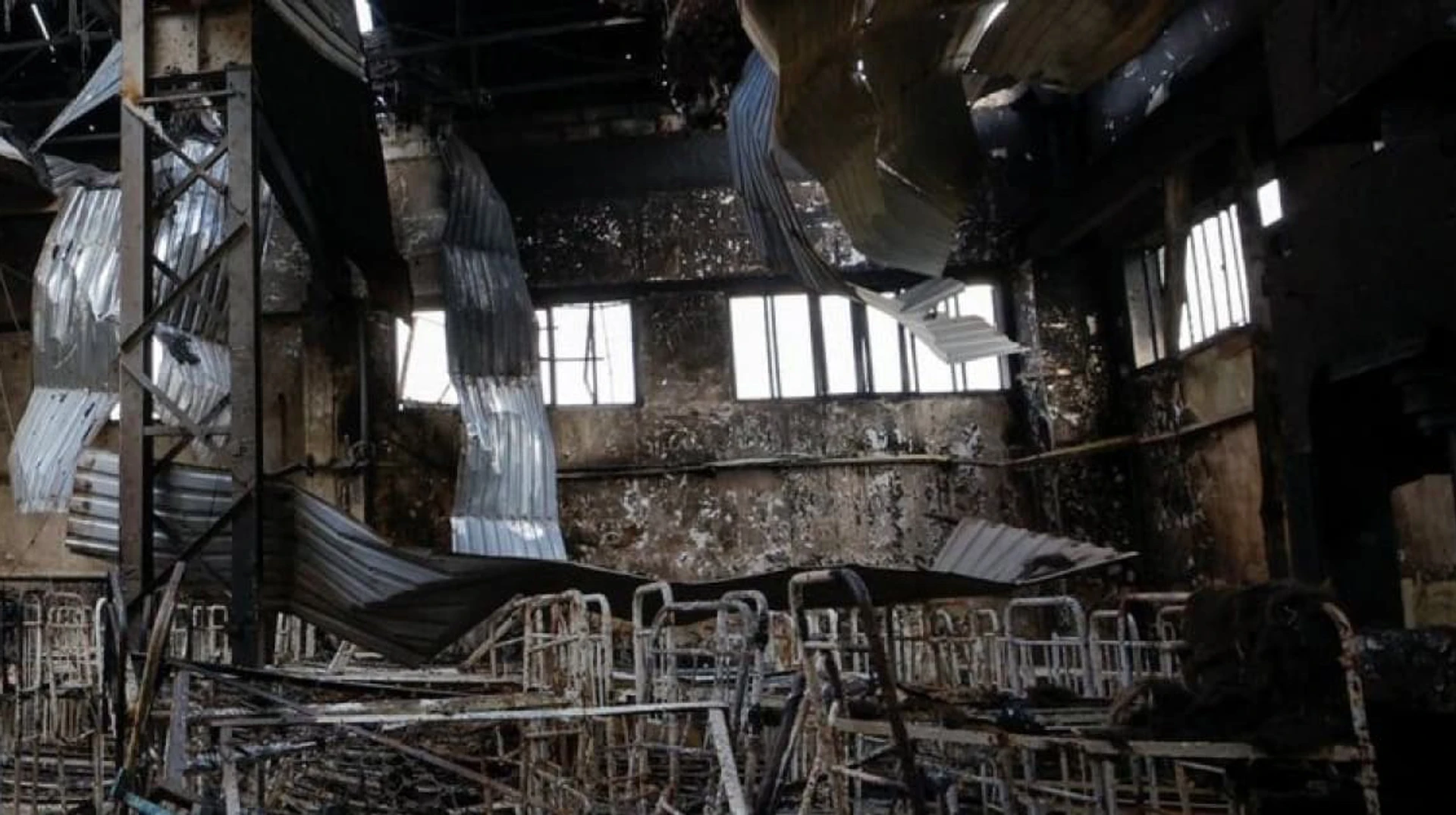
The Russians transferred 193 captured Azov fighters—defenders of Mariupol—to this barracks, and on the night of July 29, 2022, they blew it up.
More than 130 of them survived, but for most, the suffering did not end there. Ahead lay inhuman torture in Donetsk, Taganrog, Kamyshin, or beyond the Arctic Circle.
After many months of captivity, several dozen fighters were fortunate enough to be included in prisoner exchanges. Some of them recovered and returned to active duty, while others have been unable to recover from their ordeal all these years.
In 2025, the Verkhovna Rada officially designated July 28 as the Day of Mourning and Remembrance for defenders who were tortured, executed, or died in captivity.
On this day, "UP. Life" not only honors the fallen but also remembers the survivors, who are forever left with the pain of loss.
We spoke with Azov fighters “Ostapchik” and “Matros” about their memories of the most terrifying night of their lives, their fallen comrades, and life after returning home. Below are their direct quotes.
"The zone commander was drinking coffee, smoking, and watching us die"
I’m from Stryi. I’m a clinical pharmacist and medical assistant by training. In 2015, I joined Azov and served in the reconnaissance platoon of the second battalion.
In Mariupol, during one of the operations, my little finger was severed and my ring finger was injured. And on April 15, during the breakthrough at Azovstal, I sustained a second injury—a shrapnel wound to the abdomen. By then, I was already working at the makeshift “Zalizaka” hospital.
On May 18, I left Azovstal along with other lightly wounded soldiers and medics from the 555th Hospital.
In Olenivka, the treatment was relatively normal at first. We were housed in barrack No. 2, where there were 333 Azov fighters. People slept wherever they could—due to the stuffiness and lack of space, many spent the night in the courtyard.
Two days before the explosion, we were told we were being relocated so that barracks No. 2 could be repaired. We entered the industrial zone. The workshop had been prepared in advance by other prisoners of war: there were beds without mattresses and two 500-liter barrels of water that smelled like a swamp and had tadpoles swimming in them.
Then the commander came and gave a speech saying that we had to live there to relieve the prison. We counted the people and went to sleep. There is a famous photograph of the barracks wall where “193 people” is written. There were originally 200 of us, but that evening, seven people were taken to Donetsk.
On the first day, there were floodlights all around the barracks shining on it, but they were removed. On July 28, someone from the administration brought in two electricians. One of them began attaching the floodlights to the building itself.
We were driven out of the barracks onto the street, while the other electrician went inside with the administration. They were working on the electrical panel and turned the lights back on for us. Some said it was before a prisoner exchange, others—before a transfer to another prison.
That day, we were ordered not to leave the barracks after 10:00 p.m., and only two at a time were allowed to use the restroom. After dinner, “Cosmos” and I sat outside for a long time.
After lights out, I couldn’t sleep because the hangar was made of metal, it was stifling, and there were no windows. I lay with my head against the wall, then rolled over so my feet were there, because the guy sleeping on the second floor had really smelly feet. That ended up saving my life, because the shrapnel hit my legs instead of my head.
Around 11 p.m., the “Grad” started firing—the Russians fired off an entire rocket cassette from the industrial zone. Then came the mortar rounds. It was all staged to create the impression that “our own” were shelling us.
The first explosion rang out at night, followed by a second a few seconds later. There was a detonation inside the building. I started falling from the second floor and rolling onto my side. We were on fire; everyone was screaming.
The door had been blown out, and the exit itself was blocked by beds and the bodies of the guys, because the shock wave had shifted the beds. The only window, barred with bars, was blown out, and we began pulling the wounded out through it. I pulled out several people, then went back for more.
I ran over to “Kosmos” and started shouting—Bodia, Bodia! But Bodia showed no signs of life. That’s when I froze for the first time, because he’s someone close to me. I’m shouting—Bodia, Bodia! And I see that his head is crushed. The black hat he’d been wearing when he fell asleep was covered in blood and torn…
At that moment, someone started dragging out another guy with both legs shattered, and I helped. Then I ran back to “Kosmos,” but he was already gone. I tried to drag away another half-charred guy, but I couldn’t.
My comrades who were close to the epicenter of the explosion were torn to pieces. Right at the exit, there was a bunk bed, and the guy sleeping on the top bunk was torn in half. The lower half of his body remained on the bed, while the upper half was on the floor, connected only by his intestines. I will remember that for the rest of my life.
We dragged the wounded out to the alley in front of the entrance to the compound. We received no assistance whatsoever. When we approached the gate, the Russians threw a flash-bang grenade and started firing into the air. Only one special forces soldier threw a first-aid kit: it contained two bandages, a pair of scissors, and an Esmarch tourniquet. I cut that tourniquet in half and applied it to two soldiers.
We tore our T-shirts to stop the bleeding while the zone commander drank coffee, smoked, and watched us die. An hour and a half later, the Russians threw us a bag of torn sheets and a few water bottles.
Around 5 a.m., they let in the captured medics from Hospital 555, who had several CAT tourniquets, bandages, and gauze. Some of the guys had already died from lack of proper medical care, and we dragged them up to the fence.
One of our comrades was critically wounded: his head, torso, and abdomen were pierced, and all his limbs were crushed… When I went over to see if he was still alive, the zone commander said, “Oh, is this one already dead? Good.” And he went back to drinking his coffee.
Around 7 a.m., we were told that the vehicles were on their way. We, the wounded, started loading our seriously injured comrades into the KAMAZ trucks, but since the men were lying down, the trucks filled up quickly. We had to stack the guys on top of each other.
Although there were Russian medics on the prison grounds, and ambulances were parked outside the prison at night, they did not provide us with any assistance. Later, I went back to the barracks, which had already burned down completely, and saw no signs of an airstrike. The walls weren’t damaged by shrapnel, and the roof had been blown outward, not inward.
They took us to the disciplinary isolation unit (DIZO). There were 35 people in the cell, all with shrapnel wounds. We were covered in blood; some were already decomposing. The hole in my leg wouldn’t heal; a piece of glass was stuck in my foot.
The female medics from the DIZO negotiated with the guards to have us taken out for a bath so they could bandage our wounds. On the fifth day, some “DNR” doctors came and pulled that shard out of my leg.
Some of the guys were taken for interrogations. When Steven Seagal (an American actor and Putin supporter—ed.) arrived, the Russians said, “We need some live ones.” They picked out the least injured guys and those with tattoos to show on camera what “Nazis” we were.
Every evening, we could hear other guys being tortured in the DIZO corridor. It didn’t concern us—apparently, there was an order not to touch those who had survived in “barrack 200.” But at 4 a.m., we heard the sound of tape being unrolled. They used it to tie people up so they wouldn’t scream. And then—moans and screams…
About a month later, Russian special forces searched us and sent us back to barrack number 2, and on September 26, we ended up in Taganrog. When the KAMAZ pulled up to the detention center, the Russians turned Russian music up to full volume. A bunch of prison staff were yelling, “You bitches, get out!” The guys started climbing out, but they were just dragged out by their legs and beaten.
Here’s how it goes: you jump out of the KAMAZ, and they’re already beating you with batons while you’re in the air. You fall—they finish you off on the floor. They threw the second group of guys right on top of us.
Then they strip you, beat you, and take you to a cold shower. When five of you have gathered against the wall, they take you further—they take your fingerprints, shave your head, and cut off a lock of hair for DNA.
Next comes the stretching: hands against the wall, legs split wide, the guard shocks you with a stun gun. They take you into an office, throw you on the floor: you spread your arms and legs, the guard steps on them, beats you on the buttocks, and the female guard asks: “Last name, first name, patronymic, where did you serve, where are you from, where did you study?”
You have to talk nonstop while they beat you. And for every “ow” you make—they hit even harder. Then they tell me to stand up and hand me some kind of form. I sign it, and then the female guard says, “Wait, don’t move”—and starts writing something like “f*ck” or “f*ggot” on my forehead with a pen. And I’m all wet, the pen won’t write, she’s pressing it into my skin…
A few days later, the torture began. These beatings and taunts are one thing, but the torture is carried out by specially trained people in a separate room. There are different kinds of torture: electric shock, the tapik, being hung by a hook.
The medics got it the worst, because for some reason the Russians thought our medics were cutting off Russian prisoners’ balls. And if I’m both a medic and a scout—that’s a double whammy.
It wasn’t until one of our comrades died that they started beating us less. After his death, they gave us a whole loaf of bread for the first time. As we found out later, it was just a change in the special forces unit.
I was held captive for a year. The day before the exchange, they took me to the torture chamber: they hung me up, started pouring water on me, shocked me with a stun gun, and threatened to rape me. One guy started cutting my ear with a dull knife. They tortured me for several hours, brought me back to the cell, and told me to clean myself up because I was filthy and had been rolling around on the floor.
Not even 20 minutes had passed when the cell door opened and they told me, “Time to go.” They led us back toward the torture chamber, but we turned into another building through paths I hadn’t walked before. Me and 5 or 6 other people were taken to a room called the “glass,” where you stand in line for torture. A special forces officer ordered us to do push-ups, but an FSIN officer said, “Stand down, don’t touch these six.”
The six of us sat against the wall while the other guys were dragged in and tortured. Then they started calling the six of us into the office one by one. There, the chief asked me something and gave me a sandwich with sprats and cucumber.
I said, “Sir, is this before the trial?” And he let slip, “Not necessarily.” In the next office, where I was taken, [the prison guard] said that tomorrow 12 men were going to be exchanged.
On May 6, 2023, we arrived on Ukrainian territory. I recovered and went back to fight. I guess the only thing that helped me was the desire for revenge. If you just sit at home, you’ll go crazy.
After my captivity, I can’t gain weight and I don’t take cold showers anymore, but otherwise—everything’s fine. The only thing that makes me feel bad is that my friends are dying.
"Covered in glass shards, I ran into the barracks and saw the guys burning on their beds"
I'm from Mariupol myself; I served starting in 2018, and in 2021 I was discharged. At the start of the full-scale war, my brother called me to join him in Azov.
The three most terrible days of my life were March 30, the day my brother died; April 15, the breakthrough at Azovstal; and July 28–29, the Olenivka barracks…
My unit and I left Azovstal on May 17 along with the “300th.” At first, we lived in the second barracks. During that period, I was taken for interrogation two or three times, but they didn’t beat me.
A few days before the explosion, they took us to the industrial zone, to a former metalworking shop. There were a lot of machines there, and metal beds crammed together.
The late commander Yura told us to take the spots on the side that he wanted. We were thinking about other spots: if we’d chosen them, we would have stayed there forever. Maybe he had a hunch. We lay down where he told us to, and we survived.
It became clear that something was up when the captured marines started digging trenches for the Russians about 50–70 meters away from us. On the second night, the guards changed: they were men in black.
The next night there was an explosion. The guys say there had been Grad rocket attacks before that, but I don’t remember much anymore.
The moment of the explosion was a bright flash and the sensation of something hitting my feet and burning my legs. I closed my eyes, but the flash was so intense that the light pierced even through my eyelids.
My commander and I were about 7 meters from the epicenter. Everyone started screaming and panicking. I jumped down, stepped on the glass, put on my boots, and climbed out the window, because it was already impossible to run out through the main entrance—everything was on fire.
They shouted at me, “Run, get some water, we’ll put it out.” I’m covered in glass shards and minor burns, gathering water, running into the barracks, and seeing the guys burning on their beds, the fire engulfing their skin. Some have body parts torn off; everyone is screaming. And you can’t pull them out because they’re already burning…
I started making an exit for the others, tearing down the fence, shouting, “Let’s get out.” We ran to the entrance to the zone, where the Russians were already standing. They started firing into the air, shouting, “If you break down the doors, we’ll shoot you right now!”
We started gathering the wounded, looking for sticks to make makeshift tourniquets and stop the bleeding. The Russians threw us rags—bedding torn into pieces.
From the moment of the explosion until about 8 a.m., we helped the wounded, dragged bodies away, and loaded the “seriously injured” onto KAMAZ trucks. Those who were more or less unharmed, [the Russians] sent to the DIZO.
In the detention center, there was a cell about 5x5 or 6x6 meters, with wooden pallets and no mattresses. There were 37 of us; it was summer, and the heat was insane. We drank industrial water, and to use the toilet, we’d gather in groups of 5–7 people, and only then would we flush. We conserved water as best we could.
The guys had all kinds of injuries—from burns to shrapnel wounds and severe concussions. I had about five pieces of shrapnel in my feet. Over time, they started to fester, so I squeezed them out myself.
Two days later, they sent us to the shower. The female medics who were in the detention center begged the guards to let them treat our wounds.
But the clothes we were wearing were filthy and covered in glass wool. Later, the guys from the barracks tried to pass us some boots and pants, but the guards took them away.
We knew that the Russians had brought shrapnel from a “HIMARS” into the barracks and claimed that Ukraine had struck, but no one believed it. As an artilleryman, I understood perfectly well: this was an organized execution of the Azov regiment.
A month after the attack, we were transferred back to the barracks. In September, when there was a major reshuffling of commanders, I ended up in Taganrog. I thought I would die there.
On September 26, they took us to Pretrial Detention Center No. 2, turned the Russian national anthem up full blast, and the intake process began. When I climbed down from the two-meter-high sides of the KAMAZ truck, I fell headfirst onto the asphalt and began to lose consciousness. They were just beating us up…
For the next three months, they took us out of our cells twice a day, beat us up, threw us back into the cell, and so on, every day.
After “Barrack 200,” I was left with a concussion, constant ringing in my ears, and headaches, but the shrapnel had come out and the minor burns had healed.
During my captivity, I lost 40 kg—the guys called me “trempel” (gallows—ed.), because I was tall and skinny. When they shaved my head bald, I started calling myself “the child of Auschwitz.”
They fed us some kind of pasta, like sticky paste, hake fish heads, and, if we were lucky, barley. I kept myself going with one thought: I’ll get out, I’ll live a normal life, and the Russians will just keep living here. When a Russian guard asks the cook, “Don’t give him too much, save some for me—I’ll take it home,” it’s just horrifying.
Our cell was cold, with broken windows and a radiator that barely gave off any heat. But we were lucky, because some were forced to stand all day. We were allowed to sit, and we huddled close together to keep warm.
In captivity, I began praying three times a day, even though I hadn’t been a believer before. At first, I prayed for all my fallen comrades—that their bodies be returned to their homeland and buried with honors. Then I prayed for my family, for the guys who were held captive with me, and finally for myself.
The exchange was supposed to take place on December 30. They took us out of the cell, filmed us, and three hours later I heard the guards running around and shouting that everything had been canceled. I realized that, most likely, I wouldn’t be exchanged after all.
The next morning, I woke up earlier than usual and began to pray for another miracle. And then I heard my last name…
Next came the plane, Belgorod, buses. Then one phrase: “Guys, please lift your heads”—and that was it; I felt like I was home. That feeling is indescribable.
When we got on the [Ukrainian] bus, I said, “Guys, I’ve wanted to do this the whole time I was in captivity,” and started singing the Ukrainian national anthem.
Over there, they forced us to sing the Russian anthem every two or three hours and to memorize the poem “Forgive Us, Dear Russians.” But here, you can just lift your head, look people in the eye, and sing your own anthem.
I got off the bus in the Sumy region. I kissed that snow and the ground, I was so happy…
Recovery, however, was difficult. I had survivor’s syndrome—the guys were still in captivity, and here I was, even though I wasn’t worthy of being exchanged. Then severe PTSD set in due to the loss of my brother. I began to realize that I had survived the bloodiest meat grinder since World War II.
What saved me was that I went to Spain for treatment with psilocybin mushrooms under medical supervision. I didn’t believe in it at all, but it helped me a lot. It was as if I relived my brother’s death and the barracks in Olenivka, and then I understood what I wanted from life.
Many of my friends who survived remain in captivity. Some have been “convicted” of terrorism or killing civilians based on fabricated cases.
We keep in touch with the guys who survived the attack and returned; we help each other. I don’t talk to them the way people talked to me: “It’s all good, you’re a man, you’ll bounce back and be running around in no time.”
I know how bad and painful it is for them. I say, “Dude, what do you want to do? Where should I take you? Let’s go sit down together and have some coffee.”
All men are afraid to show weakness,
especially in front of those they fought alongside. I don’t care what people think or say about me, because I know what a mess is going on in my head [after captivity].
A person will hold on until the very end, and then—some loud-slamming locker or the sound of “Shahid”—and they’ll break down.
It happened to me after watching the movie “Django.” I was lying down, watching the movie, grabbed a bottle of non-alcoholic beer, and just panicked—I was crying and gasping for air. I crawled on my knees to the bathroom; my stepfather lifted me up to put me in the shower.
For an hour or two, I sat under hot and cold water until the water heater ran out, just to come to my senses. During blackouts, when someone suddenly walked into the room, I would mentally “grab my gun” and scream at the top of my lungs. That’s why the “stay silent” strategy isn’t for everyone. It only works up to a certain point.
My wife and I divorced a year after the exchange due to the aftermath of my captivity. For three years prior, we’d lived in a perfect relationship without any arguments, but once I got out—everything turned upside down. I simply couldn’t live with her anymore because I’d become a completely different person.
In August 2023, I left the service. I had one meniscus removed from my knee; now I’m waiting to have the other one removed. I work at the [FPV drone school] Kill House of the 3rd OSB, teaching classes—I enjoy it.
I guess I wasn’t ready to return to the front, either physically or mentally. It really broke me, to be honest. It wasn’t until two years after I left that I started to breathe freely again.
Author: Olena Barsukova
"I ran up to 'Kosmos.' I started shouting—'Bodia, Bodia!' But Bodia showed no signs of life," says 32-year-old scout Ostap Shved (Ostapchik).
Ostap now has only memories of his comrade, because "Kosmos" is one of the 54 Azov fighters who died in "Barrack 200" in Olenivka.
The Russians transferred 193 captured Azov fighters—defenders of Mariupol—to this barracks, and on the night of July 29, 2022, they blew it up.
More than 130 of them survived, but for most, the suffering did not end there. Ahead lay inhuman torture in Donetsk, Taganrog, Kamyshin, or beyond the Arctic Circle.
After many months of captivity, several dozen fighters were fortunate enough to be included in prisoner exchanges. Some of them recovered and returned to active duty, while others have been unable to recover from their ordeal all these years.
In 2025, the Verkhovna Rada officially designated July 28 as the Day of Mourning and Remembrance for defenders who were tortured, executed, or died in captivity.
On this day, "UP. Life" not only honors the fallen but also remembers the survivors, who are forever left with the pain of loss.
We spoke with Azov fighters “Ostapchik” and “Matros” about their memories of the most terrifying night of their lives, their fallen comrades, and life after returning home. Below are their direct quotes.
Ostap Shved, “Ostapchik”
"The zone commander was drinking coffee, smoking, and watching us die"
I’m from Stryi. I’m a clinical pharmacist and medical assistant by training. In 2015, I joined Azov and served in the reconnaissance platoon of the second battalion.
In Mariupol, during one of the operations, my little finger was severed and my ring finger was injured. And on April 15, during the breakthrough at Azovstal, I sustained a second injury—a shrapnel wound to the abdomen. By then, I was already working at the makeshift “Zalizaka” hospital.
On May 18, I left Azovstal along with other lightly wounded soldiers and medics from the 555th Hospital.
In Olenivka, the treatment was relatively normal at first. We were housed in barrack No. 2, where there were 333 Azov fighters. People slept wherever they could—due to the stuffiness and lack of space, many spent the night in the courtyard.
Two days before the explosion, we were told we were being relocated so that barracks No. 2 could be repaired. We entered the industrial zone. The workshop had been prepared in advance by other prisoners of war: there were beds without mattresses and two 500-liter barrels of water that smelled like a swamp and had tadpoles swimming in them.
Then the commander came and gave a speech saying that we had to live there to relieve the prison. We counted the people and went to sleep. There is a famous photograph of the barracks wall where “193 people” is written. There were originally 200 of us, but that evening, seven people were taken to Donetsk.
On the first day, there were floodlights all around the barracks shining on it, but they were removed. On July 28, someone from the administration brought in two electricians. One of them began attaching the floodlights to the building itself.
We were driven out of the barracks onto the street, while the other electrician went inside with the administration. They were working on the electrical panel and turned the lights back on for us. Some said it was before a prisoner exchange, others—before a transfer to another prison.
That day, we were ordered not to leave the barracks after 10:00 p.m., and only two at a time were allowed to use the restroom. After dinner, “Cosmos” and I sat outside for a long time.
After lights out, I couldn’t sleep because the hangar was made of metal, it was stifling, and there were no windows. I lay with my head against the wall, then rolled over so my feet were there, because the guy sleeping on the second floor had really smelly feet. That ended up saving my life, because the shrapnel hit my legs instead of my head.
Around 11 p.m., the “Grad” started firing—the Russians fired off an entire rocket cassette from the industrial zone. Then came the mortar rounds. It was all staged to create the impression that “our own” were shelling us.
The first explosion rang out at night, followed by a second a few seconds later. There was a detonation inside the building. I started falling from the second floor and rolling onto my side. We were on fire; everyone was screaming.
The door had been blown out, and the exit itself was blocked by beds and the bodies of the guys, because the shock wave had shifted the beds. The only window, barred with bars, was blown out, and we began pulling the wounded out through it. I pulled out several people, then went back for more.
I ran over to “Kosmos” and started shouting—Bodia, Bodia! But Bodia showed no signs of life. That’s when I froze for the first time, because he’s someone close to me. I’m shouting—Bodia, Bodia! And I see that his head is crushed. The black hat he’d been wearing when he fell asleep was covered in blood and torn…
At that moment, someone started dragging out another guy with both legs shattered, and I helped. Then I ran back to “Kosmos,” but he was already gone. I tried to drag away another half-charred guy, but I couldn’t.
My comrades who were close to the epicenter of the explosion were torn to pieces. Right at the exit, there was a bunk bed, and the guy sleeping on the top bunk was torn in half. The lower half of his body remained on the bed, while the upper half was on the floor, connected only by his intestines. I will remember that for the rest of my life.
We dragged the wounded out to the alley in front of the entrance to the compound. We received no assistance whatsoever. When we approached the gate, the Russians threw a flash-bang grenade and started firing into the air. Only one special forces soldier threw a first-aid kit: it contained two bandages, a pair of scissors, and an Esmarch tourniquet. I cut that tourniquet in half and applied it to two soldiers.
We tore our T-shirts to stop the bleeding while the zone commander drank coffee, smoked, and watched us die. An hour and a half later, the Russians threw us a bag of torn sheets and a few water bottles.
Around 5 a.m., they let in the captured medics from Hospital 555, who had several CAT tourniquets, bandages, and gauze. Some of the guys had already died from lack of proper medical care, and we dragged them up to the fence.
One of our comrades was critically wounded: his head, torso, and abdomen were pierced, and all his limbs were crushed… When I went over to see if he was still alive, the zone commander said, “Oh, is this one already dead? Good.” And he went back to drinking his coffee.
Around 7 a.m., we were told that the vehicles were on their way. We, the wounded, started loading our seriously injured comrades into the KAMAZ trucks, but since the men were lying down, the trucks filled up quickly. We had to stack the guys on top of each other.
Although there were Russian medics on the prison grounds, and ambulances were parked outside the prison at night, they did not provide us with any assistance. Later, I went back to the barracks, which had already burned down completely, and saw no signs of an airstrike. The walls weren’t damaged by shrapnel, and the roof had been blown outward, not inward.
They took us to the disciplinary isolation unit (DIZO). There were 35 people in the cell, all with shrapnel wounds. We were covered in blood; some were already decomposing. The hole in my leg wouldn’t heal; a piece of glass was stuck in my foot.
The female medics from the DIZO negotiated with the guards to have us taken out for a bath so they could bandage our wounds. On the fifth day, some “DNR” doctors came and pulled that shard out of my leg.
Some of the guys were taken for interrogations. When Steven Seagal (an American actor and Putin supporter—ed.) arrived, the Russians said, “We need some live ones.” They picked out the least injured guys and those with tattoos to show on camera what “Nazis” we were.
Every evening, we could hear other guys being tortured in the DIZO corridor. It didn’t concern us—apparently, there was an order not to touch those who had survived in “barrack 200.” But at 4 a.m., we heard the sound of tape being unrolled. They used it to tie people up so they wouldn’t scream. And then—moans and screams…
About a month later, Russian special forces searched us and sent us back to barrack number 2, and on September 26, we ended up in Taganrog. When the KAMAZ pulled up to the detention center, the Russians turned Russian music up to full volume. A bunch of prison staff were yelling, “You bitches, get out!” The guys started climbing out, but they were just dragged out by their legs and beaten.
Here’s how it goes: you jump out of the KAMAZ, and they’re already beating you with batons while you’re in the air. You fall—they finish you off on the floor. They threw the second group of guys right on top of us.
Then they strip you, beat you, and take you to a cold shower. When five of you have gathered against the wall, they take you further—they take your fingerprints, shave your head, and cut off a lock of hair for DNA.
Next comes the stretching: hands against the wall, legs split wide, the guard shocks you with a stun gun. They take you into an office, throw you on the floor: you spread your arms and legs, the guard steps on them, beats you on the buttocks, and the female guard asks: “Last name, first name, patronymic, where did you serve, where are you from, where did you study?”
You have to talk nonstop while they beat you. And for every “ow” you make—they hit even harder. Then they tell me to stand up and hand me some kind of form. I sign it, and then the female guard says, “Wait, don’t move”—and starts writing something like “f*ck” or “f*ggot” on my forehead with a pen. And I’m all wet, the pen won’t write, she’s pressing it into my skin…
A few days later, the torture began. These beatings and taunts are one thing, but the torture is carried out by specially trained people in a separate room. There are different kinds of torture: electric shock, the tapik, being hung by a hook.
The medics got it the worst, because for some reason the Russians thought our medics were cutting off Russian prisoners’ balls. And if I’m both a medic and a scout—that’s a double whammy.
It wasn’t until one of our comrades died that they started beating us less. After his death, they gave us a whole loaf of bread for the first time. As we found out later, it was just a change in the special forces unit.
I was held captive for a year. The day before the exchange, they took me to the torture chamber: they hung me up, started pouring water on me, shocked me with a stun gun, and threatened to rape me. One guy started cutting my ear with a dull knife. They tortured me for several hours, brought me back to the cell, and told me to clean myself up because I was filthy and had been rolling around on the floor.
Not even 20 minutes had passed when the cell door opened and they told me, “Time to go.” They led us back toward the torture chamber, but we turned into another building through paths I hadn’t walked before. Me and 5 or 6 other people were taken to a room called the “glass,” where you stand in line for torture. A special forces officer ordered us to do push-ups, but an FSIN officer said, “Stand down, don’t touch these six.”
The six of us sat against the wall while the other guys were dragged in and tortured. Then they started calling the six of us into the office one by one. There, the chief asked me something and gave me a sandwich with sprats and cucumber.
I said, “Sir, is this before the trial?” And he let slip, “Not necessarily.” In the next office, where I was taken, [the prison guard] said that tomorrow 12 men were going to be exchanged.
On May 6, 2023, we arrived on Ukrainian territory. I recovered and went back to fight. I guess the only thing that helped me was the desire for revenge. If you just sit at home, you’ll go crazy.
After my captivity, I can’t gain weight and I don’t take cold showers anymore, but otherwise—everything’s fine. The only thing that makes me feel bad is that my friends are dying.
Mykita Shastun, "Sailor"
"Covered in glass shards, I ran into the barracks and saw the guys burning on their beds"
I'm from Mariupol myself; I served starting in 2018, and in 2021 I was discharged. At the start of the full-scale war, my brother called me to join him in Azov.
The three most terrible days of my life were March 30, the day my brother died; April 15, the breakthrough at Azovstal; and July 28–29, the Olenivka barracks…
My unit and I left Azovstal on May 17 along with the “300th.” At first, we lived in the second barracks. During that period, I was taken for interrogation two or three times, but they didn’t beat me.
A few days before the explosion, they took us to the industrial zone, to a former metalworking shop. There were a lot of machines there, and metal beds crammed together.
The late commander Yura told us to take the spots on the side that he wanted. We were thinking about other spots: if we’d chosen them, we would have stayed there forever. Maybe he had a hunch. We lay down where he told us to, and we survived.
It became clear that something was up when the captured marines started digging trenches for the Russians about 50–70 meters away from us. On the second night, the guards changed: they were men in black.
The next night there was an explosion. The guys say there had been Grad rocket attacks before that, but I don’t remember much anymore.
The moment of the explosion was a bright flash and the sensation of something hitting my feet and burning my legs. I closed my eyes, but the flash was so intense that the light pierced even through my eyelids.
My commander and I were about 7 meters from the epicenter. Everyone started screaming and panicking. I jumped down, stepped on the glass, put on my boots, and climbed out the window, because it was already impossible to run out through the main entrance—everything was on fire.
They shouted at me, “Run, get some water, we’ll put it out.” I’m covered in glass shards and minor burns, gathering water, running into the barracks, and seeing the guys burning on their beds, the fire engulfing their skin. Some have body parts torn off; everyone is screaming. And you can’t pull them out because they’re already burning…
I started making an exit for the others, tearing down the fence, shouting, “Let’s get out.” We ran to the entrance to the zone, where the Russians were already standing. They started firing into the air, shouting, “If you break down the doors, we’ll shoot you right now!”
We started gathering the wounded, looking for sticks to make makeshift tourniquets and stop the bleeding. The Russians threw us rags—bedding torn into pieces.
From the moment of the explosion until about 8 a.m., we helped the wounded, dragged bodies away, and loaded the “seriously injured” onto KAMAZ trucks. Those who were more or less unharmed, [the Russians] sent to the DIZO.
In the detention center, there was a cell about 5x5 or 6x6 meters, with wooden pallets and no mattresses. There were 37 of us; it was summer, and the heat was insane. We drank industrial water, and to use the toilet, we’d gather in groups of 5–7 people, and only then would we flush. We conserved water as best we could.
The guys had all kinds of injuries—from burns to shrapnel wounds and severe concussions. I had about five pieces of shrapnel in my feet. Over time, they started to fester, so I squeezed them out myself.
Two days later, they sent us to the shower. The female medics who were in the detention center begged the guards to let them treat our wounds.
But the clothes we were wearing were filthy and covered in glass wool. Later, the guys from the barracks tried to pass us some boots and pants, but the guards took them away.
We knew that the Russians had brought shrapnel from a “HIMARS” into the barracks and claimed that Ukraine had struck, but no one believed it. As an artilleryman, I understood perfectly well: this was an organized execution of the Azov regiment.
A month after the attack, we were transferred back to the barracks. In September, when there was a major reshuffling of commanders, I ended up in Taganrog. I thought I would die there.
On September 26, they took us to Pretrial Detention Center No. 2, turned the Russian national anthem up full blast, and the intake process began. When I climbed down from the two-meter-high sides of the KAMAZ truck, I fell headfirst onto the asphalt and began to lose consciousness. They were just beating us up…
For the next three months, they took us out of our cells twice a day, beat us up, threw us back into the cell, and so on, every day.
After “Barrack 200,” I was left with a concussion, constant ringing in my ears, and headaches, but the shrapnel had come out and the minor burns had healed.
During my captivity, I lost 40 kg—the guys called me “trempel” (gallows—ed.), because I was tall and skinny. When they shaved my head bald, I started calling myself “the child of Auschwitz.”
They fed us some kind of pasta, like sticky paste, hake fish heads, and, if we were lucky, barley. I kept myself going with one thought: I’ll get out, I’ll live a normal life, and the Russians will just keep living here. When a Russian guard asks the cook, “Don’t give him too much, save some for me—I’ll take it home,” it’s just horrifying.
Our cell was cold, with broken windows and a radiator that barely gave off any heat. But we were lucky, because some were forced to stand all day. We were allowed to sit, and we huddled close together to keep warm.
In captivity, I began praying three times a day, even though I hadn’t been a believer before. At first, I prayed for all my fallen comrades—that their bodies be returned to their homeland and buried with honors. Then I prayed for my family, for the guys who were held captive with me, and finally for myself.
The exchange was supposed to take place on December 30. They took us out of the cell, filmed us, and three hours later I heard the guards running around and shouting that everything had been canceled. I realized that, most likely, I wouldn’t be exchanged after all.
The next morning, I woke up earlier than usual and began to pray for another miracle. And then I heard my last name…
Next came the plane, Belgorod, buses. Then one phrase: “Guys, please lift your heads”—and that was it; I felt like I was home. That feeling is indescribable.
When we got on the [Ukrainian] bus, I said, “Guys, I’ve wanted to do this the whole time I was in captivity,” and started singing the Ukrainian national anthem.
Over there, they forced us to sing the Russian anthem every two or three hours and to memorize the poem “Forgive Us, Dear Russians.” But here, you can just lift your head, look people in the eye, and sing your own anthem.
I got off the bus in the Sumy region. I kissed that snow and the ground, I was so happy…
Recovery, however, was difficult. I had survivor’s syndrome—the guys were still in captivity, and here I was, even though I wasn’t worthy of being exchanged. Then severe PTSD set in due to the loss of my brother. I began to realize that I had survived the bloodiest meat grinder since World War II.
What saved me was that I went to Spain for treatment with psilocybin mushrooms under medical supervision. I didn’t believe in it at all, but it helped me a lot. It was as if I relived my brother’s death and the barracks in Olenivka, and then I understood what I wanted from life.
Many of my friends who survived remain in captivity. Some have been “convicted” of terrorism or killing civilians based on fabricated cases.
We keep in touch with the guys who survived the attack and returned; we help each other. I don’t talk to them the way people talked to me: “It’s all good, you’re a man, you’ll bounce back and be running around in no time.”
I know how bad and painful it is for them. I say, “Dude, what do you want to do? Where should I take you? Let’s go sit down together and have some coffee.”
All men are afraid to show weakness,
especially in front of those they fought alongside. I don’t care what people think or say about me, because I know what a mess is going on in my head [after captivity].
A person will hold on until the very end, and then—some loud-slamming locker or the sound of “Shahid”—and they’ll break down.
It happened to me after watching the movie “Django.” I was lying down, watching the movie, grabbed a bottle of non-alcoholic beer, and just panicked—I was crying and gasping for air. I crawled on my knees to the bathroom; my stepfather lifted me up to put me in the shower.
For an hour or two, I sat under hot and cold water until the water heater ran out, just to come to my senses. During blackouts, when someone suddenly walked into the room, I would mentally “grab my gun” and scream at the top of my lungs. That’s why the “stay silent” strategy isn’t for everyone. It only works up to a certain point.
My wife and I divorced a year after the exchange due to the aftermath of my captivity. For three years prior, we’d lived in a perfect relationship without any arguments, but once I got out—everything turned upside down. I simply couldn’t live with her anymore because I’d become a completely different person.
In August 2023, I left the service. I had one meniscus removed from my knee; now I’m waiting to have the other one removed. I work at the [FPV drone school] Kill House of the 3rd OSB, teaching classes—I enjoy it.
I guess I wasn’t ready to return to the front, either physically or mentally. It really broke me, to be honest. It wasn’t until two years after I left that I started to breathe freely again.
This is an automatic translation generated by DeepL.