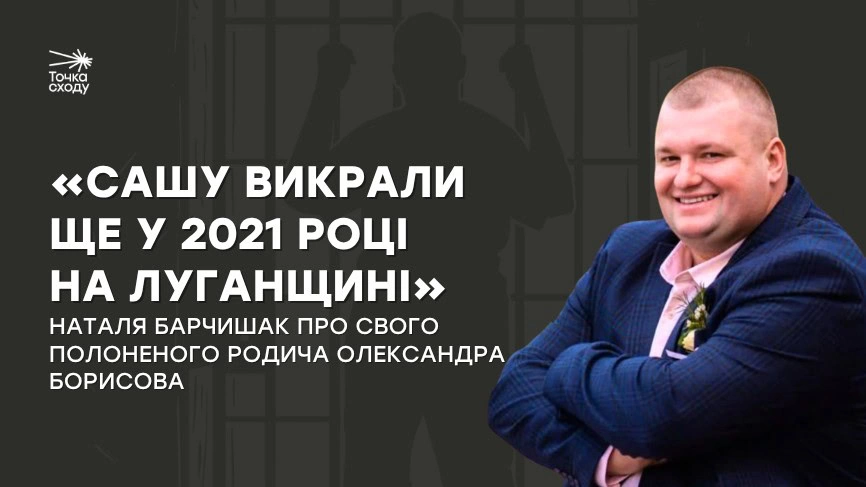
"Sasha was abducted back in 2021 in the Luhansk region"
Source: Tochka Vostoka
Author: Anna Drobot
Oleksandr Borisov has been held captive for over 5 years. He was abducted on January 6, 2021, in the Luhansk region.
Over the years, he has endured the basements of the so-called “LNR MGB,” torture, a fabricated 14-year sentence, maximum-security prisons, solitary confinement, beatings, transfer to Russia, and almost complete isolation from the world.
A man who previously weighed 170 kilograms due to health issues has lost over 70 kilograms in captivity, has gone completely gray, and continues to survive in conditions where there is neither proper medical care nor even the right to be treated humanely.
Alexander’s story was shared with “Tochka Vostoka” by his relative, Natalia Barchishak.
“Sasha stayed in the occupied territory for his parents’ sake”
“Alexander worked as a driver his whole life. He ran a small freight and passenger transport business, had his own minibus, drove people on errands, and helped with everyday trips. For a long time, he lived in Sentyanivka in the Luhansk region, and then moved to Kadiivka. After 2014, his life—like that of many people in the occupied territories—changed completely. In 2015, he traveled to Kharkiv, but only briefly—his mother had fallen seriously ill, and his parents categorically refused to leave the occupied territory. Moreover, his father had been granted a disability rating after being wounded in 2014. So Sasha returned to be with his family.”
“Sasha was abducted on January 6, 2021.”
“That day, he and his wife were in a rented apartment in Kadiivka. It was Christmas Eve, and they had been invited to visit friends. Sasha went out to run some errands, while his wife stayed home to get ready. When he called and said he had already arrived, she went to the window and saw his car parked near the house. She went downstairs, but neither the car nor he was there anymore. His wife started calling him. At first, he didn’t answer. Then he finally picked up the phone and said only: “I drove off to run some errands. Don’t worry. I’ll be back soon.” And then the phone went dead. That same day, his younger brother, Igor, was also abducted—they snatched him right out of his car at an intersection and took him away. It later became known that both were being held in Luhansk. Igor was released in March 2021. But he returned a completely different person—gray-haired, frightened, and withdrawn. He categorically refused to say anything.”
“From January 2021 until nearly the end of that year, Oleksandr was held in the basement of the ‘LNR MGB’” “He was systematically subjected to both physical and psychological pressure. Interrogations involved the use of electric shocks; he was beaten with feet and batons, wrapped in plastic wrap, and held in completely unsanitary conditions. For some time, he was forced to sleep directly on the concrete floor, with only a piece of cardboard as a mattress. For the first two months after his abduction, he had absolutely no hygiene supplies, no opportunity to wash, or even to change his clothes. They did not allow a lawyer to see him until they had obtained everything they wanted—the “confessions” they needed and his signatures on the charges. In the “verdict,” this was phrased as “aiding a foreign state in activities directed against the security of the Luhansk People’s Republic.”
“In December 2021, Sasha was transferred to the Luhansk Pretrial Detention Center.”
“The psychological and physical pressure did not stop. On February 21, 2022, based on fabricated charges, the so-called “Supreme Court of the LPR” sentenced Oleksandr to 14 years in prison. The conditions of detention were brutal: every morning at six o’clock, the prisoners were woken up to the Russian national anthem and forced to sing along. Refusal meant beatings or solitary confinement. Sasha was repeatedly placed in solitary confinement. The cells were small and overcrowded. In the summer, it was stifling with no ventilation; in the winter, it was freezing, with temperatures barely rising above a few degrees. There was virtually no medical care. The food was terrible. He wasn’t always taken out for walks, and calls home were prohibited. In November 2024, he was transferred to Russian territory. He spends most of his time in solitary confinement. Red Cross representatives are not allowed to visit him, and medical care remains unavailable. Sasha has lost a great deal of weight. Before his capture, due to serious health problems, he weighed about 170 kilograms. Now he weighs less than 100. Over the years of captivity, his hair has turned completely gray.”
“The scariest thing is realizing how long he’s been living in this hell.”
“Oleksandr is a very active person. He’s loud, energetic, and very assertive. He’s not the type to sit quietly in a corner. He’s very sociable, quickly gets along with people, knows how to analyze a situation, and can adapt even in very difficult circumstances. This has been confirmed to me by people who were held captive with him. It’s very important to me to know that he’s holding up mentally. Because, honestly, one of my greatest fears is that a person might lose hope after so many years. For almost six years now, my struggle has been a fight for his freedom. My goal is to be his voice. To make sure he isn’t forgotten. To ensure his name isn’t lost among the thousands of other Ukrainians who are also being held captive. I can’t influence political decisions or determine who gets on the prisoner exchange lists or when. But I can do what’s within my power: write appeals, file complaints, speak with government agencies, participate in protests, and keep people reminded of him and the others. And my fight has long since been about more than just Oleksandr. It’s for all Ukrainian civilians who are being illegally held captive. And I simply have no right to remain silent about this.”
This article was made possible with the support of the “Voices of Ukraine” / SAFE program, coordinated by the European Center for Press and Media Freedom in collaboration with the Public Interest Journalism Lab. “Voices of Ukraine” / SAFE is implemented as part of the Hannah Arendt Initiative with the support of the German Federal Foreign Office. The program does not influence editorial policy, and this article contains solely the views and information provided by the editorial team.
Author: Anna Drobot
Oleksandr Borisov has been held captive for over 5 years. He was abducted on January 6, 2021, in the Luhansk region.
Over the years, he has endured the basements of the so-called “LNR MGB,” torture, a fabricated 14-year sentence, maximum-security prisons, solitary confinement, beatings, transfer to Russia, and almost complete isolation from the world.
A man who previously weighed 170 kilograms due to health issues has lost over 70 kilograms in captivity, has gone completely gray, and continues to survive in conditions where there is neither proper medical care nor even the right to be treated humanely.
Alexander’s story was shared with “Tochka Vostoka” by his relative, Natalia Barchishak.
“Sasha stayed in the occupied territory for his parents’ sake”
“Alexander worked as a driver his whole life. He ran a small freight and passenger transport business, had his own minibus, drove people on errands, and helped with everyday trips. For a long time, he lived in Sentyanivka in the Luhansk region, and then moved to Kadiivka. After 2014, his life—like that of many people in the occupied territories—changed completely. In 2015, he traveled to Kharkiv, but only briefly—his mother had fallen seriously ill, and his parents categorically refused to leave the occupied territory. Moreover, his father had been granted a disability rating after being wounded in 2014. So Sasha returned to be with his family.”
“Sasha was abducted on January 6, 2021.”
“That day, he and his wife were in a rented apartment in Kadiivka. It was Christmas Eve, and they had been invited to visit friends. Sasha went out to run some errands, while his wife stayed home to get ready. When he called and said he had already arrived, she went to the window and saw his car parked near the house. She went downstairs, but neither the car nor he was there anymore. His wife started calling him. At first, he didn’t answer. Then he finally picked up the phone and said only: “I drove off to run some errands. Don’t worry. I’ll be back soon.” And then the phone went dead. That same day, his younger brother, Igor, was also abducted—they snatched him right out of his car at an intersection and took him away. It later became known that both were being held in Luhansk. Igor was released in March 2021. But he returned a completely different person—gray-haired, frightened, and withdrawn. He categorically refused to say anything.”
“From January 2021 until nearly the end of that year, Oleksandr was held in the basement of the ‘LNR MGB’” “He was systematically subjected to both physical and psychological pressure. Interrogations involved the use of electric shocks; he was beaten with feet and batons, wrapped in plastic wrap, and held in completely unsanitary conditions. For some time, he was forced to sleep directly on the concrete floor, with only a piece of cardboard as a mattress. For the first two months after his abduction, he had absolutely no hygiene supplies, no opportunity to wash, or even to change his clothes. They did not allow a lawyer to see him until they had obtained everything they wanted—the “confessions” they needed and his signatures on the charges. In the “verdict,” this was phrased as “aiding a foreign state in activities directed against the security of the Luhansk People’s Republic.”
“In December 2021, Sasha was transferred to the Luhansk Pretrial Detention Center.”
“The psychological and physical pressure did not stop. On February 21, 2022, based on fabricated charges, the so-called “Supreme Court of the LPR” sentenced Oleksandr to 14 years in prison. The conditions of detention were brutal: every morning at six o’clock, the prisoners were woken up to the Russian national anthem and forced to sing along. Refusal meant beatings or solitary confinement. Sasha was repeatedly placed in solitary confinement. The cells were small and overcrowded. In the summer, it was stifling with no ventilation; in the winter, it was freezing, with temperatures barely rising above a few degrees. There was virtually no medical care. The food was terrible. He wasn’t always taken out for walks, and calls home were prohibited. In November 2024, he was transferred to Russian territory. He spends most of his time in solitary confinement. Red Cross representatives are not allowed to visit him, and medical care remains unavailable. Sasha has lost a great deal of weight. Before his capture, due to serious health problems, he weighed about 170 kilograms. Now he weighs less than 100. Over the years of captivity, his hair has turned completely gray.”
“The scariest thing is realizing how long he’s been living in this hell.”
“Oleksandr is a very active person. He’s loud, energetic, and very assertive. He’s not the type to sit quietly in a corner. He’s very sociable, quickly gets along with people, knows how to analyze a situation, and can adapt even in very difficult circumstances. This has been confirmed to me by people who were held captive with him. It’s very important to me to know that he’s holding up mentally. Because, honestly, one of my greatest fears is that a person might lose hope after so many years. For almost six years now, my struggle has been a fight for his freedom. My goal is to be his voice. To make sure he isn’t forgotten. To ensure his name isn’t lost among the thousands of other Ukrainians who are also being held captive. I can’t influence political decisions or determine who gets on the prisoner exchange lists or when. But I can do what’s within my power: write appeals, file complaints, speak with government agencies, participate in protests, and keep people reminded of him and the others. And my fight has long since been about more than just Oleksandr. It’s for all Ukrainian civilians who are being illegally held captive. And I simply have no right to remain silent about this.”
This article was made possible with the support of the “Voices of Ukraine” / SAFE program, coordinated by the European Center for Press and Media Freedom in collaboration with the Public Interest Journalism Lab. “Voices of Ukraine” / SAFE is implemented as part of the Hannah Arendt Initiative with the support of the German Federal Foreign Office. The program does not influence editorial policy, and this article contains solely the views and information provided by the editorial team.
This is an automatic translation generated by DeepL.