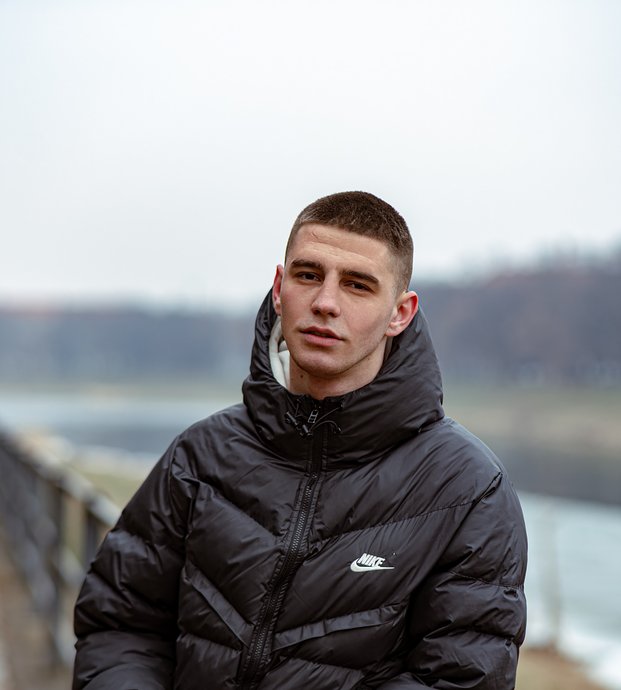
Robert Balogh from Uzhhorod released from captivity: "In the cell, I set a goal - to save myself as much as possible"
Source: Varosh
Author: Galina Gychka
Robert Baloha, a resident of Uzhhorod, will turn 23 in mid-March. Six months ago, on Ukraine’s Independence Day, he and 114 other Ukrainian soldiers were released from Russian captivity. The young man spent 2.5 years in Russian detention centers.
Robert spoke with Varosh about his time in captivity, his return, and his plans for the future. Below is his account.
— After high school, I joined the army and served in Marine Corps intelligence. The war caught us near Crimea, in Skadovsk. None of us believed it would actually start, — the young man says. — I even asked my superiors, but they didn’t believe it either. Although we had been trained for such a scenario. Starting around early 2022, there were a lot of drills; before that, there were far fewer. Everything became completely clear once the offensive began.
At 4 a.m., we were woken by an alarm; I remember the sky was so red… The Russians were coming in right from Crimea; there were a lot of them, so we were surrounded on the very first day. Was it scary? Of course! We fought to the last, and then the commander gave the order to retreat because there was no chance left. We withdrew, and about a month later, about thirteen of us were taken prisoner.
At first it was very scary, then it got easier. The hardest part was not knowing what was happening in Ukraine while you’re sitting here in a cell. The guards tried to demoralize us, telling us how bad things were in Ukraine. We didn’t believe them, of course. No one believed them.
I was thrown into cells in different cities—I was in a pretrial detention center in Voronezh, in Volgograd, in the Rostov region; in Sevastopol, they threw me into camps.
My last city of detention was Volgograd; I spent a year there. I was transferred there in a convoy; along with me, there were 80 Azov fighters and another 20 like me, from different units. The largest cell held 20 people, half of them Azov fighters. In one of the detention centers, I met a comrade with whom I had been captured together. What emotions that brought up!… We were later exchanged together.
Were we taken for interrogations?.. Yes, just like everyone else. They asked if we had killed civilians or committed crimes against the population. The treatment of us was utterly inhumane: they beat us on the legs, ribs, and with electric shocks... They mostly took me for a polygraph test too, because they didn’t believe me.
Lawyers only visited the convicted prisoners. The Red Cross visited us, but those visits were of no use: they weren’t allowed to do much… If you got sick, you could see a doctor, but usually, when you left the cell, you came back with new injuries, because on the way you’d get a good beating with batons and electric shockers. I never once saw a doctor. The guys from our cell who sought medical help received only minimal treatment—green antiseptic, analgin, nothing more… When something truly critical happened, like a heart attack or something similar, they were treated at the hospital. I also know of cases where our guys died because they got sick and weren’t helped…
We had absolutely no news from Ukraine; we picked up bits and pieces of information by chance, from the guards’ conversations among themselves. That’s how we heard that Kherson had been recaptured. How happy we were!
— Did you think about your future back then?
— To be honest, I was preparing myself for five years. It was easier for me because I was only 20. And then, after my release, I would be 25 and could still start all over again. I simply set a goal to preserve myself as much as possible. I think it worked.
One day, they came into our cell, called out our names, led us out, put us in a police van, and drove us away. We traveled for three days, blindfolded. We realized we were being taken for an exchange when they transferred us from the plane to a bus. This was in the Donetsk region. That’s when we were absolutely certain we were being taken for an exchange. Because even back in the cells, we’d been saying to each other that usually, when they transport prisoners, they don’t put them on buses. And if they do put you on a bus, it’s most likely an exchange. Once on the bus, they told us, “Don’t even think about making a move; just hold out for a day and you’ll be home.” You’re on your “final journey.”
So they brought us from Donetsk to the border with Belarus, took the blindfolds off, gave us something to eat, and then the journalists arrived. That’s how we were exchanged... When they gave us phones, I called my mom. She already suspected I’d be exchanged, because the day before the exchange, the commander had called her and said I might be included in this exchange. So she was already waiting for my call.
They didn’t let us see our families right away; we had to be in quarantine for a week while they tested us for various illnesses. Then they immediately took us to a sanatorium for rehabilitation and gave us a full medical checkup. I had scars and bruises, but nothing serious—no major injuries. I’d lost 20 kilograms: I weighed 78 in the army, and when I returned, I weighed 58. They allowed family members to visit those of us who were healthy. A week later, my mom came to see me. I was so emotional when I saw her!...
After returning home, Robert Balog began preparing to apply to Uzhhorod University. He says he wants to be a programmer and study cybersecurity. He’s been building websites on his own since he was 14, so he has the experience, but now he needs a college degree.
At the time of our conversation, Robert was in Odesa; he then moved to Vinnytsia and only a few days later returned to his hometown of Uzhhorod.
“My cellmate is in the hospital in Odesa; we spent a year together in a cell, and we were released at the same time. His knees were broken right before the prisoner exchange, so I came to see him.
*This material was prepared as part of the Dutch-Slovak-Ukrainian project “Strengthening the Rule of Law at the Local/Regional Level in Ukraine: The Case of Zakarpattia Oblast,” which is implemented with the support of the Government of the Kingdom of the Netherlands under the MATRA program, a key Dutch program supporting social transformation.
The project is implemented by the Institute for Central European Strategy (ICES) in collaboration with the Dutch organization Foundation for Justice, Integrity and Anti-Corruption (FJIAC) and the Slovak Transparency International Slovensko (TI SK) in partnership with the Transcarpathian Regional State Administration and the Regional Council.
**This material does not reflect the position or opinion of the grant project’s implementers or donors. Varosh is solely responsible for the content of its publications.
Author: Galina Gychka
On life in Russian captivity and beyond
Robert Baloha, a resident of Uzhhorod, will turn 23 in mid-March. Six months ago, on Ukraine’s Independence Day, he and 114 other Ukrainian soldiers were released from Russian captivity. The young man spent 2.5 years in Russian detention centers.
Robert spoke with Varosh about his time in captivity, his return, and his plans for the future. Below is his account.
The Start of Full-Scale War
— After high school, I joined the army and served in Marine Corps intelligence. The war caught us near Crimea, in Skadovsk. None of us believed it would actually start, — the young man says. — I even asked my superiors, but they didn’t believe it either. Although we had been trained for such a scenario. Starting around early 2022, there were a lot of drills; before that, there were far fewer. Everything became completely clear once the offensive began.
At 4 a.m., we were woken by an alarm; I remember the sky was so red… The Russians were coming in right from Crimea; there were a lot of them, so we were surrounded on the very first day. Was it scary? Of course! We fought to the last, and then the commander gave the order to retreat because there was no chance left. We withdrew, and about a month later, about thirteen of us were taken prisoner.
Captivity
At first it was very scary, then it got easier. The hardest part was not knowing what was happening in Ukraine while you’re sitting here in a cell. The guards tried to demoralize us, telling us how bad things were in Ukraine. We didn’t believe them, of course. No one believed them.
I was thrown into cells in different cities—I was in a pretrial detention center in Voronezh, in Volgograd, in the Rostov region; in Sevastopol, they threw me into camps.
My last city of detention was Volgograd; I spent a year there. I was transferred there in a convoy; along with me, there were 80 Azov fighters and another 20 like me, from different units. The largest cell held 20 people, half of them Azov fighters. In one of the detention centers, I met a comrade with whom I had been captured together. What emotions that brought up!… We were later exchanged together.
Were we taken for interrogations?.. Yes, just like everyone else. They asked if we had killed civilians or committed crimes against the population. The treatment of us was utterly inhumane: they beat us on the legs, ribs, and with electric shocks... They mostly took me for a polygraph test too, because they didn’t believe me.
Lawyers only visited the convicted prisoners. The Red Cross visited us, but those visits were of no use: they weren’t allowed to do much… If you got sick, you could see a doctor, but usually, when you left the cell, you came back with new injuries, because on the way you’d get a good beating with batons and electric shockers. I never once saw a doctor. The guys from our cell who sought medical help received only minimal treatment—green antiseptic, analgin, nothing more… When something truly critical happened, like a heart attack or something similar, they were treated at the hospital. I also know of cases where our guys died because they got sick and weren’t helped…
We had absolutely no news from Ukraine; we picked up bits and pieces of information by chance, from the guards’ conversations among themselves. That’s how we heard that Kherson had been recaptured. How happy we were!
— Did you think about your future back then?
— To be honest, I was preparing myself for five years. It was easier for me because I was only 20. And then, after my release, I would be 25 and could still start all over again. I simply set a goal to preserve myself as much as possible. I think it worked.
The Exchange
One day, they came into our cell, called out our names, led us out, put us in a police van, and drove us away. We traveled for three days, blindfolded. We realized we were being taken for an exchange when they transferred us from the plane to a bus. This was in the Donetsk region. That’s when we were absolutely certain we were being taken for an exchange. Because even back in the cells, we’d been saying to each other that usually, when they transport prisoners, they don’t put them on buses. And if they do put you on a bus, it’s most likely an exchange. Once on the bus, they told us, “Don’t even think about making a move; just hold out for a day and you’ll be home.” You’re on your “final journey.”
So they brought us from Donetsk to the border with Belarus, took the blindfolds off, gave us something to eat, and then the journalists arrived. That’s how we were exchanged... When they gave us phones, I called my mom. She already suspected I’d be exchanged, because the day before the exchange, the commander had called her and said I might be included in this exchange. So she was already waiting for my call.
They didn’t let us see our families right away; we had to be in quarantine for a week while they tested us for various illnesses. Then they immediately took us to a sanatorium for rehabilitation and gave us a full medical checkup. I had scars and bruises, but nothing serious—no major injuries. I’d lost 20 kilograms: I weighed 78 in the army, and when I returned, I weighed 58. They allowed family members to visit those of us who were healthy. A week later, my mom came to see me. I was so emotional when I saw her!...
At Home
After returning home, Robert Balog began preparing to apply to Uzhhorod University. He says he wants to be a programmer and study cybersecurity. He’s been building websites on his own since he was 14, so he has the experience, but now he needs a college degree.
At the time of our conversation, Robert was in Odesa; he then moved to Vinnytsia and only a few days later returned to his hometown of Uzhhorod.
“My cellmate is in the hospital in Odesa; we spent a year together in a cell, and we were released at the same time. His knees were broken right before the prisoner exchange, so I came to see him.
*This material was prepared as part of the Dutch-Slovak-Ukrainian project “Strengthening the Rule of Law at the Local/Regional Level in Ukraine: The Case of Zakarpattia Oblast,” which is implemented with the support of the Government of the Kingdom of the Netherlands under the MATRA program, a key Dutch program supporting social transformation.
The project is implemented by the Institute for Central European Strategy (ICES) in collaboration with the Dutch organization Foundation for Justice, Integrity and Anti-Corruption (FJIAC) and the Slovak Transparency International Slovensko (TI SK) in partnership with the Transcarpathian Regional State Administration and the Regional Council.
**This material does not reflect the position or opinion of the grant project’s implementers or donors. Varosh is solely responsible for the content of its publications.
This is an automatic translation generated by DeepL.