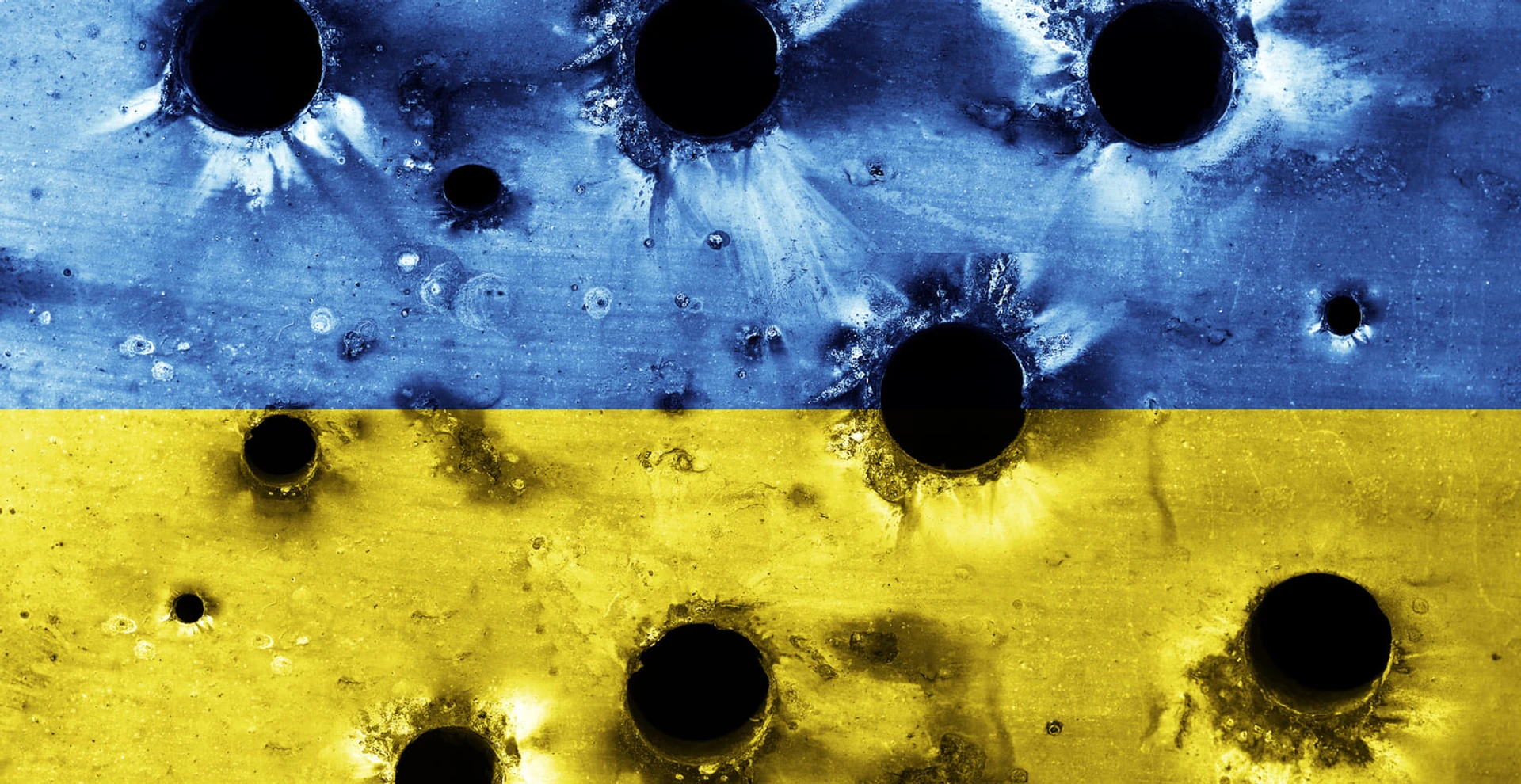
Invisible to the Geneva Conventions: Why It Is So Difficult for Ukraine to Repatriate Civilian Prisoners
Source: Ukrainska Pravda
Author: Diana Krechetova
As of July 2023, more than 25,000 Ukrainian civilians are being held captive in Russia. However, these figures are not final.
According to the Associated Press, which obtained a Russian government document, Russia plans to establish 25 new “correctional colonies” and six other detention centers for civilians in the occupied territories of Ukraine by 2026.
Prisoners of war are subject to exchange at the state level, but the situation regarding civilians is much more complicated. Ukraine cannot conduct exchanges of civilians under international humanitarian law. However, this does not stop Russia—it has even attempted to use civilian hostages to secure the return of its military personnel.
Since the start of the full-scale war, Ukrainian civil society organizations, working in particular with law enforcement agencies, have been handling the return of civilians from Russian captivity. One of them is the “Search for the Missing” project.
“Ukrainska Pravda. Life” spoke with the initiative’s leader, Kateryna Osadcha, to find out how and how successfully the process of returning civilian hostages to Ukraine is proceeding. At the same time, Vitaliy Chornenkyi, a human rights activist with the “Right to Protection” Charitable Foundation, explained what assistance Ukrainian civilians and the families of citizens who survived Russian captivity are entitled to.
We also spoke with:
a Ukrainian woman who faced the challenge of bringing her father home from captivity,
a man who survived Russian captivity.
We heard about the courage our people showed while under occupation and the atrocities committed against them by the Russians.
Next—the first-person accounts of Natalia (name changed for security reasons) and Igor.
The story of the abduction of Natalia’s father in occupied Kherson
Kherson endured 255 days of the Russian invasion. The city became a symbol of resistance for Ukrainians, who from the very first days of the occupation took to the streets to protest against the armed Russians who had seized their small homeland.
Kherson was under occupation from the start of Russia’s
full-scale invasion ***
I was born in Kherson and lived there until I was 17. Then I moved to Kyiv to study. When the full-scale war began, I left for Paris to continue my studies. I’m 23 now.
My parents were in Kherson when the war broke out. Back in 2021, they were already saying that a war was coming. My parents are very engaged; they followed all the news and understood what was happening. They tried to get that across to me, but I just laughed. It turned out I shouldn’t have.
They had a plan in case of an invasion. Dad said that if anything started, Mom and I should get in the car and head toward the nearest border with Moldova. I asked, “What about you?” He said he’d stay in Kherson.
Then we all forgot about it, but on the night of February 24, I got a call saying that the airport in Kherson was being bombed and that Mom was getting ready to leave. She left right away; Dad stayed behind. And with him, my whole family.
Dad
Dad stayed behind to defend Kherson. He’s still young—not even fifty yet. But he retired on January 1, 2022, because he’d been in military service (though not in the Ukrainian Armed Forces). And then the war started. He went to the territorial defense unit on the very first day. But—you’ll laugh—it turned out to be closed.
The city was in chaos; a huge line had formed at the registration site, but no one was being accepted. It was unclear what was happening. Dad went there the next day, and that’s when he finally signed up for the Territorial Defense Forces.
Since then, he hasn’t said much about what was happening in Kherson. I found out everything later, after he was abducted, when I had to piece together the events and figure out what had happened.
My father didn’t stay at the TRO for long, because it was disbanded: by March 1, the city was already occupied.
After that, my father was involved in partisan activities. I know that he was directly involved in the explosions near the airport in Chornobaivka. He conducted reconnaissance and provided information to our side. How do I know this? He would call me sometimes and ask if I had any acquaintances in Snigurivka. He said he needed information about what was happening there. And I found people for him in Snigurivka.
After that, my dad would send me screenshots of messages—without phone numbers—where people thanked him for the valuable information. Of course, all these screenshots were later deleted, but I saved them for myself.
All of this continued after I left the country with my mom.
For
reference
During the full-scale war, Chornobaivka was dubbed the Ukrainian Bermuda Triangle. Russian generals and helicopters “disappeared” there without a trace. The airport became a graveyard for Russians time and time again. As of August 14, 2022, the Ukrainian army had carried out 28 strikes on enemy positions.
The Ukrainian Armed Forces liberated Chornobaivka from occupation on November 11.
Chornobaivka was dubbed the Ukrainian Bermuda Triangle.
The Day the FSB Agents Abducted My Dad
Even before that, I was worried about my dad anyway, because from the start of the occupation until the day Kherson was liberated, people were being actively abducted. Even if my father had simply been living there (and not engaged in partisan activities—ed.), the danger would still have existed.
His plan was this: he knows nothing and can say nothing. My dad deliberately didn’t memorize any numbers so that later, if necessary, he could tell the truth and not harm anyone.
How it all happened
Early in the morning on April 19, FSB agents in balaclavas came to our house. That day, my grandmother—my dad’s mother—was staying overnight at our house. She went out and asked the occupiers what they wanted. They said they were looking for weapons. Then they searched our entire house. After that, they took my dad away. My grandmother asked why, and they replied that “it’s just their job.”
That was the day we lost contact with him. My mom and I didn’t find out that the occupiers had abducted my father until April 20.
The Russians took my dad and his two phones. We haven’t heard from him or seen him since then. We don’t know how he’s doing, where he is, or if he’s even alive…
Even during the occupation, my grandmother would go to the Russian command post in the courthouse and to other locations where prisoners were being held—trying to find out at least some information. She was hoping for confirmation that my dad was being held in one of those buildings. That’s because some people were given that information, and some even managed to persuade the occupiers to release their relatives.
When my dad was abducted, I tried to talk to all the locals whose relatives had been released from captivity—I wanted to find out how they’d managed to do it. I tried to explore every possible option, but in our case, none of it worked.
Someone definitely turned my father in, because there were so many collaborators in Kherson.
“In the first few months after my dad was abducted, I was still full of optimism”
Immediately after my dad was abducted, we wrote to every agency—everywhere we possibly could. The police, the SBU, and then the prosecutor’s office contacted us. In France, I tried to get the International Committee of the Red Cross involved, but they aren’t helping at all.
Only our civil society organizations are helping. Yes, they’re much smaller, but at least they provide some information, and it’s clear that people are working hard and are committed to finding the captives. This gives me hope, because I haven’t heard or seen anything from our authorities in over a year.
A month after I filed the missing person report, I received a call from the prosecutor’s office. The prosecutor was very kind to me then. I hoped that they would finally help me find out something about my father. It was only the second month, and I was still full of optimism.
The prosecutor conducted an interview and asked me to send him the IMEI numbers of my dad’s phones. These are the numbers of the devices that were taken along with him. One was his personal phone; the other was needed for emergency communication. I sent them, and then I also helped file requests with the mobile carriers so they could provide information on where the phones’ locations had been tracked.
The prosecutor assured me that we would receive responses from all the carriers.
However, these two phones still haven’t been added to the international wanted list. If the phones had been added to the international wanted list and it turned out that they were on Russian territory, then it would be possible to prove that my dad is also somewhere in Russia. Or at least confirm that he is being held captive.
“It is ‘very difficult’ for Ukrainian authorities to recognize my father as a prisoner of war”
When I submitted information to the Coordination Headquarters stating that my father had been taken prisoner and pointed out that there were witnesses—my grandmother and our neighbors—I was asked if I had any evidence in the form of photos or videos. I said, “No,” and thought to myself: Is this a joke? FSB agents were in our home—was my grandmother supposed to film that on video? Or the neighbors? Who was supposed to film the moment my dad was being taken away? They’re not suicidal, after all.
My father is supposedly considered abducted, but the Ministry of Reintegration has been taking a very long time to review my application to have my father recognized as a prisoner of war because “there is no evidence.” Here, everything can only be based on witnesses, and without photos or videos, they don’t believe us. This is outrageous.
“No one cares about civilians”
My dad has civilian status. But they took him away because he was in the Territorial Defense Forces, even though that wasn’t documented anywhere. He was a gunner, helping our military. As I’ve already said, chaos reigned in Kherson. My dad sent me incomplete, handwritten lists. They listed surnames and indicated how many weapons each person had. There are 60 people on that piece of paper.
This information isn’t available anywhere else, so no one except the witnesses can confirm that my dad was actually in the TRO. This is very unfortunate, because with this evidence, it would be possible to prove in court that he is a prisoner of war, not a civilian prisoner. But the court requires evidence; witnesses alone won’t be enough.
I want to change my father’s status to prisoner of war because that’s how they handle such cases. Prisoners of war are exchanged. I contacted the TRO asking them to provide confirmation that my father was affiliated with them. I also reached out to his military unit and the Ministry of Defense, asking them to recognize him as a soldier. The TRO replied that all the documents had been destroyed and they couldn’t help in any way.
At the same time, the Russians likely had all those lists anyway. The occupiers could have known the last name of every TRO member, but our people destroyed those documents. So it turns out they only made things worse.
Natalia’s father (name changed) was abducted by the occupiers in April 2022.
“All the information I have is unofficial”
Unfortunately, the information I have is unofficial. What have I managed to find out over the past year?
My dad’s friend managed to send a package to the pretrial detention center through an acquaintance in Crimea. The package, addressed to my father, was accepted there. If they accepted the package, there’s a good chance he was at least there at some point.
After that, we reached out to the Crimea SOS civic initiative, where they told us they also had information that my dad was being held in that detention center.
This seemed unreal to me, because two independent sources—albeit very unreliable ones—pointed to the exact same location as my father’s probable whereabouts. That was in early March.
However, during that time, prisoners could have been transferred—particularly to Russia. Anything could have happened.
I need to act very quickly here, but I can’t, because I’m not the police or the SBU. And the police and the SBU aren’t helping me.
The Story of the Captivity of Kherson Volunteer Igor
My name is Igor; I’m originally from the city of Izmail. I’ve lived in Kherson since I was 8. I’m 34 now. I currently live in Odesa.
When the full-scale war began, locals formed a small community organization in Kherson. We helped people and provided free meals for half a year. At first, we cooked meals on minimal stoves. As more and more people learned about us, many locals began to come. People from Kherson reached out with their requests, ranging from basic hygiene supplies to medications.
That’s when we started helping at an accelerated pace. Most recently, we managed to fully provide for the needs of retirees and people with disabilities in the village of Sadovoye near Kherson.
How Igor Was Taken Prisoner
I was taken prisoner on September 8, 2022, in occupied Kherson. But I don’t like that word. I call it a “camp.”
It happened not far from my house. I was supposed to go to the store with a friend’s father, who had asked for help with some shopping. I went outside, got into the front seat of the car, and he sat in the back seat. A minibus was blocking our way out.
At first, two or three men jumped out of it. They were in civilian clothes and started hitting the car and trying to open the doors. I tried to drive away because I didn’t understand what was happening. Then four or five men in green uniforms with automatic rifles jumped out of the van. That’s when I realized there was no point in driving away—they might shoot me.
I stopped; they tried to smash the window, so I opened the car door myself. They dragged me out, threw me to the ground, put a bag over my head, pinned me face-down, sat on top of me, pinned my arms down, and handcuffed me.
Meanwhile, someone was searching the car. Then they loaded me into a van and took me away in an unknown direction.
Some of the occupiers drove off in my car. The man who was with me did too. I found out later that he was released that same day. He was about 70 years old.
Igor was taken captive in September 2022.
A Hellish Captivity
I spent 45 days there.
At first, I didn’t understand where they had taken me. On the first day, after being tortured, they threw me into a cell. There was a man there. We started talking, and he told me that we were in what used to be either the city courthouse or the land registry office. It’s an administrative building in the city center that they had seized.
Two and a half days later, I was transferred to a temporary detention center, where I was stuck for 17–20 days.
They treated us like shit. That’s the best way I can put it.
Their tactic was this: for the first 2–3 days, they put maximum psychological pressure on us. Then they’d choke us, put gas masks on us, and cut off the air supply; they’d even smoke into the masks. They’d put bags over our heads and pour boiling water on our legs. They’d take pliers and pull out teeth. With some, they just tried.
Fortunately, they didn’t pull any of my teeth out. They filed down the teeth of the guys in the neighboring cells with a file. One prisoner had eight teeth pulled out. They beat him with a stun gun until he lost consciousness. They connected cords from an old Soviet telephone to the power grid and wrapped the wires around his arms, legs, tongue, ears, nose, and genitals.
They could shock me with electricity, use a stun gun, and then beat me with batons all at the same time. The flesh on my left arm separated from the bone. My arm swelled up and turned black.
I have scars on my legs. I also had two through-and-through wounds in my leg—one larger, the other smaller. I don’t know when they appeared because I was unconscious. I saw them when I came to.
Water torture. First, they stuffed a sock into my mouth, and then they poured water over it. I was choking. Hunger and the lack of water and food no longer felt like torture. It was just a way to make me lose weight.
There were two of us in the first solitary confinement cell. It was the harshest there, because we were handcuffed 24 hours a day. We couldn’t stand up; we slept sitting up.
There were 6 to 8 people in the isolation cell. Some left, some arrived. When they sent me back to the basement, there were four of us at first; then another guy was brought in, but they released him after two weeks.
I now know that I was ratted out by a local who, while drunk in the company of some people I didn’t know well, started saying he wasn’t afraid of the Russians. The “leftists” heard this, after which they took him and his stepfather to the basement and began torturing them. He broke down and started framing people, including me.
“Before our release, the Russians said they were taking us to be executed.”
They took us out to a field one and a half to two weeks before the de-occupation of Kherson. They loaded everyone from our basement into two cars, tied our hands and blindfolded us. They said they were taking us to be executed. They threatened us with guns and threw firecrackers at us.
We drove for about 40 minutes. They took us outside Kherson, made us kneel in a field, and started recording a video message. They forced each of us to say certain words on camera.
Then one of the occupiers began ostentatiously reloading his assault rifle—so that everyone could hear. Thank God, it was just to scare us.
In the end, they dumped us near the village of Kizomys and told us to head to Mykolaiv.
We were dirty, smelly, without documents, and wearing women’s clothes because it was cold in the basements—we put on whatever we could find.
We split up: I teamed up with an older man, and we walked to Kizomys. At first we walked, then we got a ride. This man had an acquaintance there. But when we got to the village, it turned out she was no longer there. She had left, but her sister was still there.
The woman took our word for it: who we were and where we were from. We hadn’t washed for 40 days. We looked like vagrants.
She let us stay in a neighbor’s summer kitchen. She gave us some clothes, a razor, and scissors. We got our hair cut and shaved.
Returning to occupied Kherson at our own risk
Kizomys was also under occupation. The Russians were patrolling the area, conducting raids, searching for partisans and their own deserters.
Neither I nor this man had any documents, and there were still checkpoints in Kherson at the time. The man called his relatives. The next day, they brought him his documents and picked him up in a car. But I still didn’t have any documents.
Then we figured out a way for me to get out: an acquaintance had a pickup truck that he had disguised as a bread delivery truck. They introduced me as one of their workers who had forgotten his documents at home. That’s how I was taken to Kherson, which was still occupied at the time, even though the Russians had warned us not to return. And if we did return, we’d end up as food for the crayfish.
At our own risk, we did return home and stayed there until the city was liberated. We stayed at home the whole time and didn’t go out anywhere.
My family was in a state of uncertainty the entire time, as rumors were circulating that I had been taken to Crimea. Some people said I was in Krasnodar. After 45 days, I got in touch with them for the first time.
Igor spent 45 days in Russian captivity.
Consequences of Captivity
The handcuffs tore the tendons in my arms. My nerve endings healed incorrectly, which is why my arms are constantly numb now. My front teeth were damaged; I had surgery. My legs became very weak. I suffered concussions and had cracked ribs.
I’m also left with deep-seated fears. I’ll be working with a psychologist.
Right after my captivity, I struggled with insomnia: I couldn’t fall asleep until morning because the light in our cell was always on.
How the government
(didn’t) help a civilian hostage When Kherson was liberated, I submitted an application to the Ministry of Reintegration. They rejected both my application and those of the others I was held captive with.
I filled out the application form on their website. When I submitted it the first time, they said one document was missing. We revised it and resubmitted it, to which they replied that a certificate from the SBU was missing. We filed an official request with the SBU stating that we needed the relevant certificate. Their response: The SBU does not issue such certificates. After I submitted the SBU’s response to the commission under the Ministry of Reintegration, they demanded video evidence of how we were taken captive.
Of course, I don’t have any such videos. Ultimately, my request for assistance was denied. They told me to hire a lawyer and go to court.
The “Search for the Missing”
Project While organizations such as the International Committee of the Red Cross say they “don’t have the keys to the prisons” where Ukrainian prisoners are being held, Ukrainians are trying to locate missing civilians on their own.
“Search for the Missing” is a project dedicated exclusively to searching for civilians. It operates with the support of the National Police and the National Information Bureau (Ministry for the Reintegration of the Temporarily Occupied Territories of Ukraine).
In June of this year alone, the project received 134 reports regarding missing Ukrainian civilians. 132 of these cases were closed with the status “Found.” Six of these people, unfortunately, have died.
Currently, there are 878 open reports with various statuses (excluding confirmed captivity), and 278 are actively being searched for. In addition, it has now been confirmed that 367 Ukrainians are in captivity, and another 98 are likely to be as well.
The project team currently consists of about 40 people working in the Donetsk, Luhansk, Kharkiv, Zaporizhzhia, Kherson, and Kyiv regions. There is also a separate unit dedicated to searching for people in other parts of Ukraine.
According to the project leader, there is currently no single algorithm for searching for a person who has gone missing during wartime.
“It depends on the person’s location, the circumstances of their disappearance, and whether they are in occupied territory or government-controlled territory. It depends on whether anyone saw Russian military personnel take the person away on the street or not. Perhaps the person simply disappeared—left home and didn’t return. There are a great many facts that need to be cross-referenced,” emphasizes Kateryna Osadcha.
The search for missing persons is conducted not only with the help of a team of volunteers but also with the involvement of relatives and acquaintances of the missing civilians. All possible “tools” for the search are being utilized, including social media.
“The team reviews, for example, all possible Telegram channels—absolutely every single one that exists. Photos and videos of captivity, the occupation, and the distribution of humanitarian aid are very often posted there. We share all of this with the relatives because we simply cannot identify a person the way a relative can. The active participation of relatives in the search is very important,” the project leader concludes.
To search for Ukrainians in the occupied territories, the “Search for the Missing” team enlists volunteers who are able to transport humanitarian aid there, as well as people living under occupation.
The project team also enlists the help of those who have been successfully returned home to assist in the search for missing civilians.
“Recently, two men were released from civilian captivity after spending nearly a year there. They helped us identify others,” says Osadcha.
Kateryna Osadcha emphasizes that the greatest challenge in returning civilian hostages is that they are not subject to exchange at the state level.
“Civilian captivity is not considered prohibited by the Geneva Conventions because, in principle, it should not exist under any circumstances. We do not have Russian civilians whom we can exchange for our Ukrainian civilians. Because we are not barbarians. Therefore, the biggest challenge is that we need to devise a strategy and figure out how to bring our civilian captives home. The government needs to pay more attention to this,” the project leader emphasizes.
How to File a Missing Person
Report To file a missing person report, you can message the @UKRescueBot chatbot or the “Search for the Missing” Telegram channel. You can also submit a request on the website.
When information about a person with the relevant last name appears on the Telegram channel or on the website, you will receive an automatic notification from the bot.
You can also search for relatives using lists that the project team compiles independently based on data from volunteers, the police, territorial defense forces, and others. These lists are available at this link.
At the same time, if you have information about missing people, you can send it via email to: poshuk.war@gmail.com.
All information will be processed and forwarded to their relatives.
What kind of assistance from the state are Ukrainians and relatives of Ukrainians entitled to if they were taken hostage by the occupiers but managed to escape?
We reached out to Vitalii Chornenkyi, the legal aid coordinator at the “Right to Protection” Charitable Foundation, for clarification.
Supporting Ukrainians and the relatives of our fellow citizens who were taken as civilian hostages by the Russians but managed to escape is one of the state’s responsibilities.
Even before the full-scale invasion on January 26, 2022, the Verkhovna Rada of Ukraine adopted the Law “On Social and Legal Protection of Persons for Whom the Fact of Deprivation of Personal Liberty as a Result of Armed Aggression Against Ukraine Has Been Established, and their family members” (hereinafter referred to as Law No. 2010-IX). This law establishes the procedure for confirming that a person has been deprived of their personal liberty as a result of armed aggression against Ukraine.
Former prisoners of war and their relatives are entitled to assistance from the state.
Where should civilians turn to confirm that they were held captive?
They must apply directly to the Commission on Establishing the Fact of a Person’s Deprivation of Personal Liberty as a Result of Armed Aggression against Ukraine, which operates under the Ministry of Reintegration (hereinafter also referred to as the Commission).
This procedure applies to civilians who were deprived of their personal liberty by the Russians during the war, in particular while in the temporarily occupied territories of Ukraine or on the territory of the Russian Federation.
The following must be submitted to the Commission:
The following documents serve as the basis for recognizing a person as a family member of an individual who has been deprived of personal liberty as a result of armed aggression against Ukraine:
“Therefore, neither the SBU nor the Ministry of Reintegration directly makes decisions regarding the (non-)confirmation of the fact that a person was deprived of personal liberty as a result of armed aggression against Ukraine, nor regarding the refusal to recognize a person as a family member of such an individual.
Such decisions are made by the Commission. For the most part, this authority is discretionary, and witness testimony alone may indeed be insufficient to confirm the fact—and thus the financial payments made on the basis of such a decision,” the human rights advocate acknowledges.
What should you do if the Commission has not confirmed the fact of deprivation of liberty?
There is only one option—go to court and challenge the decision. The complaint is filed through administrative proceedings with the district administrative court.
What assistance and guarantees can former hostages and civilian hostages count on?
Ukrainian Law No. 2010-IX provides for various types of assistance and guarantees. Specifically, these include:
Annual state financial assistance in the amount of 100,000 hryvnias is provided to a person confirmed to have been held hostage, OR to members of that person’s family while the person is in captivity.
To receive this assistance, an application must be submitted to the Ministry of Reintegration using the prescribed form. The following must be attached to the application:
Author: Diana Krechetova
As of July 2023, more than 25,000 Ukrainian civilians are being held captive in Russia. However, these figures are not final.
According to the Associated Press, which obtained a Russian government document, Russia plans to establish 25 new “correctional colonies” and six other detention centers for civilians in the occupied territories of Ukraine by 2026.
Prisoners of war are subject to exchange at the state level, but the situation regarding civilians is much more complicated. Ukraine cannot conduct exchanges of civilians under international humanitarian law. However, this does not stop Russia—it has even attempted to use civilian hostages to secure the return of its military personnel.
Since the start of the full-scale war, Ukrainian civil society organizations, working in particular with law enforcement agencies, have been handling the return of civilians from Russian captivity. One of them is the “Search for the Missing” project.
“Ukrainska Pravda. Life” spoke with the initiative’s leader, Kateryna Osadcha, to find out how and how successfully the process of returning civilian hostages to Ukraine is proceeding. At the same time, Vitaliy Chornenkyi, a human rights activist with the “Right to Protection” Charitable Foundation, explained what assistance Ukrainian civilians and the families of citizens who survived Russian captivity are entitled to.
We also spoke with:
a Ukrainian woman who faced the challenge of bringing her father home from captivity,
a man who survived Russian captivity.
We heard about the courage our people showed while under occupation and the atrocities committed against them by the Russians.
Next—the first-person accounts of Natalia (name changed for security reasons) and Igor.
The story of the abduction of Natalia’s father in occupied Kherson
Kherson endured 255 days of the Russian invasion. The city became a symbol of resistance for Ukrainians, who from the very first days of the occupation took to the streets to protest against the armed Russians who had seized their small homeland.
Kherson was under occupation from the start of Russia’s
full-scale invasion ***
I was born in Kherson and lived there until I was 17. Then I moved to Kyiv to study. When the full-scale war began, I left for Paris to continue my studies. I’m 23 now.
My parents were in Kherson when the war broke out. Back in 2021, they were already saying that a war was coming. My parents are very engaged; they followed all the news and understood what was happening. They tried to get that across to me, but I just laughed. It turned out I shouldn’t have.
They had a plan in case of an invasion. Dad said that if anything started, Mom and I should get in the car and head toward the nearest border with Moldova. I asked, “What about you?” He said he’d stay in Kherson.
Then we all forgot about it, but on the night of February 24, I got a call saying that the airport in Kherson was being bombed and that Mom was getting ready to leave. She left right away; Dad stayed behind. And with him, my whole family.
Dad
Dad stayed behind to defend Kherson. He’s still young—not even fifty yet. But he retired on January 1, 2022, because he’d been in military service (though not in the Ukrainian Armed Forces). And then the war started. He went to the territorial defense unit on the very first day. But—you’ll laugh—it turned out to be closed.
The city was in chaos; a huge line had formed at the registration site, but no one was being accepted. It was unclear what was happening. Dad went there the next day, and that’s when he finally signed up for the Territorial Defense Forces.
Since then, he hasn’t said much about what was happening in Kherson. I found out everything later, after he was abducted, when I had to piece together the events and figure out what had happened.
My father didn’t stay at the TRO for long, because it was disbanded: by March 1, the city was already occupied.
After that, my father was involved in partisan activities. I know that he was directly involved in the explosions near the airport in Chornobaivka. He conducted reconnaissance and provided information to our side. How do I know this? He would call me sometimes and ask if I had any acquaintances in Snigurivka. He said he needed information about what was happening there. And I found people for him in Snigurivka.
After that, my dad would send me screenshots of messages—without phone numbers—where people thanked him for the valuable information. Of course, all these screenshots were later deleted, but I saved them for myself.
All of this continued after I left the country with my mom.
For
reference
During the full-scale war, Chornobaivka was dubbed the Ukrainian Bermuda Triangle. Russian generals and helicopters “disappeared” there without a trace. The airport became a graveyard for Russians time and time again. As of August 14, 2022, the Ukrainian army had carried out 28 strikes on enemy positions.
The Ukrainian Armed Forces liberated Chornobaivka from occupation on November 11.
Chornobaivka was dubbed the Ukrainian Bermuda Triangle.
The Day the FSB Agents Abducted My Dad
Even before that, I was worried about my dad anyway, because from the start of the occupation until the day Kherson was liberated, people were being actively abducted. Even if my father had simply been living there (and not engaged in partisan activities—ed.), the danger would still have existed.
His plan was this: he knows nothing and can say nothing. My dad deliberately didn’t memorize any numbers so that later, if necessary, he could tell the truth and not harm anyone.
How it all happened
Early in the morning on April 19, FSB agents in balaclavas came to our house. That day, my grandmother—my dad’s mother—was staying overnight at our house. She went out and asked the occupiers what they wanted. They said they were looking for weapons. Then they searched our entire house. After that, they took my dad away. My grandmother asked why, and they replied that “it’s just their job.”
That was the day we lost contact with him. My mom and I didn’t find out that the occupiers had abducted my father until April 20.
The Russians took my dad and his two phones. We haven’t heard from him or seen him since then. We don’t know how he’s doing, where he is, or if he’s even alive…
Even during the occupation, my grandmother would go to the Russian command post in the courthouse and to other locations where prisoners were being held—trying to find out at least some information. She was hoping for confirmation that my dad was being held in one of those buildings. That’s because some people were given that information, and some even managed to persuade the occupiers to release their relatives.
When my dad was abducted, I tried to talk to all the locals whose relatives had been released from captivity—I wanted to find out how they’d managed to do it. I tried to explore every possible option, but in our case, none of it worked.
Someone definitely turned my father in, because there were so many collaborators in Kherson.
“In the first few months after my dad was abducted, I was still full of optimism”
Immediately after my dad was abducted, we wrote to every agency—everywhere we possibly could. The police, the SBU, and then the prosecutor’s office contacted us. In France, I tried to get the International Committee of the Red Cross involved, but they aren’t helping at all.
Only our civil society organizations are helping. Yes, they’re much smaller, but at least they provide some information, and it’s clear that people are working hard and are committed to finding the captives. This gives me hope, because I haven’t heard or seen anything from our authorities in over a year.
A month after I filed the missing person report, I received a call from the prosecutor’s office. The prosecutor was very kind to me then. I hoped that they would finally help me find out something about my father. It was only the second month, and I was still full of optimism.
The prosecutor conducted an interview and asked me to send him the IMEI numbers of my dad’s phones. These are the numbers of the devices that were taken along with him. One was his personal phone; the other was needed for emergency communication. I sent them, and then I also helped file requests with the mobile carriers so they could provide information on where the phones’ locations had been tracked.
The prosecutor assured me that we would receive responses from all the carriers.
However, these two phones still haven’t been added to the international wanted list. If the phones had been added to the international wanted list and it turned out that they were on Russian territory, then it would be possible to prove that my dad is also somewhere in Russia. Or at least confirm that he is being held captive.
“It is ‘very difficult’ for Ukrainian authorities to recognize my father as a prisoner of war”
When I submitted information to the Coordination Headquarters stating that my father had been taken prisoner and pointed out that there were witnesses—my grandmother and our neighbors—I was asked if I had any evidence in the form of photos or videos. I said, “No,” and thought to myself: Is this a joke? FSB agents were in our home—was my grandmother supposed to film that on video? Or the neighbors? Who was supposed to film the moment my dad was being taken away? They’re not suicidal, after all.
My father is supposedly considered abducted, but the Ministry of Reintegration has been taking a very long time to review my application to have my father recognized as a prisoner of war because “there is no evidence.” Here, everything can only be based on witnesses, and without photos or videos, they don’t believe us. This is outrageous.
“No one cares about civilians”
My dad has civilian status. But they took him away because he was in the Territorial Defense Forces, even though that wasn’t documented anywhere. He was a gunner, helping our military. As I’ve already said, chaos reigned in Kherson. My dad sent me incomplete, handwritten lists. They listed surnames and indicated how many weapons each person had. There are 60 people on that piece of paper.
This information isn’t available anywhere else, so no one except the witnesses can confirm that my dad was actually in the TRO. This is very unfortunate, because with this evidence, it would be possible to prove in court that he is a prisoner of war, not a civilian prisoner. But the court requires evidence; witnesses alone won’t be enough.
I want to change my father’s status to prisoner of war because that’s how they handle such cases. Prisoners of war are exchanged. I contacted the TRO asking them to provide confirmation that my father was affiliated with them. I also reached out to his military unit and the Ministry of Defense, asking them to recognize him as a soldier. The TRO replied that all the documents had been destroyed and they couldn’t help in any way.
At the same time, the Russians likely had all those lists anyway. The occupiers could have known the last name of every TRO member, but our people destroyed those documents. So it turns out they only made things worse.
Natalia’s father (name changed) was abducted by the occupiers in April 2022.
“All the information I have is unofficial”
Unfortunately, the information I have is unofficial. What have I managed to find out over the past year?
My dad’s friend managed to send a package to the pretrial detention center through an acquaintance in Crimea. The package, addressed to my father, was accepted there. If they accepted the package, there’s a good chance he was at least there at some point.
After that, we reached out to the Crimea SOS civic initiative, where they told us they also had information that my dad was being held in that detention center.
This seemed unreal to me, because two independent sources—albeit very unreliable ones—pointed to the exact same location as my father’s probable whereabouts. That was in early March.
However, during that time, prisoners could have been transferred—particularly to Russia. Anything could have happened.
I need to act very quickly here, but I can’t, because I’m not the police or the SBU. And the police and the SBU aren’t helping me.
The Story of the Captivity of Kherson Volunteer Igor
My name is Igor; I’m originally from the city of Izmail. I’ve lived in Kherson since I was 8. I’m 34 now. I currently live in Odesa.
When the full-scale war began, locals formed a small community organization in Kherson. We helped people and provided free meals for half a year. At first, we cooked meals on minimal stoves. As more and more people learned about us, many locals began to come. People from Kherson reached out with their requests, ranging from basic hygiene supplies to medications.
That’s when we started helping at an accelerated pace. Most recently, we managed to fully provide for the needs of retirees and people with disabilities in the village of Sadovoye near Kherson.
How Igor Was Taken Prisoner
I was taken prisoner on September 8, 2022, in occupied Kherson. But I don’t like that word. I call it a “camp.”
It happened not far from my house. I was supposed to go to the store with a friend’s father, who had asked for help with some shopping. I went outside, got into the front seat of the car, and he sat in the back seat. A minibus was blocking our way out.
At first, two or three men jumped out of it. They were in civilian clothes and started hitting the car and trying to open the doors. I tried to drive away because I didn’t understand what was happening. Then four or five men in green uniforms with automatic rifles jumped out of the van. That’s when I realized there was no point in driving away—they might shoot me.
I stopped; they tried to smash the window, so I opened the car door myself. They dragged me out, threw me to the ground, put a bag over my head, pinned me face-down, sat on top of me, pinned my arms down, and handcuffed me.
Meanwhile, someone was searching the car. Then they loaded me into a van and took me away in an unknown direction.
Some of the occupiers drove off in my car. The man who was with me did too. I found out later that he was released that same day. He was about 70 years old.
Igor was taken captive in September 2022.
A Hellish Captivity
I spent 45 days there.
At first, I didn’t understand where they had taken me. On the first day, after being tortured, they threw me into a cell. There was a man there. We started talking, and he told me that we were in what used to be either the city courthouse or the land registry office. It’s an administrative building in the city center that they had seized.
Two and a half days later, I was transferred to a temporary detention center, where I was stuck for 17–20 days.
They treated us like shit. That’s the best way I can put it.
Their tactic was this: for the first 2–3 days, they put maximum psychological pressure on us. Then they’d choke us, put gas masks on us, and cut off the air supply; they’d even smoke into the masks. They’d put bags over our heads and pour boiling water on our legs. They’d take pliers and pull out teeth. With some, they just tried.
Fortunately, they didn’t pull any of my teeth out. They filed down the teeth of the guys in the neighboring cells with a file. One prisoner had eight teeth pulled out. They beat him with a stun gun until he lost consciousness. They connected cords from an old Soviet telephone to the power grid and wrapped the wires around his arms, legs, tongue, ears, nose, and genitals.
They could shock me with electricity, use a stun gun, and then beat me with batons all at the same time. The flesh on my left arm separated from the bone. My arm swelled up and turned black.
I have scars on my legs. I also had two through-and-through wounds in my leg—one larger, the other smaller. I don’t know when they appeared because I was unconscious. I saw them when I came to.
Water torture. First, they stuffed a sock into my mouth, and then they poured water over it. I was choking. Hunger and the lack of water and food no longer felt like torture. It was just a way to make me lose weight.
There were two of us in the first solitary confinement cell. It was the harshest there, because we were handcuffed 24 hours a day. We couldn’t stand up; we slept sitting up.
There were 6 to 8 people in the isolation cell. Some left, some arrived. When they sent me back to the basement, there were four of us at first; then another guy was brought in, but they released him after two weeks.
I now know that I was ratted out by a local who, while drunk in the company of some people I didn’t know well, started saying he wasn’t afraid of the Russians. The “leftists” heard this, after which they took him and his stepfather to the basement and began torturing them. He broke down and started framing people, including me.
“Before our release, the Russians said they were taking us to be executed.”
They took us out to a field one and a half to two weeks before the de-occupation of Kherson. They loaded everyone from our basement into two cars, tied our hands and blindfolded us. They said they were taking us to be executed. They threatened us with guns and threw firecrackers at us.
We drove for about 40 minutes. They took us outside Kherson, made us kneel in a field, and started recording a video message. They forced each of us to say certain words on camera.
Then one of the occupiers began ostentatiously reloading his assault rifle—so that everyone could hear. Thank God, it was just to scare us.
In the end, they dumped us near the village of Kizomys and told us to head to Mykolaiv.
We were dirty, smelly, without documents, and wearing women’s clothes because it was cold in the basements—we put on whatever we could find.
We split up: I teamed up with an older man, and we walked to Kizomys. At first we walked, then we got a ride. This man had an acquaintance there. But when we got to the village, it turned out she was no longer there. She had left, but her sister was still there.
The woman took our word for it: who we were and where we were from. We hadn’t washed for 40 days. We looked like vagrants.
She let us stay in a neighbor’s summer kitchen. She gave us some clothes, a razor, and scissors. We got our hair cut and shaved.
Returning to occupied Kherson at our own risk
Kizomys was also under occupation. The Russians were patrolling the area, conducting raids, searching for partisans and their own deserters.
Neither I nor this man had any documents, and there were still checkpoints in Kherson at the time. The man called his relatives. The next day, they brought him his documents and picked him up in a car. But I still didn’t have any documents.
Then we figured out a way for me to get out: an acquaintance had a pickup truck that he had disguised as a bread delivery truck. They introduced me as one of their workers who had forgotten his documents at home. That’s how I was taken to Kherson, which was still occupied at the time, even though the Russians had warned us not to return. And if we did return, we’d end up as food for the crayfish.
At our own risk, we did return home and stayed there until the city was liberated. We stayed at home the whole time and didn’t go out anywhere.
My family was in a state of uncertainty the entire time, as rumors were circulating that I had been taken to Crimea. Some people said I was in Krasnodar. After 45 days, I got in touch with them for the first time.
Igor spent 45 days in Russian captivity.
Consequences of Captivity
The handcuffs tore the tendons in my arms. My nerve endings healed incorrectly, which is why my arms are constantly numb now. My front teeth were damaged; I had surgery. My legs became very weak. I suffered concussions and had cracked ribs.
I’m also left with deep-seated fears. I’ll be working with a psychologist.
Right after my captivity, I struggled with insomnia: I couldn’t fall asleep until morning because the light in our cell was always on.
How the government
(didn’t) help a civilian hostage When Kherson was liberated, I submitted an application to the Ministry of Reintegration. They rejected both my application and those of the others I was held captive with.
I filled out the application form on their website. When I submitted it the first time, they said one document was missing. We revised it and resubmitted it, to which they replied that a certificate from the SBU was missing. We filed an official request with the SBU stating that we needed the relevant certificate. Their response: The SBU does not issue such certificates. After I submitted the SBU’s response to the commission under the Ministry of Reintegration, they demanded video evidence of how we were taken captive.
Of course, I don’t have any such videos. Ultimately, my request for assistance was denied. They told me to hire a lawyer and go to court.
The “Search for the Missing”
Project While organizations such as the International Committee of the Red Cross say they “don’t have the keys to the prisons” where Ukrainian prisoners are being held, Ukrainians are trying to locate missing civilians on their own.
“Search for the Missing” is a project dedicated exclusively to searching for civilians. It operates with the support of the National Police and the National Information Bureau (Ministry for the Reintegration of the Temporarily Occupied Territories of Ukraine).
In June of this year alone, the project received 134 reports regarding missing Ukrainian civilians. 132 of these cases were closed with the status “Found.” Six of these people, unfortunately, have died.
Currently, there are 878 open reports with various statuses (excluding confirmed captivity), and 278 are actively being searched for. In addition, it has now been confirmed that 367 Ukrainians are in captivity, and another 98 are likely to be as well.
The project team currently consists of about 40 people working in the Donetsk, Luhansk, Kharkiv, Zaporizhzhia, Kherson, and Kyiv regions. There is also a separate unit dedicated to searching for people in other parts of Ukraine.
According to the project leader, there is currently no single algorithm for searching for a person who has gone missing during wartime.
“It depends on the person’s location, the circumstances of their disappearance, and whether they are in occupied territory or government-controlled territory. It depends on whether anyone saw Russian military personnel take the person away on the street or not. Perhaps the person simply disappeared—left home and didn’t return. There are a great many facts that need to be cross-referenced,” emphasizes Kateryna Osadcha.
The search for missing persons is conducted not only with the help of a team of volunteers but also with the involvement of relatives and acquaintances of the missing civilians. All possible “tools” for the search are being utilized, including social media.
“The team reviews, for example, all possible Telegram channels—absolutely every single one that exists. Photos and videos of captivity, the occupation, and the distribution of humanitarian aid are very often posted there. We share all of this with the relatives because we simply cannot identify a person the way a relative can. The active participation of relatives in the search is very important,” the project leader concludes.
To search for Ukrainians in the occupied territories, the “Search for the Missing” team enlists volunteers who are able to transport humanitarian aid there, as well as people living under occupation.
The project team also enlists the help of those who have been successfully returned home to assist in the search for missing civilians.
“Recently, two men were released from civilian captivity after spending nearly a year there. They helped us identify others,” says Osadcha.
Kateryna Osadcha emphasizes that the greatest challenge in returning civilian hostages is that they are not subject to exchange at the state level.
“Civilian captivity is not considered prohibited by the Geneva Conventions because, in principle, it should not exist under any circumstances. We do not have Russian civilians whom we can exchange for our Ukrainian civilians. Because we are not barbarians. Therefore, the biggest challenge is that we need to devise a strategy and figure out how to bring our civilian captives home. The government needs to pay more attention to this,” the project leader emphasizes.
How to File a Missing Person
Report To file a missing person report, you can message the @UKRescueBot chatbot or the “Search for the Missing” Telegram channel. You can also submit a request on the website.
When information about a person with the relevant last name appears on the Telegram channel or on the website, you will receive an automatic notification from the bot.
You can also search for relatives using lists that the project team compiles independently based on data from volunteers, the police, territorial defense forces, and others. These lists are available at this link.
At the same time, if you have information about missing people, you can send it via email to: poshuk.war@gmail.com.
All information will be processed and forwarded to their relatives.
What kind of assistance from the state are Ukrainians and relatives of Ukrainians entitled to if they were taken hostage by the occupiers but managed to escape?
We reached out to Vitalii Chornenkyi, the legal aid coordinator at the “Right to Protection” Charitable Foundation, for clarification.
Supporting Ukrainians and the relatives of our fellow citizens who were taken as civilian hostages by the Russians but managed to escape is one of the state’s responsibilities.
Even before the full-scale invasion on January 26, 2022, the Verkhovna Rada of Ukraine adopted the Law “On Social and Legal Protection of Persons for Whom the Fact of Deprivation of Personal Liberty as a Result of Armed Aggression Against Ukraine Has Been Established, and their family members” (hereinafter referred to as Law No. 2010-IX). This law establishes the procedure for confirming that a person has been deprived of their personal liberty as a result of armed aggression against Ukraine.
Former prisoners of war and their relatives are entitled to assistance from the state.
Where should civilians turn to confirm that they were held captive?
They must apply directly to the Commission on Establishing the Fact of a Person’s Deprivation of Personal Liberty as a Result of Armed Aggression against Ukraine, which operates under the Ministry of Reintegration (hereinafter also referred to as the Commission).
This procedure applies to civilians who were deprived of their personal liberty by the Russians during the war, in particular while in the temporarily occupied territories of Ukraine or on the territory of the Russian Federation.
The following must be submitted to the Commission:
- an application from the individual, their legal representative, or a family member, using the following form:
- documents and/or information (photos, video footage, etc.) confirming the fact(s) of a violation of the provisions of the Convention relative to the Protection of Civilian Persons in Time of War of August 12, 1949, with respect to the applicant during their capture, unlawful detention, arrest, etc.
- an extract from the Unified State Register of Pre-trial Investigations (if criminal proceedings have been initiated against the individual);
- reports from security and defense forces regarding the individual.
The following documents serve as the basis for recognizing a person as a family member of an individual who has been deprived of personal liberty as a result of armed aggression against Ukraine:
- a completed application form;
- a decision establishing the fact that the person, of whom the applicant is a family member, has been deprived of personal liberty as a result of armed aggression against Ukraine;
- relevant documents (certificates) confirming that the applicant is a family member of the person for whom the deprivation of personal liberty has been established (for example, a marriage certificate, a child’s birth certificate);
- an extract from the Unified State Register of Pre-trial Investigations (if criminal proceedings are pending against the person);
- reports from security and defense forces regarding the person.
- information and details provided by the applicant, their legal representative, another close relative, an attorney, or another representative under contract;
- documents (certificates) confirming the accuracy of the details (information) provided by the person and/or concerning the person, submitted by central and local executive authorities, other state bodies, authorities of the Autonomous Republic of Crimea, local self-government bodies, and their officials at the Commission’s request;
- decisions on relevant matters by an international judicial body whose jurisdiction is recognized by Ukraine;
- other information provided or made public by international, human rights, and other organizations.
“Therefore, neither the SBU nor the Ministry of Reintegration directly makes decisions regarding the (non-)confirmation of the fact that a person was deprived of personal liberty as a result of armed aggression against Ukraine, nor regarding the refusal to recognize a person as a family member of such an individual.
Such decisions are made by the Commission. For the most part, this authority is discretionary, and witness testimony alone may indeed be insufficient to confirm the fact—and thus the financial payments made on the basis of such a decision,” the human rights advocate acknowledges.
What should you do if the Commission has not confirmed the fact of deprivation of liberty?
There is only one option—go to court and challenge the decision. The complaint is filed through administrative proceedings with the district administrative court.
What assistance and guarantees can former hostages and civilian hostages count on?
Ukrainian Law No. 2010-IX provides for various types of assistance and guarantees. Specifically, these include:
- medical and rehabilitation assistance,
- spa and resort treatment,
- provision of temporary housing,
- guarantees in the areas of labor relations, pensions, mandatory state social insurance, and many others.
Annual state financial assistance in the amount of 100,000 hryvnias is provided to a person confirmed to have been held hostage, OR to members of that person’s family while the person is in captivity.
To receive this assistance, an application must be submitted to the Ministry of Reintegration using the prescribed form. The following must be attached to the application:
- a copy of the applicant’s identification document;
- information or documents confirming that the person was deprived of personal liberty as a result of armed aggression against Ukraine in the current year;
- a statement with the details of a personal bank account opened at a financial institution.
This is an automatic translation generated by DeepL.