"In that hell, I said goodbye to my life more than once". The story of a woman who returned from Russian captivity
Source: Ukrainska Pravda
Author: Lesya Rodina
35-year-old Iryna Stogniy had dreamed of becoming a soldier since childhood. In 2015, she joined the army. She later signed a contract with the 56th Brigade. She completed training according to NATO standards and became a combat medic in her company.
“I couldn’t imagine that I would end up in the very depths of hell, where I would have to grit my teeth and endure both humiliation and pain, and then I would get another chance at a new life,” says Iryna.
Iryna rescued the wounded in Mariupol and was taken prisoner along with her comrades. Here is her story.
On Iryna Stogniy’s arms are patriotic tattoos of a trident, red viburnum, and the inscription: “They killed. They were killing. They took me captive. But I did not submit. I was born Ukrainian.” They cannot be erased from her skin or her memory. Those few months are etched in her memory for life with bitterness and pain.
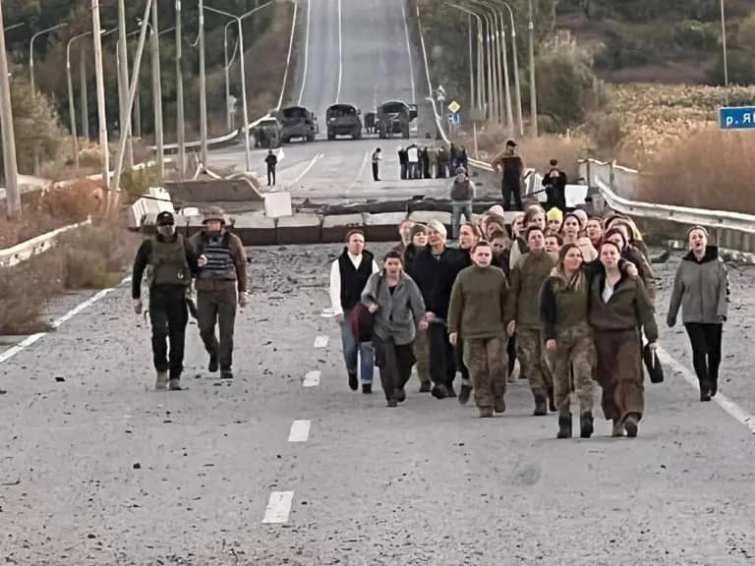
Iryna Stogniy is one of 108 women whom Ukraine brought home from Russian captivity on October 17. The young woman is originally from the village of Kryshchyntsi in the Tulchyn district of Vinnytsia region.
She had dreamed of becoming a soldier since childhood. That is why she signed a contract with the Armed Forces. She later completed training according to NATO standards and became a senior combat medic in her company. During the war, she met the man she loved, and they were married right on the front lines in 2017. During the full-scale war, Iryna rescued the wounded in Mariupol.
"I was in Mariupol from the very beginning. When I was taken prisoner, I said goodbye to life, lying face down on the ground, with an automatic rifle pointed at my head. My whole life flashed before my eyes. They drove me around quite a bit; I traveled all over half of Russia. Then, at night, they took us to Olenivka, where they fed us more or less. The men weren’t fed the same way we were. Once a day, while we got three meals.
“And four days later, they took me to Taganrog, in the Rostov region, to the pretrial detention center,” Irina continues her story. “And there, it was just hell. Our boys and girls were there. You could say I was held captive by the devil himself. They interrogated me. Since I’m a senior paramedic, they thought we were tormenting their prisoners.
When I was in Olenivka for four days, they brought two wounded DNR prisoners to me. They said that I had interrogated these wounded DNR fighters. That’s when hell began. They wouldn’t even let us go outside. They beat us.”
During her captivity, Irina recalls, only prayer brought her comfort. There was no medical care.
“When we asked for a pill, they would bring it to us, but an hour later they would come and beat us even more so we wouldn’t ask. They helped some of the wounded, in their agony, to pass away. They mocked us. And the girls… oh God, it’s hard to say...
The food was terrible. Tea—just colored water—and some kind of soup. In the evening, it was always either a fish cutlet or fried fish; I guess that’s what kept us from starving to death. They didn’t give out hygiene products. Toilet paper—one small roll for four people. There were no sanitary pads either; we tore up whatever clothes we could find,” says Iryna.
"They brought me to the Belgorod region, to Valuyki. We were there for 3.5 months. The treatment there was a little better. They fed us better, but they broke us down mentally. They told us that Ukraine didn’t need us. They played 20 minutes of propaganda news for us and showed that Ukraine had been captured, that certain regions no longer existed there, and that everything here belonged to them.
They took us outside for half an hour. They started to get us in order and feed us better. There was meat, fish cutlets, and fried fish. They conducted medical examinations—taking blood and urine samples and performing fluorography,” Irina recounts.
They constantly tried to recruit the prisoners, forcing us to sing the occupying country’s anthem and listen to nonsense about Nazism and the like.
"They herded us into a room and forced us to say everything they had written there for their propaganda videos. There were four people standing in front with automatic weapons and a camera opposite us. They realized that when you look to the side, you can see that you’re reading, so now they made it look like you were speaking on your own. And before filming, they had a serious talk with us. They beat us in a way that the bruises wouldn’t show up on video…
They forced us to sing that “shit.” That’s what we called the Russian anthem. We sang until our voices were hoarse. Because if you sang quietly, they’d kick you in the kidneys. But the belief that I had to return gave me the strength not to give up. I prayed constantly and waited for it all to end,” says Irina.
Iryna says that during their captivity, they were often moved from one prison to another while blindfolded.
"Then they took us to the Kursk region to another prison camp. There, the food was very hearty—rich soups and meat—pork and beef. We stayed there for a month. They actively forced all the prisoners to accept Russian citizenship,” says Iryna.
She recalls that it wasn’t easy to stay strong during that difficult time, but she never lost faith that she would be able to return to her homeland.
“In the Kursk prison camp, they also forced us to constantly sing their songs and memorize poems. At 6 a.m., we woke up to their anthem. We would sometimes sing it as many as 15 times. Then—morning exercises, at 7 a.m.—breakfast, and then—roll call. After that, they gave lectures on Nazism. At 10 a.m., more calisthenics—200 squats and 100 push-ups. Then lunch, reading books, and retelling what we’d read. At 10 p.m.—lights out. And so a month flew by.
Then they put us on a plane again and took us back to Taganrog. When we saw those cells, we started crossing ourselves again. The same abuse all over again. Fortunately, we weren’t there long.
The desire to return to our families in Ukraine helped us survive. Everyone knew that back home, their children, parents, and relatives were waiting. And for their sake, you had to endure everything and return. I didn’t want to die in a foreign land,” says Iryna, holding back tears.
The woman still can’t believe she’s home, in her native Ukraine. She laughs and cries, her emotions in waves, bringing joy one moment and bitterness the next. On the very first day of her release, she wrote to her family and friends that she was free, that she was finally returning home.
“They blindfolded and gagged us again and put us on a plane. First they took us to Sevastopol, then from Sevastopol we went to Melitopol, and in Vasylivka they switched us over. We didn’t believe it until the very end. But when we saw the white flag, we realized we were going home,” says Iryna.
Now she wants to focus on her health.
“I dream of ‘rebuilding’ myself. To get myself back in shape, get some treatment, and restore myself to God’s image. Many of us also need psychological support. We underwent a medical examination. We spent a week in the capital; they put us up in a hotel. Then came rehabilitation. Many will need surgery and medical care,” adds Iryna.
When asked about her plans for the future, the combat medic responds:
“I plan to return home soon. My mom has cancer. She’s been so worried about me this whole time. It’s taken a toll on her health. Now I’m going to take care of her. I also need some time for myself. My husband is still in captivity. I’m sounding the alarm so they’ll start getting him out of that hellhole. I’m doing everything I can. If necessary, I’m always ready to return to duty and help my country again.”
Author: Lesya Rodina
35-year-old Iryna Stogniy had dreamed of becoming a soldier since childhood. In 2015, she joined the army. She later signed a contract with the 56th Brigade. She completed training according to NATO standards and became a combat medic in her company.
“I couldn’t imagine that I would end up in the very depths of hell, where I would have to grit my teeth and endure both humiliation and pain, and then I would get another chance at a new life,” says Iryna.
Iryna rescued the wounded in Mariupol and was taken prisoner along with her comrades. Here is her story.
Thrown face-down on the ground
On Iryna Stogniy’s arms are patriotic tattoos of a trident, red viburnum, and the inscription: “They killed. They were killing. They took me captive. But I did not submit. I was born Ukrainian.” They cannot be erased from her skin or her memory. Those few months are etched in her memory for life with bitterness and pain.
Iryna Stogniy is one of 108 women whom Ukraine brought home from Russian captivity on October 17. The young woman is originally from the village of Kryshchyntsi in the Tulchyn district of Vinnytsia region.
She had dreamed of becoming a soldier since childhood. That is why she signed a contract with the Armed Forces. She later completed training according to NATO standards and became a senior combat medic in her company. During the war, she met the man she loved, and they were married right on the front lines in 2017. During the full-scale war, Iryna rescued the wounded in Mariupol.
"I was in Mariupol from the very beginning. When I was taken prisoner, I said goodbye to life, lying face down on the ground, with an automatic rifle pointed at my head. My whole life flashed before my eyes. They drove me around quite a bit; I traveled all over half of Russia. Then, at night, they took us to Olenivka, where they fed us more or less. The men weren’t fed the same way we were. Once a day, while we got three meals.
Not a prison, but hell
“And four days later, they took me to Taganrog, in the Rostov region, to the pretrial detention center,” Irina continues her story. “And there, it was just hell. Our boys and girls were there. You could say I was held captive by the devil himself. They interrogated me. Since I’m a senior paramedic, they thought we were tormenting their prisoners.
When I was in Olenivka for four days, they brought two wounded DNR prisoners to me. They said that I had interrogated these wounded DNR fighters. That’s when hell began. They wouldn’t even let us go outside. They beat us.”
During her captivity, Irina recalls, only prayer brought her comfort. There was no medical care.
“When we asked for a pill, they would bring it to us, but an hour later they would come and beat us even more so we wouldn’t ask. They helped some of the wounded, in their agony, to pass away. They mocked us. And the girls… oh God, it’s hard to say...
The food was terrible. Tea—just colored water—and some kind of soup. In the evening, it was always either a fish cutlet or fried fish; I guess that’s what kept us from starving to death. They didn’t give out hygiene products. Toilet paper—one small roll for four people. There were no sanitary pads either; we tore up whatever clothes we could find,” says Iryna.
They filmed propaganda videos in Valuyki
"They brought me to the Belgorod region, to Valuyki. We were there for 3.5 months. The treatment there was a little better. They fed us better, but they broke us down mentally. They told us that Ukraine didn’t need us. They played 20 minutes of propaganda news for us and showed that Ukraine had been captured, that certain regions no longer existed there, and that everything here belonged to them.
They took us outside for half an hour. They started to get us in order and feed us better. There was meat, fish cutlets, and fried fish. They conducted medical examinations—taking blood and urine samples and performing fluorography,” Irina recounts.
They constantly tried to recruit the prisoners, forcing us to sing the occupying country’s anthem and listen to nonsense about Nazism and the like.
"They herded us into a room and forced us to say everything they had written there for their propaganda videos. There were four people standing in front with automatic weapons and a camera opposite us. They realized that when you look to the side, you can see that you’re reading, so now they made it look like you were speaking on your own. And before filming, they had a serious talk with us. They beat us in a way that the bruises wouldn’t show up on video…
They forced us to sing that “shit.” That’s what we called the Russian anthem. We sang until our voices were hoarse. Because if you sang quietly, they’d kick you in the kidneys. But the belief that I had to return gave me the strength not to give up. I prayed constantly and waited for it all to end,” says Irina.
They forced us to sing their songs constantly
Iryna says that during their captivity, they were often moved from one prison to another while blindfolded.
"Then they took us to the Kursk region to another prison camp. There, the food was very hearty—rich soups and meat—pork and beef. We stayed there for a month. They actively forced all the prisoners to accept Russian citizenship,” says Iryna.
She recalls that it wasn’t easy to stay strong during that difficult time, but she never lost faith that she would be able to return to her homeland.
“In the Kursk prison camp, they also forced us to constantly sing their songs and memorize poems. At 6 a.m., we woke up to their anthem. We would sometimes sing it as many as 15 times. Then—morning exercises, at 7 a.m.—breakfast, and then—roll call. After that, they gave lectures on Nazism. At 10 a.m., more calisthenics—200 squats and 100 push-ups. Then lunch, reading books, and retelling what we’d read. At 10 p.m.—lights out. And so a month flew by.
Then they put us on a plane again and took us back to Taganrog. When we saw those cells, we started crossing ourselves again. The same abuse all over again. Fortunately, we weren’t there long.
The desire to return to our families in Ukraine helped us survive. Everyone knew that back home, their children, parents, and relatives were waiting. And for their sake, you had to endure everything and return. I didn’t want to die in a foreign land,” says Iryna, holding back tears.
When they saw familiar landscapes—they cried
The woman still can’t believe she’s home, in her native Ukraine. She laughs and cries, her emotions in waves, bringing joy one moment and bitterness the next. On the very first day of her release, she wrote to her family and friends that she was free, that she was finally returning home.
“They blindfolded and gagged us again and put us on a plane. First they took us to Sevastopol, then from Sevastopol we went to Melitopol, and in Vasylivka they switched us over. We didn’t believe it until the very end. But when we saw the white flag, we realized we were going home,” says Iryna.
Now she wants to focus on her health.
“I dream of ‘rebuilding’ myself. To get myself back in shape, get some treatment, and restore myself to God’s image. Many of us also need psychological support. We underwent a medical examination. We spent a week in the capital; they put us up in a hotel. Then came rehabilitation. Many will need surgery and medical care,” adds Iryna.
When asked about her plans for the future, the combat medic responds:
“I plan to return home soon. My mom has cancer. She’s been so worried about me this whole time. It’s taken a toll on her health. Now I’m going to take care of her. I also need some time for myself. My husband is still in captivity. I’m sounding the alarm so they’ll start getting him out of that hellhole. I’m doing everything I can. If necessary, I’m always ready to return to duty and help my country again.”
This is an automatic translation generated by DeepL.