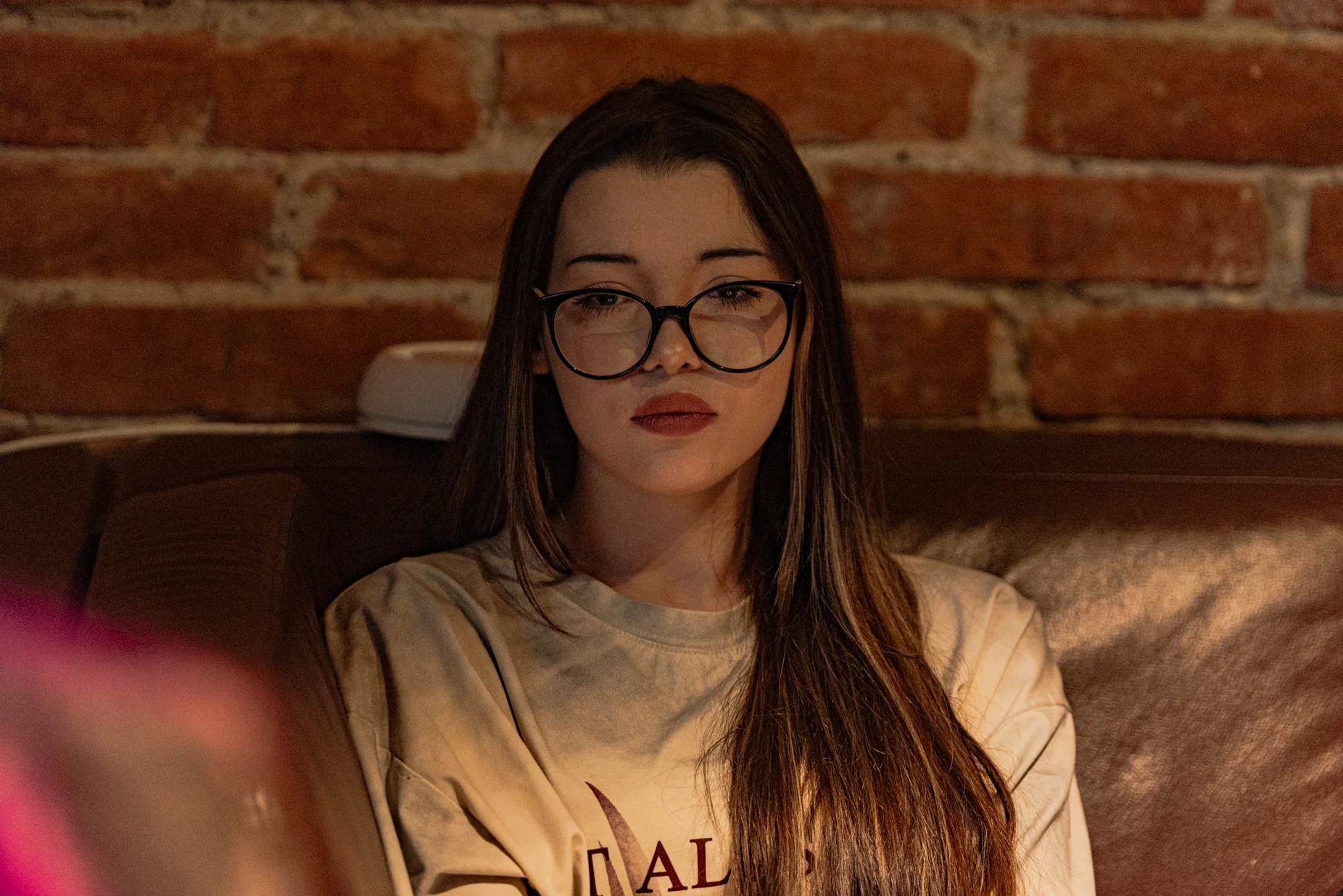
"I dream that someday I will return home to Ukrainian Mariupol": Kira Obedynska, the first girl to return from occupation, in Uzhhorod
Source: Varosh
Author: Tetiana Klym-Kashuba
“I was really looking forward to my grandpa coming to pick me up. When I saw him walk into the hospital room in Donetsk, I had a huge smile on my face,” recalls 15-year-old Kira Obedynska, describing the moment that marked the beginning of her return to her homeland.
Kira Obedynska is the first girl who was officially returned to Ukraine in 2022 after being taken from Mariupol to occupied Donetsk. To bring his granddaughter home, her grandfather, Oleksandr Obedynskyi, undertook an 8-day journey, traveling personally to Donetsk from Chernivtsi, where he was living at the time.
Today, nearly a year later, Kira and Oleksandr Obedynskyi live in Uzhhorod. The girl is now in 10th grade, and among 24 other children, she has become a recipient of the presidential award “The Future of Ukraine.” The medal is awarded annually to Ukrainian children who have withstood the trials of war and demonstrated resilience in difficult life circumstances.
“This award came as a complete surprise to us,” says Mr. Oleksandr, walking alongside Kira. We walk through the summer light of Uzhhorod—a city where, after terrible trials and several moves, a grandfather and his granddaughter have found shelter and a semblance of peace.
A city where, after traveling across the entire country, they are still “settling in” and even trying to make plans. Despite their bitter experience, from which they know: plans and life are so fragile that they can shatter into pieces in an instant.
On February 24, 2022, at 5 a.m., 12-year-old Kira Obedynska was waiting for a bus at a stop in her hometown of Mariupol. The girl was enrolled in a home-schooling program, and that day she was supposed to take tests at school to move up to the next grade. The bus hadn’t arrived yet when Kira’s cell phone rang: it was her father, Ukrainian water polo champion Yevhen Obeydynsky.
“Come home immediately. As fast as you can. Don’t stop anywhere,” Kira heard her father’s voice through the receiver. She tried to ask what had happened, and at that moment she heard explosions nearby.
Not understanding what was happening, Kira, along with another woman who was also waiting for the bus, headed to another stop to go home. Walking beside the girl, the stranger intuitively covered her with her jacket—as if, like a mother, she was trying to protect her. Kira’s own mother had died when the girl was still very young…
…Kira returned home on the first available minibus. From then on, buses in Mariupol stopped running. Soon after, cell service went out, and gas, water, and heating were cut off. A full-scale war had begun.
– I didn’t believe until the very end that there would be a full-scale invasion. When someone told me about it, I brushed it off: what nonsense, what war in the 21st century, are you kidding me? Perhaps the sense of danger was dulled by the fact that the war had been raging near us since 2014: we lived literally 20 km from the front line and had somehow adapted. And even when the full-scale invasion began, I was certain: well, they’ll shoot for a week—and that’ll be it. But once it started, it just kept going, and it’s still raging today,” recalls Oleksandr Obedynskyi.
With each passing day of the great war, fear, confusion, uncertainty, and death in Mariupol spread exponentially. Dozens of bombs rained down on the city from fighter jets. Tanks fired point-blank at buildings. People tried to survive in basements.
Kira, along with her peers and other children, literally lived underground: the kids were forbidden from going outside. In the basements, it’s dark, damp, and always cold.
In the constant darkness, you can’t tell what day or time it is. But in the perpetual cold, you know for sure that it’s February. And you understand even more clearly that a war is raging above: the basement constantly shakes from clearly audible explosions, “strikes,” and bursts of machine-gun fire.
From time to time, adults would venture outside to look for water and whatever food they could find. There is no longer a central water supply in the city, so people collect water from underground springs and utility wells. They go out for water first thing in the morning, lining up in a queue and risking their lives during yet another enemy airstrike.
On one such day, 12-year-old Kira’s father was killed practically before her eyes. Yevgen Obedinsky had just gone up to the apartment when another Russian shell struck the building. Due to the constant shelling and the resulting fire, the balcony where the man was standing at that moment caught fire and collapsed.
To this day, there is no way to find Yevgeny’s body or even to find out if he was buried at all and where.
“Mariupol after the full-scale invasion is a city of mass graves. Those they could bury were laid to rest in courtyards; those they couldn’t were left on the streets. You walk through the city—looking for firewood or water—and there are corpses lying out in the open, at best covered with something,” says Oleksandr Obedynskyi.
… After her father’s death, Kira was left alone with her father’s girlfriend and her family. She left Mariupol on foot with them—in the terrible chaos of war, there was no organized evacuation, and the humanitarian corridors weren’t functioning. Grandfather Oleksandr, having left Mariupol earlier, was living in Chernivtsi at the time.
“My son and I wanted to leave together, but his car broke down, and I didn’t have any gas. When we finally managed to find fuel, he said, ‘You go ahead, and we’ll catch up as soon as I fix the car.’ But it didn’t work out. A few days later, I found out that my son had been killed, and my wounded granddaughter had been taken to Donetsk,” says Oleksandr Obedynskyi.
Yevgeny’s girlfriend informed the grandfather about the fate of his son and granddaughter. While fleeing Mariupol on foot with a group of adults and children, Kira stepped on a tripwire. Wounded, she was first taken to Mangush, 15 km from Mariupol—the village was already occupied by the Russians at that time. From there, she was transported to a hospital in Donetsk.
There, Kira waited for her grandfather in the hospital for nearly a month. All the while, government officials were negotiating with Moscow regarding the child’s return to Ukraine. The situation was made more difficult and anxious by the fact that the mechanisms for repatriation had not yet been established at that time, and the girl, as an orphan, could at any moment be taken further into Russia—to one of the boarding schools or to a family for adoption.
On Sunday, April 24, 2022, Oleksandr Obedynskyi traveled to Donetsk to pick up Kira. The journey took him 8 days. And he made it in time: the next day, on Monday, they were about to discharge the girl…
Then came the trip to Kyiv and rehabilitation at “Okhmatdyt.” At the time, the first boy returned from Russian captivity—Ilya Matvienko from Mariupol, who had also been evacuated to Uzhhorod—was undergoing treatment at the medical center alongside Kira.
After being discharged from “Okhmatdyt” on May 6, Grandpa Oleksandr and his granddaughter Kira returned to Chernivtsi.
Recalling her first months in a city that was new to her, Kira describes how she couldn’t settle down for a long time and constantly “longed” to return to Mariupol.
“I cried so much; for about six months I couldn’t get used to it, and I kept asking to go home. “I didn’t watch the news—it was scary; I didn’t want to see what they’d done to my hometown,” the girl says.
Eventually, she got used to her new home and made new friends, but the need to move arose again: Oleksandra was offered housing in Uzhhorod. So, at the end of July last year, the grandfather and his granddaughter moved to Transcarpathia.
Kira brought her passion for dance with her to Uzhhorod: she first joined a dance studio in Chernivtsi, and now continues her training at the “Amplua” studio, where she’s learning jazz-funk. She is still undecided about her future career, but has already chosen the humanities track in high school.
She dreams of getting a big dog—one like the one her grandfather used to have in Mariupol.
But most of all, she dreams of returning to her beloved Mariupol—to once again feel the scent and touch of the sea and the comfort of her home.
“We’ve lived by the sea our whole lives; Kira grew up with the sea. And now it’s forever in our hearts. But right now we’re here, and we accept it as a given. We must rejoice in the gift of life, in what we have now. So we’re settling in little by little and making ourselves at home. And God willing, we’ll return to Mariupol in the future—but only when the Ukrainian flag flies over it again,” says Oleksandr Obedynskyi.
Author: Tetiana Klym-Kashuba
The story of Kira Obedynska’s return to Ukraine from the occupied territories
“I was really looking forward to my grandpa coming to pick me up. When I saw him walk into the hospital room in Donetsk, I had a huge smile on my face,” recalls 15-year-old Kira Obedynska, describing the moment that marked the beginning of her return to her homeland.
Kira Obedynska is the first girl who was officially returned to Ukraine in 2022 after being taken from Mariupol to occupied Donetsk. To bring his granddaughter home, her grandfather, Oleksandr Obedynskyi, undertook an 8-day journey, traveling personally to Donetsk from Chernivtsi, where he was living at the time.
Today, nearly a year later, Kira and Oleksandr Obedynskyi live in Uzhhorod. The girl is now in 10th grade, and among 24 other children, she has become a recipient of the presidential award “The Future of Ukraine.” The medal is awarded annually to Ukrainian children who have withstood the trials of war and demonstrated resilience in difficult life circumstances.
“This award came as a complete surprise to us,” says Mr. Oleksandr, walking alongside Kira. We walk through the summer light of Uzhhorod—a city where, after terrible trials and several moves, a grandfather and his granddaughter have found shelter and a semblance of peace.
A city where, after traveling across the entire country, they are still “settling in” and even trying to make plans. Despite their bitter experience, from which they know: plans and life are so fragile that they can shatter into pieces in an instant.
“Come home immediately, don’t stop anywhere”
On February 24, 2022, at 5 a.m., 12-year-old Kira Obedynska was waiting for a bus at a stop in her hometown of Mariupol. The girl was enrolled in a home-schooling program, and that day she was supposed to take tests at school to move up to the next grade. The bus hadn’t arrived yet when Kira’s cell phone rang: it was her father, Ukrainian water polo champion Yevhen Obeydynsky.
“Come home immediately. As fast as you can. Don’t stop anywhere,” Kira heard her father’s voice through the receiver. She tried to ask what had happened, and at that moment she heard explosions nearby.
Not understanding what was happening, Kira, along with another woman who was also waiting for the bus, headed to another stop to go home. Walking beside the girl, the stranger intuitively covered her with her jacket—as if, like a mother, she was trying to protect her. Kira’s own mother had died when the girl was still very young…
…Kira returned home on the first available minibus. From then on, buses in Mariupol stopped running. Soon after, cell service went out, and gas, water, and heating were cut off. A full-scale war had begun.
Losing track of time in the basement and water that endangered lives
– I didn’t believe until the very end that there would be a full-scale invasion. When someone told me about it, I brushed it off: what nonsense, what war in the 21st century, are you kidding me? Perhaps the sense of danger was dulled by the fact that the war had been raging near us since 2014: we lived literally 20 km from the front line and had somehow adapted. And even when the full-scale invasion began, I was certain: well, they’ll shoot for a week—and that’ll be it. But once it started, it just kept going, and it’s still raging today,” recalls Oleksandr Obedynskyi.
With each passing day of the great war, fear, confusion, uncertainty, and death in Mariupol spread exponentially. Dozens of bombs rained down on the city from fighter jets. Tanks fired point-blank at buildings. People tried to survive in basements.
Kira, along with her peers and other children, literally lived underground: the kids were forbidden from going outside. In the basements, it’s dark, damp, and always cold.
In the constant darkness, you can’t tell what day or time it is. But in the perpetual cold, you know for sure that it’s February. And you understand even more clearly that a war is raging above: the basement constantly shakes from clearly audible explosions, “strikes,” and bursts of machine-gun fire.
From time to time, adults would venture outside to look for water and whatever food they could find. There is no longer a central water supply in the city, so people collect water from underground springs and utility wells. They go out for water first thing in the morning, lining up in a queue and risking their lives during yet another enemy airstrike.
“They were supposed to catch up with us, but they didn’t…”
On one such day, 12-year-old Kira’s father was killed practically before her eyes. Yevgen Obedinsky had just gone up to the apartment when another Russian shell struck the building. Due to the constant shelling and the resulting fire, the balcony where the man was standing at that moment caught fire and collapsed.
To this day, there is no way to find Yevgeny’s body or even to find out if he was buried at all and where.
“Mariupol after the full-scale invasion is a city of mass graves. Those they could bury were laid to rest in courtyards; those they couldn’t were left on the streets. You walk through the city—looking for firewood or water—and there are corpses lying out in the open, at best covered with something,” says Oleksandr Obedynskyi.
… After her father’s death, Kira was left alone with her father’s girlfriend and her family. She left Mariupol on foot with them—in the terrible chaos of war, there was no organized evacuation, and the humanitarian corridors weren’t functioning. Grandfather Oleksandr, having left Mariupol earlier, was living in Chernivtsi at the time.
“My son and I wanted to leave together, but his car broke down, and I didn’t have any gas. When we finally managed to find fuel, he said, ‘You go ahead, and we’ll catch up as soon as I fix the car.’ But it didn’t work out. A few days later, I found out that my son had been killed, and my wounded granddaughter had been taken to Donetsk,” says Oleksandr Obedynskyi.
An 8-day journey to Donetsk: bringing Kira back to Ukraine
Yevgeny’s girlfriend informed the grandfather about the fate of his son and granddaughter. While fleeing Mariupol on foot with a group of adults and children, Kira stepped on a tripwire. Wounded, she was first taken to Mangush, 15 km from Mariupol—the village was already occupied by the Russians at that time. From there, she was transported to a hospital in Donetsk.
There, Kira waited for her grandfather in the hospital for nearly a month. All the while, government officials were negotiating with Moscow regarding the child’s return to Ukraine. The situation was made more difficult and anxious by the fact that the mechanisms for repatriation had not yet been established at that time, and the girl, as an orphan, could at any moment be taken further into Russia—to one of the boarding schools or to a family for adoption.
On Sunday, April 24, 2022, Oleksandr Obedynskyi traveled to Donetsk to pick up Kira. The journey took him 8 days. And he made it in time: the next day, on Monday, they were about to discharge the girl…
Then came the trip to Kyiv and rehabilitation at “Okhmatdyt.” At the time, the first boy returned from Russian captivity—Ilya Matvienko from Mariupol, who had also been evacuated to Uzhhorod—was undergoing treatment at the medical center alongside Kira.
After being discharged from “Okhmatdyt” on May 6, Grandpa Oleksandr and his granddaughter Kira returned to Chernivtsi.
Uzhhorod: Dance Classes and a Cherished Dream of Her Native Mariupol
Recalling her first months in a city that was new to her, Kira describes how she couldn’t settle down for a long time and constantly “longed” to return to Mariupol.
“I cried so much; for about six months I couldn’t get used to it, and I kept asking to go home. “I didn’t watch the news—it was scary; I didn’t want to see what they’d done to my hometown,” the girl says.
Eventually, she got used to her new home and made new friends, but the need to move arose again: Oleksandra was offered housing in Uzhhorod. So, at the end of July last year, the grandfather and his granddaughter moved to Transcarpathia.
Kira brought her passion for dance with her to Uzhhorod: she first joined a dance studio in Chernivtsi, and now continues her training at the “Amplua” studio, where she’s learning jazz-funk. She is still undecided about her future career, but has already chosen the humanities track in high school.
She dreams of getting a big dog—one like the one her grandfather used to have in Mariupol.
But most of all, she dreams of returning to her beloved Mariupol—to once again feel the scent and touch of the sea and the comfort of her home.
“We’ve lived by the sea our whole lives; Kira grew up with the sea. And now it’s forever in our hearts. But right now we’re here, and we accept it as a given. We must rejoice in the gift of life, in what we have now. So we’re settling in little by little and making ourselves at home. And God willing, we’ll return to Mariupol in the future—but only when the Ukrainian flag flies over it again,” says Oleksandr Obedynskyi.
This is an automatic translation generated by DeepL.