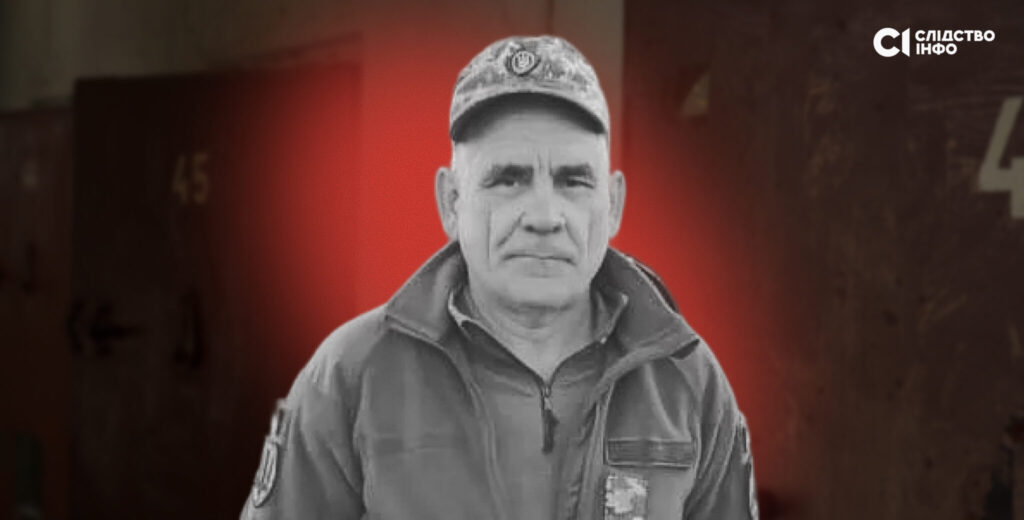
"He died because he was bleeding out”: Russians tortured a 59-year-old serviceman in captivity and tried to hide the cause of death
Source: SlidstvoInfo
Author: Vladyslava Kobko
“Our family is divided: Mom is the soul, Dad is the heart. And right now, we’re missing our heart,” says Yana Grigorieva. Her father, Serhiy Grigoriev, had been fighting in the east since 2019, and at the start of the open war, he was taken prisoner in Mariupol. Soon, Sergei’s family received a video message from him in captivity, in which he said, “I hope I’ll see you again.” However, the Grigorievs were unable to reunite—in May 2023, Sergei died in captivity.
In the medical death certificate, a Russian doctor listed the cause of death as a stroke. However, a Ukrainian forensic examination determined that Serhiy’s death was violent. Journalists from “Slidstvo.Info” also managed to find a former prisoner who testified that Serhiy Hryhoriev’s condition had significantly deteriorated following systematic beatings.
This is reported in an article by Slidstvo.Info.
For English subtitles, please enable captions in the video settings and select Auto-translate → English.
Author: Vladyslava Kobko
“Our family is divided: Mom is the soul, Dad is the heart. And right now, we’re missing our heart,” says Yana Grigorieva. Her father, Serhiy Grigoriev, had been fighting in the east since 2019, and at the start of the open war, he was taken prisoner in Mariupol. Soon, Sergei’s family received a video message from him in captivity, in which he said, “I hope I’ll see you again.” However, the Grigorievs were unable to reunite—in May 2023, Sergei died in captivity.
In the medical death certificate, a Russian doctor listed the cause of death as a stroke. However, a Ukrainian forensic examination determined that Serhiy’s death was violent. Journalists from “Slidstvo.Info” also managed to find a former prisoner who testified that Serhiy Hryhoriev’s condition had significantly deteriorated following systematic beatings.
This is reported in an article by Slidstvo.Info.
For English subtitles, please enable captions in the video settings and select Auto-translate → English.
“My husband and I have been married for 36 years. We had a happy marriage and two children. We met and got married within a month. As a woman, I was happy in every way. Serhiy was a wonderful husband and person; he was calm and balanced. He had golden hands that could do anything,” Galina Hryhorieva tells Slidstvo.Info.
Together with her husband Serhiy, they built a house in Pyriatyn, Poltava Oblast, in the 1990s, where they lived together.
Galina says: Serhiy really wanted to have his own house, with an orchard next to it. So soon the Grigorievs bought a little more land and planted apple trees on it. The Grigorievs harvested their largest crop in decades last year—when they learned that Serhiy had died. “The orchard yielded so much that apples were lying on the ground, and the branches were bending,” says Serhiy’s wife, Galina.
Now the woman takes care of the property on her own, though she says that every night in her dreams she sees herself handling all household matters together with her husband: “In my dreams, everything happens: we live that life, drive a car, work. Day after day.”
The Grigorievs’ daughters—Yana and Oksana—live abroad, but they’ve come to Pyriatyn now because in a few days their father would have turned 62. So on this day, they want to be together in their family home.
Together with her husband Serhiy, they built a house in Pyriatyn, Poltava Oblast, in the 1990s, where they lived together.
Galina says: Serhiy really wanted to have his own house, with an orchard next to it. So soon the Grigorievs bought a little more land and planted apple trees on it. The Grigorievs harvested their largest crop in decades last year—when they learned that Serhiy had died. “The orchard yielded so much that apples were lying on the ground, and the branches were bending,” says Serhiy’s wife, Galina.
Now the woman takes care of the property on her own, though she says that every night in her dreams she sees herself handling all household matters together with her husband: “In my dreams, everything happens: we live that life, drive a car, work. Day after day.”
The Grigorievs’ daughters—Yana and Oksana—live abroad, but they’ve come to Pyriatyn now because in a few days their father would have turned 62. So on this day, they want to be together in their family home.
"HE WAS A FATHER TO THE BOYS"
Serhiy Hryhoriev went to war in 2019. His family recalls that he seemed to have become younger: “He was at basic training and told us how he ran cross-country. He said, ‘I’m not the last one yet!’ He had a newfound enthusiasm. To the guys he was with there, he was like a father. Everyone respected him,” Sergei’s family recounts.
On January 4, 2022, Sergei Grigoriev returned to the ATO (JFO) zone, serving near Mariupol. His contract was set to expire in just a few days, but a full-scale war had begun. He served as a driver in the 209th Separate Anti-Tank Division.
In the early days of open warfare near Mariupol, the Russians destroyed Sergei’s vehicle and those of his comrades. Then marines came to their aid, and together with them, Serhiy drove into Mariupol. There, the soldiers were stationed at the Illich Plant.
On January 4, 2022, Sergei Grigoriev returned to the ATO (JFO) zone, serving near Mariupol. His contract was set to expire in just a few days, but a full-scale war had begun. He served as a driver in the 209th Separate Anti-Tank Division.
In the early days of open warfare near Mariupol, the Russians destroyed Sergei’s vehicle and those of his comrades. Then marines came to their aid, and together with them, Serhiy drove into Mariupol. There, the soldiers were stationed at the Illich Plant.
"I AM ALIVE, HEALTHY. EVERYTHING WILL BE FINE."
On April 12, the wife of one of Serhiy’s comrades called his daughter and told her that their family members had been taken prisoner.
On August 24, 2022, the Hryhoriyevs received a letter from Serhiy: “Dear Halochka, I am alive and well. Everything will be fine.”
His wife and daughters recreated the phrase “Everything will be fine,” written in Serhiy’s handwriting, on their wrists by getting matching tattoos.
“This is our strength. These are Dad’s words, written while he was in captivity. The last words written in the letter, addressed to us, are that everything will be fine,” says Serhiy’s daughter Oksana.
In 2023, Serhiy’s family also received a video of him filmed while in captivity. Oksana Hryhorieva says it was recorded in Kamyshin. Prior to that, Serhiy was held in Olenivka and, likely, in Taganrog.
In the video message, Serhiy Hryhoriev is wearing a prison uniform with reflective strips. He looks exhausted and has lost a significant amount of weight.
“My dear ones, I am alive and well, waiting to return. I hope I’ll get to see you after all,” says Serhiy Hryhoriev in the video.
“From the words, ‘I hope I’ll get to see you after all,’ we realized something was wrong,” recalls his daughter Oksana.
“And what could that ‘something’ be? From the way he looked in the video, I realized he couldn’t see anymore. He left for service wearing glasses with thick lenses. And his teeth aren’t there [in the video]. The man had all his own teeth in his mouth. They’re dentures—God forbid they might fall out. But they’re his own,” adds Serhiy’s wife, Galina Hryhorieva.
After Kamyshin, Serhiy Hryhoriev was transferred to Penal Colony No. 12 in the city of Kamensk-Shakhtinsky, located in the Rostov Oblast of Russia. “Sledstvo.Info” tracked down a soldier who was there at the same time as Sergei Grigoriev.
“He stood out even among people our age. He was an elderly man. We went to the cafeteria together. At first, he seemed quite lively. Obviously, he wasn’t assigned to the occasional work tasks. He wasn’t put on guard duty for the unit. But he behaved quite energetically, considering his age and the conditions,” recalls soldier Oleksandr, who returned to Ukraine in October of this year after 3.5 years in captivity.
On August 24, 2022, the Hryhoriyevs received a letter from Serhiy: “Dear Halochka, I am alive and well. Everything will be fine.”
His wife and daughters recreated the phrase “Everything will be fine,” written in Serhiy’s handwriting, on their wrists by getting matching tattoos.
“This is our strength. These are Dad’s words, written while he was in captivity. The last words written in the letter, addressed to us, are that everything will be fine,” says Serhiy’s daughter Oksana.
In 2023, Serhiy’s family also received a video of him filmed while in captivity. Oksana Hryhorieva says it was recorded in Kamyshin. Prior to that, Serhiy was held in Olenivka and, likely, in Taganrog.
In the video message, Serhiy Hryhoriev is wearing a prison uniform with reflective strips. He looks exhausted and has lost a significant amount of weight.
“My dear ones, I am alive and well, waiting to return. I hope I’ll get to see you after all,” says Serhiy Hryhoriev in the video.
“From the words, ‘I hope I’ll get to see you after all,’ we realized something was wrong,” recalls his daughter Oksana.
“And what could that ‘something’ be? From the way he looked in the video, I realized he couldn’t see anymore. He left for service wearing glasses with thick lenses. And his teeth aren’t there [in the video]. The man had all his own teeth in his mouth. They’re dentures—God forbid they might fall out. But they’re his own,” adds Serhiy’s wife, Galina Hryhorieva.
After Kamyshin, Serhiy Hryhoriev was transferred to Penal Colony No. 12 in the city of Kamensk-Shakhtinsky, located in the Rostov Oblast of Russia. “Sledstvo.Info” tracked down a soldier who was there at the same time as Sergei Grigoriev.
“He stood out even among people our age. He was an elderly man. We went to the cafeteria together. At first, he seemed quite lively. Obviously, he wasn’t assigned to the occasional work tasks. He wasn’t put on guard duty for the unit. But he behaved quite energetically, considering his age and the conditions,” recalls soldier Oleksandr, who returned to Ukraine in October of this year after 3.5 years in captivity.
"A BODY IN A BLACK BAG WAS BROUGHT TO THE PRISON TERRITORY"
However, Sergei’s condition in the prison camp eventually began to deteriorate. Alexander, a soldier, explains that this happened after a month of systematic beatings inflicted on the prisoners by Federal Penitentiary Service officers from another region.
“We categorized the people who worked at the prison camp. There were the locals, then there was the special forces (these were people brought in from other regions to maintain order in case of a possible riot), and alongside them were the “attached forces” (these were FSIN employees). They came in from different regions. Speaking specifically about Serhiy, I can say that at that time, a not-so-friendly shift of ‘reinforcements’ arrived. And every meal, every trip to the dining hall—it was an unpleasant ordeal,” says former prisoner Oleksandr.
The soldier explains that the “reinforcement” shift would set up so-called “red corridors” in the dining hall for the prisoners—before and after meals: “In this ‘corridor,’ almost everyone was struck with a baton, a fist, or something else. The blows were serious. It wasn’t just ‘hurry up, hurry up.’ These were serious blows. They tried to hit the pressure points.”
Oleksandr adds that after about a week, Serhiy Hryhoriev began complaining about his health. He had heart pain and started having shortness of breath.
“It was obvious that his health was deteriorating. He couldn’t handle the physical exertion and beatings that happened every time. Our unit was on the 8th floor; it was hard for him to climb the stairs, so they transferred him to the first floor, to Unit 7. And then they took him to solitary confinement (SHIZO),” the witness recalls.
A captured combat medic was held in solitary confinement along with Sergei Grigoriev. However, they were unable to save Sergei: “They just told us before lunch that he had died. And then they carried his body into the prison grounds in a black bag.”
Sergei’s wife Galina and daughters Yana and Oksana learned of their father’s death on January 6, 2024. The day before, a prisoner exchange had taken place, and one of the released prisoners appeared in the chat group where the relatives of soldiers held in Kamensk-Shakhtinsky gather.
“We categorized the people who worked at the prison camp. There were the locals, then there was the special forces (these were people brought in from other regions to maintain order in case of a possible riot), and alongside them were the “attached forces” (these were FSIN employees). They came in from different regions. Speaking specifically about Serhiy, I can say that at that time, a not-so-friendly shift of ‘reinforcements’ arrived. And every meal, every trip to the dining hall—it was an unpleasant ordeal,” says former prisoner Oleksandr.
The soldier explains that the “reinforcement” shift would set up so-called “red corridors” in the dining hall for the prisoners—before and after meals: “In this ‘corridor,’ almost everyone was struck with a baton, a fist, or something else. The blows were serious. It wasn’t just ‘hurry up, hurry up.’ These were serious blows. They tried to hit the pressure points.”
Oleksandr adds that after about a week, Serhiy Hryhoriev began complaining about his health. He had heart pain and started having shortness of breath.
“It was obvious that his health was deteriorating. He couldn’t handle the physical exertion and beatings that happened every time. Our unit was on the 8th floor; it was hard for him to climb the stairs, so they transferred him to the first floor, to Unit 7. And then they took him to solitary confinement (SHIZO),” the witness recalls.
A captured combat medic was held in solitary confinement along with Sergei Grigoriev. However, they were unable to save Sergei: “They just told us before lunch that he had died. And then they carried his body into the prison grounds in a black bag.”
Sergei’s wife Galina and daughters Yana and Oksana learned of their father’s death on January 6, 2024. The day before, a prisoner exchange had taken place, and one of the released prisoners appeared in the chat group where the relatives of soldiers held in Kamensk-Shakhtinsky gather.
"I DON'T AGREE TO FORGIVE, DO YOU UNDERSTAND?"
Oksana Grigorieva immediately sent the soldier a photo of her father and asked if he had seen him. The soldier read the message but didn’t respond for two days. Oksana says that the silence was already causing her to worry, but they still hoped for the best.
On the morning of January 6, the former soldier sent Oksana Grigorieva a message: “Yuriyovych died in mid-May 2023. My condolences.”
In March 2024, the Grigorievs were informed that Sergei’s body had been returned to Ukraine. In June, Sergei Grigoriev was buried in Pyriatyn, Poltava Oblast.
Russia issued a medical death certificate in the name of Sergei Grigoriev. In the document, the doctor determined the cause of the soldier’s death to be “severe intracerebral hemorrhage in the right hemisphere of the brain,” i.e., a stroke.
However, a Ukrainian forensic examination, which was conducted after the repatriation of Serhiy Hryhoriev’s body to Ukraine, established that his death was violent. Specifically, the cause of death was listed as “closed blunt trauma to the abdominal cavity with damage to the spleen.”
“The forensic pathologist was outraged that Russia had issued a false death certificate. She said that, of course, it was clear here that the man had been tortured. There was an internal hematoma. He died because he bled to death,” says Serhiy’s eldest daughter, Yana Hryhorieva.
A small fir tree stands on Serhiy’s grave, and a candle burns there. Red roses that Galina planted are still blooming nearby. She visits her husband every Saturday: “I feel that I cannot forgive them (the Russians—ed.). I cannot forgive them not only for my husband, but for all the young men, for all the children… Maybe it’s my sin that I have no right to act this way. But I don’t belong to that group of people. I refuse to forgive, do you understand?”
“Our family is torn apart; Mom is the soul, Dad is the heart. And right now, we’re missing a heart,” adds Serhiy’s daughter Yana.
On the morning of January 6, the former soldier sent Oksana Grigorieva a message: “Yuriyovych died in mid-May 2023. My condolences.”
In March 2024, the Grigorievs were informed that Sergei’s body had been returned to Ukraine. In June, Sergei Grigoriev was buried in Pyriatyn, Poltava Oblast.
Russia issued a medical death certificate in the name of Sergei Grigoriev. In the document, the doctor determined the cause of the soldier’s death to be “severe intracerebral hemorrhage in the right hemisphere of the brain,” i.e., a stroke.
However, a Ukrainian forensic examination, which was conducted after the repatriation of Serhiy Hryhoriev’s body to Ukraine, established that his death was violent. Specifically, the cause of death was listed as “closed blunt trauma to the abdominal cavity with damage to the spleen.”
“The forensic pathologist was outraged that Russia had issued a false death certificate. She said that, of course, it was clear here that the man had been tortured. There was an internal hematoma. He died because he bled to death,” says Serhiy’s eldest daughter, Yana Hryhorieva.
A small fir tree stands on Serhiy’s grave, and a candle burns there. Red roses that Galina planted are still blooming nearby. She visits her husband every Saturday: “I feel that I cannot forgive them (the Russians—ed.). I cannot forgive them not only for my husband, but for all the young men, for all the children… Maybe it’s my sin that I have no right to act this way. But I don’t belong to that group of people. I refuse to forgive, do you understand?”
“Our family is torn apart; Mom is the soul, Dad is the heart. And right now, we’re missing a heart,” adds Serhiy’s daughter Yana.
This is an automatic translation generated by DeepL.