From his arrest in the Kyiv region to a pretrial detention center in Russia: the story of released volunteer Volodymyr Kropun
Source: MIPL
Author: Artur Prikhnо
Volodymyr Kropun, a volunteer with the Ukrainian Red Cross, spent more than two weeks in a Russian detention center. He was abducted by Russian military personnel in the village of Kozarovychi in the Kyiv region. Initially, Volodymyr was held in Dymer on the grounds of a former foundry near the “Viknaland” enterprise. There were several dozen other detained civilians there.
Later, Volodymyr and more than ten other detainees were taken from Dymer and sent to Russia, where they were held in a pretrial detention center. In total, about two hundred people from the Kyiv region are being held there.
Recently, the International Institute for Human Rights (IIHR) published an investigation into how occupying forces in the Kyiv region abducted people and tortured them in detention facilities. Details about the abductions, the route taken to transport them to Russian territory, and the conditions in which they are forced to live follow below in Vladimir Kropun’s own words.
About the Route
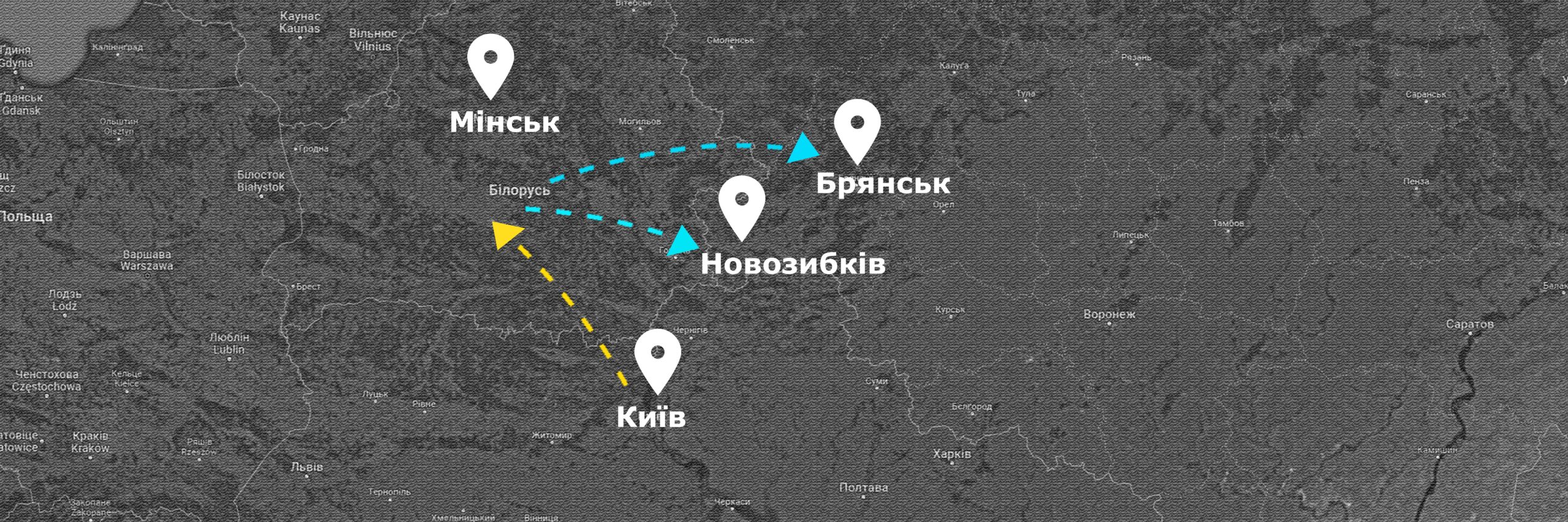
It was March 23–24. They took 14 people from Dymer. Then, along the way, another woman was added to the group. We first spent the night in Gostomel on the airport grounds. Then we were transported in two “Ural” trucks to Belarus. Each “Ural” truck carried 35–37 people. There were a few military personnel, but the vast majority—about 90%—were civilians.
In Belarus, we were taken to a city near the border (Ukrainian law enforcement agencies asked that we not name it). From there, we were taken from Belarus to the Bryansk region, to the village of Novozybkov, to Pretrial Detention Center No. 2. The address is 9 Krasnaya Square.
In Novozybkov, the guards told us that the detention center had been cleared specifically for our region—Bucha, Gostomel, Dymer, Kozarovychi, Ivankiv, and Chernobyl. They said: “We’re going to fill it to capacity.” There were no local “inmates” there.
On the conditions and torture
At “reception,” right after we were brought to the detention center, they beat us brutally. Those on the first buses took the worst of it. They beat us on the back and on the legs. I arrived on the second bus, so I was, you could say, lucky. By the time it was my turn, they were already tired. They gave me a “massage,” of course, but not as harshly as they did to the first ones.
They bring people in one by one, strip them naked, and ask questions at the same time. If you don’t undress properly or answer too slowly, they beat you.
At the detention center, they initially kept us on the fourth floor. There were three to five people in each cell. After the first interrogations were over, they consolidated the groups. There were nine of us in our cell. The largest group had 14. The rest had 10, 6, 4… In total, I personally heard 72 names. These were the names they called out near the neighboring cells; I memorized them. In total, there were about 200 people, maybe even more.
They treated us like “convicts.” They gave us their uniforms, a toothbrush, toothpaste, soap, and toilet paper. There were terrible drafts in the cells. And when they moved us downstairs, there was mold. There was no ventilation. Instead, there were cracks in the walls.
Everyone had a separate bed; they gave us bedding, a robe, and slippers. Some investigators came by—they took our fingerprints and drew blood for testing.
About the interrogations
During the interrogations, of course, no one identified themselves to us. When you’re on your knees, blindfolded, and with your hands tied, it’s hard to ask who’s talking to you. The police and military personnel without badges were the most cooperative during the interrogations. Those in civilian clothes were brutal. They asked about Bandera supporters and other such [nonsense].
They forced us to sign some documents with our eyes closed. Of course, no one told us what was in those documents. A pretrial detention center for detainees and suspects. They didn’t tell us our status. Accordingly, no one imposed any preventive measures on us. They simply abducted us like objects. They brought us to another country and conducted their interrogations. There’s not a whiff of the law there.
On our release
My opinion is that they abducted us to exchange us for their own military personnel. There are many places like this detention center in Russia. When we were released, they drove us for about six hours in “prisoner transport” vehicles to some airport. They left us there for the night because the weather was bad.
Then they put us on a plane, and we flew to another city. There, they added four or five people to our group. According to them, it was Rostov-on-Don.
We took these people with us. From there, we flew to Belbek by plane, and then traveled by “Kamaz” trucks to Zaporizhzhia—that’s where we were released.
Since his release from Russian captivity on March 9, Volodymyr Kropun has been in contact with the families of those whom the Russians continue to hold in pretrial detention centers. He has compiled a list of people he knows for certain are being held. Among them is journalist Dmytro Khilyuk, who was abducted in Kozarovychi and about whom the MIPL reported earlier. Dmytro, like dozens of other civilians, is being held in a pretrial detention center in the Bryansk region.
Author: Artur Prikhnо
Volodymyr Kropun, a volunteer with the Ukrainian Red Cross, spent more than two weeks in a Russian detention center. He was abducted by Russian military personnel in the village of Kozarovychi in the Kyiv region. Initially, Volodymyr was held in Dymer on the grounds of a former foundry near the “Viknaland” enterprise. There were several dozen other detained civilians there.
Later, Volodymyr and more than ten other detainees were taken from Dymer and sent to Russia, where they were held in a pretrial detention center. In total, about two hundred people from the Kyiv region are being held there.
Recently, the International Institute for Human Rights (IIHR) published an investigation into how occupying forces in the Kyiv region abducted people and tortured them in detention facilities. Details about the abductions, the route taken to transport them to Russian territory, and the conditions in which they are forced to live follow below in Vladimir Kropun’s own words.
About the Route
It was March 23–24. They took 14 people from Dymer. Then, along the way, another woman was added to the group. We first spent the night in Gostomel on the airport grounds. Then we were transported in two “Ural” trucks to Belarus. Each “Ural” truck carried 35–37 people. There were a few military personnel, but the vast majority—about 90%—were civilians.
In Belarus, we were taken to a city near the border (Ukrainian law enforcement agencies asked that we not name it). From there, we were taken from Belarus to the Bryansk region, to the village of Novozybkov, to Pretrial Detention Center No. 2. The address is 9 Krasnaya Square.
In Novozybkov, the guards told us that the detention center had been cleared specifically for our region—Bucha, Gostomel, Dymer, Kozarovychi, Ivankiv, and Chernobyl. They said: “We’re going to fill it to capacity.” There were no local “inmates” there.
On the conditions and torture
At “reception,” right after we were brought to the detention center, they beat us brutally. Those on the first buses took the worst of it. They beat us on the back and on the legs. I arrived on the second bus, so I was, you could say, lucky. By the time it was my turn, they were already tired. They gave me a “massage,” of course, but not as harshly as they did to the first ones.
They bring people in one by one, strip them naked, and ask questions at the same time. If you don’t undress properly or answer too slowly, they beat you.
At the detention center, they initially kept us on the fourth floor. There were three to five people in each cell. After the first interrogations were over, they consolidated the groups. There were nine of us in our cell. The largest group had 14. The rest had 10, 6, 4… In total, I personally heard 72 names. These were the names they called out near the neighboring cells; I memorized them. In total, there were about 200 people, maybe even more.
They treated us like “convicts.” They gave us their uniforms, a toothbrush, toothpaste, soap, and toilet paper. There were terrible drafts in the cells. And when they moved us downstairs, there was mold. There was no ventilation. Instead, there were cracks in the walls.
Everyone had a separate bed; they gave us bedding, a robe, and slippers. Some investigators came by—they took our fingerprints and drew blood for testing.
About the interrogations
During the interrogations, of course, no one identified themselves to us. When you’re on your knees, blindfolded, and with your hands tied, it’s hard to ask who’s talking to you. The police and military personnel without badges were the most cooperative during the interrogations. Those in civilian clothes were brutal. They asked about Bandera supporters and other such [nonsense].
They forced us to sign some documents with our eyes closed. Of course, no one told us what was in those documents. A pretrial detention center for detainees and suspects. They didn’t tell us our status. Accordingly, no one imposed any preventive measures on us. They simply abducted us like objects. They brought us to another country and conducted their interrogations. There’s not a whiff of the law there.
On our release
My opinion is that they abducted us to exchange us for their own military personnel. There are many places like this detention center in Russia. When we were released, they drove us for about six hours in “prisoner transport” vehicles to some airport. They left us there for the night because the weather was bad.
Then they put us on a plane, and we flew to another city. There, they added four or five people to our group. According to them, it was Rostov-on-Don.
We took these people with us. From there, we flew to Belbek by plane, and then traveled by “Kamaz” trucks to Zaporizhzhia—that’s where we were released.
Since his release from Russian captivity on March 9, Volodymyr Kropun has been in contact with the families of those whom the Russians continue to hold in pretrial detention centers. He has compiled a list of people he knows for certain are being held. Among them is journalist Dmytro Khilyuk, who was abducted in Kozarovychi and about whom the MIPL reported earlier. Dmytro, like dozens of other civilians, is being held in a pretrial detention center in the Bryansk region.
This is an automatic translation generated by DeepL.