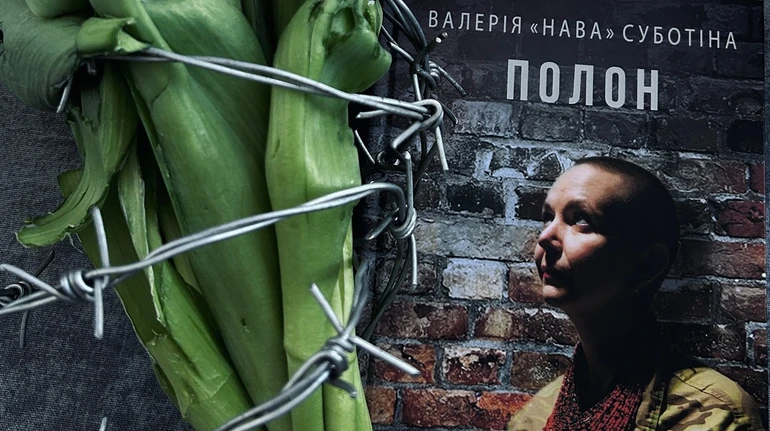
"More terrible things happen in torture chambers": Azovstal defender Nava published a book about her captivity
Source: Ukrainska Pravda
Author: Olena Barsukova
Valeria Subotina (Karpilenko), a defender of Mariupol and former head of the Azov press service, known by the call sign "Nava," has written a book about her captivity.
Valeria lived in Mariupol with her partner, border guard Andriy Subotin. She initially worked in Azov’s press service, then headed the press service of the Donetsk Border Guard Detachment, and returned to her home regiment at the start of the full-scale war.
The soldier covered the city’s defense, writing articles that recounted the heroism of the Azovstal defenders and the horrific conditions they endured.
Valeria and Andriy got married at the besieged steel plant—their rings were made of foil. And three days later, Valeria’s beloved died.
After leaving Azovstal, Valeria spent nearly a year in captivity: first in Olenivka, then in Taganrog. During this time, Valeria’s grandmother, who had raised her, died in Mariupol.
Now, nearly a year after the prisoner exchange, Navi’s book titled “Captivity” has been published. The defender of Mariupol spoke to “UP. Life” about the book, in which she describes Russian torture chambers, as well as life after captivity and the fight for her comrades.
Valeria Subotina (Karpilenko) began thinking about writing the book while still in captivity, so she tried to remember everything that happened there.
“We had no paper, pens, or pencils, especially in Taganrog. But I tried to remember everything down to the last detail. This was very important given that we had no voice there; we weren’t heard because we were cut off from the outside world. It was important for me to remember everything so that I could become the voice of the captives," says Valeria.
In the book, she talks a lot about her life: she describes her childhood, meeting her beloved, and her happy family life in Mariupol. Valeria recounted how "Azov" became her family.
She described the Russian occupiers, the guards, and the security forces from the “FSB” and “FSIN” who tormented the prisoners. Also, the torture, beatings, and harassment...
At the same time, Valeria talked about joking with her fellow prisoners, doing “yoga” in a cramped cell, and how the captive women supported one another.
“Actually, it doesn’t take a lot of courage to write this book. You just need to know why you’re doing it. For me, everything I do has one goal—to continue the informational fight for our captives.
When we discussed the idea of writing this book with Oleksandr Krasovych, the director of the Folio publishing house, I thought I’d write it very quickly. “But he knew it would be difficult for me,” Valeria recalls.
A third of the book came relatively easily, but then it became increasingly difficult for Valeria to get back to it. However, she kept writing to tell the story of the horrors of captivity.
“I was supported by the director of Folio, my husband’s parents, and my friends, most of whom are also former prisoners of war. We support one another, and their faith in me and in this idea helped me tremendously…
What happened to me isn’t even the worst of it. Unfortunately, even more horrific things happen in those torture chambers. It’s terrifying to even think about it, but no matter how painful it is, we must.
Because while we’re just thinking about them, someone is still in those torture chambers, enduring pain, fear, a sense of helplessness, and absolute vulnerability,” the soldier emphasized.
Valeria spoke about her comrades, describing the pain of losing the soldiers whom the Russians killed in Olenivka on July 28–29, 2022. She also wrote about her anxiety over Dmytro “Orest” Kozatskyi, who took the legendary photos from Azovstal. And how the occupiers claimed that he had “abandoned her” and moved abroad.
“When you go through all these events, you recall Ukrainian literature and realize that our entire history is cyclical. Not only in suffering, but also in struggle. Our citizens do not give up and continue to fight under any circumstances...
I didn’t think about the heroes of past centuries or our ancestors, because I was focused on the stories of my comrades. I couldn’t describe some of them, because many are still in Russian torture chambers.
In some cases, I changed their aliases or adapted their stories. I thought about my comrades with the hope that they would soon be released so that I could write their stories together with them, so that people would know how they found the strength to fight, survive under those conditions, and not lose hope,” says Valeria.
Author: Olena Barsukova
Valeria Subotina (Karpilenko), a defender of Mariupol and former head of the Azov press service, known by the call sign "Nava," has written a book about her captivity.
Valeria lived in Mariupol with her partner, border guard Andriy Subotin. She initially worked in Azov’s press service, then headed the press service of the Donetsk Border Guard Detachment, and returned to her home regiment at the start of the full-scale war.
The soldier covered the city’s defense, writing articles that recounted the heroism of the Azovstal defenders and the horrific conditions they endured.
Valeria and Andriy got married at the besieged steel plant—their rings were made of foil. And three days later, Valeria’s beloved died.
After leaving Azovstal, Valeria spent nearly a year in captivity: first in Olenivka, then in Taganrog. During this time, Valeria’s grandmother, who had raised her, died in Mariupol.
Now, nearly a year after the prisoner exchange, Navi’s book titled “Captivity” has been published. The defender of Mariupol spoke to “UP. Life” about the book, in which she describes Russian torture chambers, as well as life after captivity and the fight for her comrades.
"Captivity." A book about pain and rebirth
Valeria Subotina (Karpilenko) began thinking about writing the book while still in captivity, so she tried to remember everything that happened there.
“We had no paper, pens, or pencils, especially in Taganrog. But I tried to remember everything down to the last detail. This was very important given that we had no voice there; we weren’t heard because we were cut off from the outside world. It was important for me to remember everything so that I could become the voice of the captives," says Valeria.
In the book, she talks a lot about her life: she describes her childhood, meeting her beloved, and her happy family life in Mariupol. Valeria recounted how "Azov" became her family.
She described the Russian occupiers, the guards, and the security forces from the “FSB” and “FSIN” who tormented the prisoners. Also, the torture, beatings, and harassment...
At the same time, Valeria talked about joking with her fellow prisoners, doing “yoga” in a cramped cell, and how the captive women supported one another.
“Actually, it doesn’t take a lot of courage to write this book. You just need to know why you’re doing it. For me, everything I do has one goal—to continue the informational fight for our captives.
When we discussed the idea of writing this book with Oleksandr Krasovych, the director of the Folio publishing house, I thought I’d write it very quickly. “But he knew it would be difficult for me,” Valeria recalls.
A third of the book came relatively easily, but then it became increasingly difficult for Valeria to get back to it. However, she kept writing to tell the story of the horrors of captivity.
“I was supported by the director of Folio, my husband’s parents, and my friends, most of whom are also former prisoners of war. We support one another, and their faith in me and in this idea helped me tremendously…
What happened to me isn’t even the worst of it. Unfortunately, even more horrific things happen in those torture chambers. It’s terrifying to even think about it, but no matter how painful it is, we must.
Because while we’re just thinking about them, someone is still in those torture chambers, enduring pain, fear, a sense of helplessness, and absolute vulnerability,” the soldier emphasized.
Valeria spoke about her comrades, describing the pain of losing the soldiers whom the Russians killed in Olenivka on July 28–29, 2022. She also wrote about her anxiety over Dmytro “Orest” Kozatskyi, who took the legendary photos from Azovstal. And how the occupiers claimed that he had “abandoned her” and moved abroad.
“When you go through all these events, you recall Ukrainian literature and realize that our entire history is cyclical. Not only in suffering, but also in struggle. Our citizens do not give up and continue to fight under any circumstances...
I didn’t think about the heroes of past centuries or our ancestors, because I was focused on the stories of my comrades. I couldn’t describe some of them, because many are still in Russian torture chambers.
In some cases, I changed their aliases or adapted their stories. I thought about my comrades with the hope that they would soon be released so that I could write their stories together with them, so that people would know how they found the strength to fight, survive under those conditions, and not lose hope,” says Valeria.
In the comments on Valeria’s post, many people write that they aren’t ready to read this book. But she believes that everyone needs to understand what is happening to those held captive in Russia.
“Of course, people shouldn’t shut themselves away and sit at home feeling depressed; instead, they should work constructively and be of use to the army. But to truly grasp what is happening to our servicemen in captivity, you need to watch interviews and read as much as possible to understand why this war is continuing.
That there can be no peace negotiations, that we must continue the fight, that the enemy will give us no choice. Our choice is strength, resistance, and the defense of our own land. There can be no agreements. The result of our agreements can be seen in what happened when we left Azovstal. We were promised specific dates for our return, specific conditions of detention. And what did Russia do?
This will affect all of Ukraine if the Defense Forces stop defending our country, if people don’t care, if they don’t help,” the woman emphasizes.
In one section, Valeria described how she worked in the kitchen: they baked bread in unsanitary conditions, using poor-quality flour, but the female defenders of Azovstal still tried to bake the best bread they could for their fellow prisoners.
The prisoners were fed very poorly—for lunch they were given porridge with putasu fish, which contained innards. "Nava" recalls that while in captivity, they constantly thought about food.
She even thought about how she would make this bread and porridge with fish, but using good ingredients and at home.
"Actually, I only recently baked bread for the first time. I handed it out to some former prisoners of war at an event and saw the reaction of the guys and girls to this bread, because they know its value, they remember our work at the bakery...
We dreamed a lot about food while in captivity, but when we got out, I didn’t have a strong desire to eat anything,” says the soldier.
When “Nava” was in captivity, the Russians constantly repeated that the defenders of Mariupol were not welcome in Ukraine. They wanted the fighters to lose hope and not know if they had anywhere to return to. But the soldiers still supported one another.
“I couldn’t believe that my friends and acquaintances had stopped fighting for me, that they had forgotten me. I was scared only because I didn’t know what was happening in Ukraine or if anyone was waiting for me.
Upon my return, I saw the rallies held in our support. Some of them were particularly poignant and emotional, such as “Christmas Without Azov.” The photos, posters, and everything else made me realize that people were waiting for me. It was a very pleasant surprise and provided tremendous psychological support.
And even if it didn’t speed up the exchange, it helped me emotionally. I saw how much people were worried about me and fighting for me,” the soldier shares.
Valeria returned to Ukraine as part of an exchange on April 10, 2023. At first, when she met her loved ones, she was disoriented.
“It’s very hard to spend four and a half months in Taganrog, and then another seven in a cell where you hardly see anyone. So it took time for me to adjust and start communicating normally with people again."
"I just wanted to wake up in my apartment, walk barefoot on the floor, make myself some coffee, make a sandwich, and spend at least one normal morning like that," the woman says.
Valeria is now a reserve officer in the Armed Forces of Ukraine. After returning from captivity, she served as a communications advisor to the commander of the Ukrainian Armed Forces’ Special Operations Forces, and now she continues the information war in a different way.
“During combat operations, I always documented what was happening and wrote reports. Now I’m often abroad with the Coordination Headquarters. To show that all countries must fight for the release of our prisoners of war, help Ukraine with weapons, and fight the aggressor, I talk about the terrible fates of those in captivity—and about myself.
My main task now is working at the YOUkraine hub. This is Ukraine’s first hub for former prisoners of war, created by former prisoners of war. Here we meet, discuss what’s on our minds, and support one another,” says Valeria.
The book about captivity is also part of the information war. Valeria plans to write her next book soon ("Azovstal. The Steel Press Service"), in which she will tell the stories of her comrades.
The most important thing for "Nava" is to help the soldiers on the front lines and those who remain in captivity. The struggle gives her strength.
“It just so happened that I had no support growing up and had to build my life on my own. I also described this in the book so that people could understand me.
It’s a great luxury to give up and succumb to sad, terrible, dark moods. But I simply don’t have that right. Right now, as far as I’m concerned, no one has that right. This is a historic time of struggle for Ukraine’s freedom and the formation of the nation, and I must continue this struggle.
I don’t want to spend this period of my life—no matter how long it may be—with my hands down. It’s nice to fight, to move forward, to be active, to have reasons to laugh. And suffering and dying can happen at any moment,” says Valeria.
Why should Ukrainians read the book “Captivity”? The defender of Mariupol answers this question as follows:
“Very often, people don’t know how to properly communicate with former prisoners of war; they ask inappropriate, traumatic questions.
Reading the book will help you understand a little better what happens to such people. You should read it to understand that our struggle must continue. We cannot stop, so that what is described in the book does not happen to you and your children,” Valeria addresses the readers.
"Nava" hopes the book will be translated into foreign languages.
"Several people have told me that the book was an easy read. I tried to make it emotionally accessible to everyone. I really hope it gets translated into English. But for that to happen, it’s important that sales reach a sufficiently high level.
The Folio publishing house met us halfway and made it affordable. Because this isn’t a profitable project, but rather an informational one. It’s very important to translate the book so that it’s read not only in Ukraine but all over the world. I hope we’ll succeed. And I also want to emphasize that the main goal of this book is to fight for those who are still in captivity,” Valeria adds.
The book is available for pre-order on the Folio Publishing House website, and you can also purchase the online version.
“Of course, people shouldn’t shut themselves away and sit at home feeling depressed; instead, they should work constructively and be of use to the army. But to truly grasp what is happening to our servicemen in captivity, you need to watch interviews and read as much as possible to understand why this war is continuing.
That there can be no peace negotiations, that we must continue the fight, that the enemy will give us no choice. Our choice is strength, resistance, and the defense of our own land. There can be no agreements. The result of our agreements can be seen in what happened when we left Azovstal. We were promised specific dates for our return, specific conditions of detention. And what did Russia do?
This will affect all of Ukraine if the Defense Forces stop defending our country, if people don’t care, if they don’t help,” the woman emphasizes.
In one section, Valeria described how she worked in the kitchen: they baked bread in unsanitary conditions, using poor-quality flour, but the female defenders of Azovstal still tried to bake the best bread they could for their fellow prisoners.
The prisoners were fed very poorly—for lunch they were given porridge with putasu fish, which contained innards. "Nava" recalls that while in captivity, they constantly thought about food.
She even thought about how she would make this bread and porridge with fish, but using good ingredients and at home.
"Actually, I only recently baked bread for the first time. I handed it out to some former prisoners of war at an event and saw the reaction of the guys and girls to this bread, because they know its value, they remember our work at the bakery...
We dreamed a lot about food while in captivity, but when we got out, I didn’t have a strong desire to eat anything,” says the soldier.
When “Nava” was in captivity, the Russians constantly repeated that the defenders of Mariupol were not welcome in Ukraine. They wanted the fighters to lose hope and not know if they had anywhere to return to. But the soldiers still supported one another.
“I couldn’t believe that my friends and acquaintances had stopped fighting for me, that they had forgotten me. I was scared only because I didn’t know what was happening in Ukraine or if anyone was waiting for me.
Upon my return, I saw the rallies held in our support. Some of them were particularly poignant and emotional, such as “Christmas Without Azov.” The photos, posters, and everything else made me realize that people were waiting for me. It was a very pleasant surprise and provided tremendous psychological support.
And even if it didn’t speed up the exchange, it helped me emotionally. I saw how much people were worried about me and fighting for me,” the soldier shares.
Valeria returned to Ukraine as part of an exchange on April 10, 2023. At first, when she met her loved ones, she was disoriented.
“It’s very hard to spend four and a half months in Taganrog, and then another seven in a cell where you hardly see anyone. So it took time for me to adjust and start communicating normally with people again."
"I just wanted to wake up in my apartment, walk barefoot on the floor, make myself some coffee, make a sandwich, and spend at least one normal morning like that," the woman says.
Valeria is now a reserve officer in the Armed Forces of Ukraine. After returning from captivity, she served as a communications advisor to the commander of the Ukrainian Armed Forces’ Special Operations Forces, and now she continues the information war in a different way.
“During combat operations, I always documented what was happening and wrote reports. Now I’m often abroad with the Coordination Headquarters. To show that all countries must fight for the release of our prisoners of war, help Ukraine with weapons, and fight the aggressor, I talk about the terrible fates of those in captivity—and about myself.
My main task now is working at the YOUkraine hub. This is Ukraine’s first hub for former prisoners of war, created by former prisoners of war. Here we meet, discuss what’s on our minds, and support one another,” says Valeria.
The book about captivity is also part of the information war. Valeria plans to write her next book soon ("Azovstal. The Steel Press Service"), in which she will tell the stories of her comrades.
The most important thing for "Nava" is to help the soldiers on the front lines and those who remain in captivity. The struggle gives her strength.
“It just so happened that I had no support growing up and had to build my life on my own. I also described this in the book so that people could understand me.
It’s a great luxury to give up and succumb to sad, terrible, dark moods. But I simply don’t have that right. Right now, as far as I’m concerned, no one has that right. This is a historic time of struggle for Ukraine’s freedom and the formation of the nation, and I must continue this struggle.
I don’t want to spend this period of my life—no matter how long it may be—with my hands down. It’s nice to fight, to move forward, to be active, to have reasons to laugh. And suffering and dying can happen at any moment,” says Valeria.
Why should Ukrainians read the book “Captivity”? The defender of Mariupol answers this question as follows:
“Very often, people don’t know how to properly communicate with former prisoners of war; they ask inappropriate, traumatic questions.
Reading the book will help you understand a little better what happens to such people. You should read it to understand that our struggle must continue. We cannot stop, so that what is described in the book does not happen to you and your children,” Valeria addresses the readers.
"Nava" hopes the book will be translated into foreign languages.
"Several people have told me that the book was an easy read. I tried to make it emotionally accessible to everyone. I really hope it gets translated into English. But for that to happen, it’s important that sales reach a sufficiently high level.
The Folio publishing house met us halfway and made it affordable. Because this isn’t a profitable project, but rather an informational one. It’s very important to translate the book so that it’s read not only in Ukraine but all over the world. I hope we’ll succeed. And I also want to emphasize that the main goal of this book is to fight for those who are still in captivity,” Valeria adds.
The book is available for pre-order on the Folio Publishing House website, and you can also purchase the online version.
This is an automatic translation generated by DeepL.