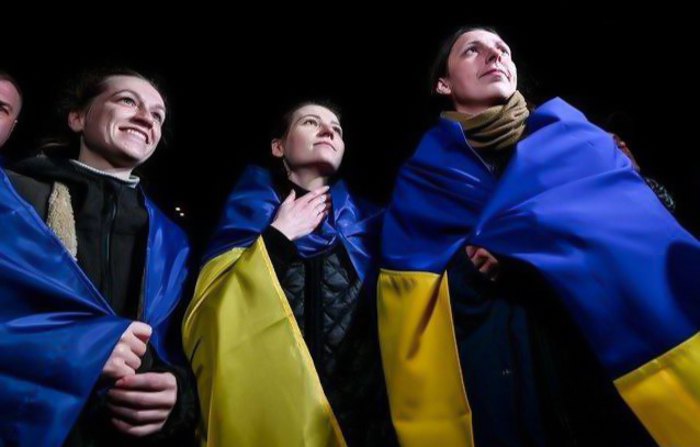
189 days of captivity of a military medic and what happened before and after. The story of Olena Kryvtsova
Source: LB
Author: Olena Struk
On October 17, 108 Ukrainian women returned home from captivity under the occupiers. Among them was Olena Kryvtsova—a medical service lieutenant and resident physician in the therapeutic department of the 555th Mariupol Military Hospital.
She had just stepped out of the vehicle that had brought them to the exchange site in the Zaporizhzhia region. Squinting, she looked up at the evening sky—surprisingly clear and blue. Nearby was a river, over which the sun was setting. “We were like children who had seen something fascinating. Or like some dazed people staring at the sun, shocked by how beautiful it was,” she says. “Finally, we believed it—we were home.”
189 days of captivity were behind them.
A month later, Olena Kryvtsova told LB.ua about her experience of the war, the basements of the Illich Plant, the despair and hope during captivity, and her release.
Olena Kryvtsova is 27 years old. It might seem strange to turn off your brain when making a choice that will later determine your fate, but she was used to following her heart. That is exactly how she became a military medic. No, there were no doctors in her family on either side. Yes, she used to treat dolls and teddy bears as a child. But, after all, it was just a game. But she did like biology in school. Olena enrolled at Vinnytsia Medical University and then chose the military department. There she met her future husband—Yuriy. When they were calling out names, he shouted louder than anyone else from the gallery: “Me!”
In 2018, Olena signed a contract with the Armed Forces of Ukraine. “I felt that I was needed there,” she says. Her mom just asked, “Have you thought this through? Do you realize there’s a war in the country?” Well, of course I understood...
“I read stories, saw photos, watched videos. I imagined the danger. Because war is war. But in reality, to truly grasp it all, I had to go through it myself,” she admits.
After college, Olena studied at the Kyiv Military Academy. She graduated with honors and could choose her posting. Severodonetsk, Chasiv Yar, Mariupol.
A city by the sea—it was romantic, to say the least. Especially since the 555th Garrison Hospital had just been formed there from the 61st Mobile Hospital. It was large (170 personnel) and promising. Some of her classmates had already gone to work there. Without weighing the pros and cons for long, Olena once again followed her heart.
— The hospital was set up in the building of the former city hospital. The move, the setup, the process of getting established—that’s exactly the stage I joined. It was great because it’s probably harder to find your place in an established system. Plus, the team was 95% young men and women—progressive, energetic, and driven to achieve something.
My husband finished his studies at the academy and, a year later, was assigned to a brigade stationed in Mariupol. I wouldn’t say that this reunited our family (laughs). Because we’re still in different units—he has his service, I have mine. For him, it’s either the training ground or a business trip. He comes back—I leave. But still, when we’re in the same city, there’s at least a chance to see each other and spend the weekend together. That’s how military families are.
It was then, at the hospital, that I first encountered combat injuries. Of course, not on the scale of what came later. And for the first time, I felt a certain sense of duality that textbooks don’t mention. I remember when nine soldiers were admitted to us—a shell had hit their dugout. You see them, and everything else shuts down: there’s a specific patient with a specific condition, and there are specific actions you have to take to help. And only then does the rest sink in. Yes, this is a soldier with a limb injury, but on the other hand—this is Artem, 22 years old, who proposed to his girlfriend a week ago. This is a specific fate, a specific path that a person has traveled to reach this point. War is a huge tragedy for the country, but it’s also a great many personal tragedies—for those on the front lines and for those waiting for their loved ones to return. The scale of it is impossible to grasp.
On the eve of the large-scale invasion, Olena went to Volnovakha for a rotation. For many years, a reinforcement team had been working there at the central district hospital: a general practitioner, a surgeon, an anesthesiologist, and a nurse. They had a single small room with minimal equipment where they treated soldiers. During her service in Mariupol, this was Olena’s seventh rotation to Volnovakha.
She slept poorly on the night of February 23–24. Olena was reading the news until she came across the Russian president’s address. Around 4 a.m., she heard an explosion, and just two hours later, the first soldiers were brought in. The Russians were shelling the checkpoints.
— We weren’t mentally prepared for these horrific scenes. It’s one thing when they bring in one or two people with bullet or shrapnel wounds, but it’s another when car after car pulls up to the hospital and you realize this isn’t going to end. And those pools of blood... It’s like something out of a movie. How can there be blood up to your calves inside a building? And then you see it with your own eyes.
We had no idea how critical the situation was, which added to the tension. But in that state of confusion, you couldn’t afford to lose your composure. I remember we started taking the guys’ socks off. Because we didn’t know how close the enemy was. And if the Russians suddenly came in and saw the wounded, it was better for them to think they were just civilians. We spent the entire day on February 24 on our feet. We were transporting the guys the following night as well. The doctors from the Volnovakha hospital helped us the whole time; there was no longer any distinction: these are your patients, these are ours.
And then we received orders to return to the hospital in Mariupol. Its basement had been cleared out some time before the fighting began. That was the extent of our protection. At first, only military personnel were brought to us; then, as the Russians got closer, a large number of civilians began arriving. There were countless wounded, as well as patients requiring general medical care. War doesn’t stop blood sugar levels from rising, which requires insulin. And when the medicines ran out in the pharmacies, we gave people what we had from our own supplies.
I wouldn’t say I felt fear back then. It was something else. It was like having a terrible nightmare. You feel restless, anxious; you want to wake up, but you can’t. Talking with my colleagues was what kept me going. When the rumbling started outside the window—and it was already March—we’d joke among ourselves: “Oh, spring thunderstorms.” Dark humor kicks in; you try to lighten the load for yourself and for those around you. And then, at your own risk, you climb up to the 4th or 5th floor, look out the window, and see the city ablaze, the very neighborhood where you rent your apartment burning. But it didn’t matter anymore what was left there. And then the next thought: it’s not just fire and smoke—there are people there. And I couldn’t wrap my head around it.
— Because of the shelling, we had to keep moving. We work, work, work. Then we feel the explosions getting closer and closer. The walls start shaking, plaster falls on our heads. And then we load up the car again, take everything we have left with us, and drive to the next basement that our guys scouted out in the area. We moved in small groups, mostly at night, dragging the wounded behind us, who also endured everything stoically. Even with their limbs bandaged, they still tried to help. They’d grab a pack of condensed milk and carry it. In total, we changed locations four times at the plant.
These weren’t bunkers. They were shallow rooms, like cellars, relatively safe, where you depended more on luck. For example, we spent some time in a basement with a five-story building above it. It couldn’t withstand the strikes, and one of our entrances collapsed. A soldier was killed then, and there were many wounded.
As for medical supplies, we had what we’d brought from the hospital; most of it was provided by the 36th Brigade. And all of that was slowly running out. Even basic painkillers or antibiotics. You see how there’s less and less of them in the box, while the number of wounded keeps growing. And you work with what you have for now. You treat them for now. And then? It’s better not to think about “then.” Especially since the shelling is so close. Who knows if there will even be a tomorrow.
There were moments when we said goodbye to each other: “It was great and a pleasure working with you.” We assumed that the next bomb could kill us. And we were no longer afraid of death itself. No one said: “I’m not ready to die, I’m too young.” We really didn’t want to die a slow death or be left without arms or legs.
It’s strange to realize that young men and women in their 30s were saying goodbye—people who still had their whole lives ahead of them, not to grow taller, but to grow in breadth. Thank you, that’s all... And then the shelling would stop, and we would go back to work. Until the next flare-up.
I never once cried during the war, even though there were many situations that called for it. Whether the enemy was close by, or when the guys were literally dying in my arms. In a letter home from captivity, I wrote to my mom that only she would see my tears. I won’t say it was on purpose. It’s just the state of mind you’re in. You realize you don’t have the right to break down. Because you’re among people. And people are social beings; they look at each other and get swept up in emotions. And if you hold it together, it’s easier for others to hold it together too. It sets off a whole chain reaction, so you pull yourself together even more. I’ve seen it. A heroic act under those conditions isn’t just shielding someone with your body. It’s even holding it together like this.
— Even if you compare everything I’ve gone through since the war began—the hell, the pain, the blood, the chaos—it wasn’t as terrifying as captivity. I’m not even talking about the physical toll. It’s a period when your life is put on hold. Those 189 days are erased; it’s as if they never existed. You’re suspended somewhere between heaven and earth. You don’t exist. How many times did the Russians tell us: “You aren’t here.” Of course, they meant something else: that we were there unofficially, so they could do whatever they wanted. But it felt as if you really weren’t there. It’s a feeling of alienation that’s impossible to shake, and at the same time, a Groundhog Day with no idea if it will ever end.
When we compared ourselves to people serving sentences, we realized it was easier for them. They know the term: they have a starting point, they have an end point, and they simply live toward it. But you, on the one hand, seem to believe and hope every day. Every morning you wake up and think: “God, it’s not impossible that something good will happen today.” And then in the evening, as you fall asleep, you realize that nothing has happened. And it’s this constant internal struggle between hope and despair.
You try to believe in the good, convincing yourself that nothing lasts forever or is endless. And then despair takes hold of you again. You start thinking about your family: what if my loved ones think I’m dead, what if, what if, what if... It knocks you off your feet like a snowball. Then comes another reset, one that keeps you from turning into a vegetable: they have to wait for you, and as a normal person, not a broken one about whom people say, “Well, it’s clear why she’s like that—she’s been through so much.”
— Many people held on only through their loved ones, through thoughts of them. I don’t know how normal this is from a physiological standpoint, but we talked to them. You sit down, close your eyes, and start talking to your mom: you recall her voice, her facial expressions, her behavior, some of her movements, her habits while talking. You picture the scene in every detail.
It really distracted me when I was mentally cooking something with her. Here we are in the kitchen. I walk to the fridge and take out the ingredients. Mom puts the kettle on for coffee; you can hear the TV. Everything plays out in my head in great detail. Some people would start crying at moments like that. Because you’ve just experienced something good, and then you open your eyes and reality comes crashing down on you again. That dissonance was really jarring. But as long as I lived in those memories, dreams, and images, I could switch off. They were like anchor points in the midst of the unfamiliar and uncertain.
I’m intrigued by the guards’ psychological tactics. They left you with absolutely nothing of your own. Take underwear, for example. It’s been checked; there are no prohibited items in it—why not leave it? But no. This is probably another lever of influence, to take away everything from your past life, from your peaceful life, from your own life, leaving you with nothing. And when you want to hold on to something, you have nothing tangible or physical to hold in your hands. All that remains is to imagine, fantasize, remember what was, and wonder what will come next.
Sometimes these dreams seemed completely unrealistic. This was especially true in the early days of captivity, when there was a strange sense of elation. You think it will all end soon, that you’ll be exchanged. You imagine going to the seaside with your husband.
But day after day passes, and eventually you reach a stage where you force yourself to dream because you need a distraction: I’ll think about going to the seaside. But it doesn’t work; apathy takes over. You ask yourself: “Am I just tired, or has something broken?”
I ask my friend, “Did you think about home today?” — “No.” — “Me neither.” Your past life seems to be drifting away from you. It’s somewhere far, far away. Maybe it never even existed. We explained it to ourselves as emotional exhaustion. You’re constantly climbing this ladder of memories and dreams and falling off it. And getting back up gets harder and harder each time.
— When I start to even say “these people” about Russians, it’s as if I’m stumbling over my words. Can they even be called people? They’re like a mechanism set in motion in a loop. They’ve been fed the idea that Ukrainians are bad. And that’s it—no other reality exists. It shatters against the wall they’ve built around themselves.
Even in the six months we were in contact with them, I never managed to understand them. There were some who, perhaps, showed a glimmer of sympathy or understanding, but for the majority, there was only this one stereotype: you’re Ukrainian—you’re my enemy.
This was especially noticeable when they first brought us to a location—whether a detention center or a penal colony. At first, they displayed extreme aggression, trying to assert their superiority both psychologically and physically.
But after we’d been there for a while, we noticed a sort of shift in their mindset. They saw that we were women who had never held a weapon in our lives, that we weren’t the monsters they’d been told about on TV. But they were like a dog that had been hit for causing trouble. There was confusion in its eyes and a lack of understanding of what was happening. And to regain their footing, they simply pushed reality away from themselves. They had their own version of the truth for everything.
For example. It was very cold at one location, but they wouldn’t give us warm clothes. Before another inspection of the colony, the guards decided to measure the temperature in the room: “Well, now we’ll see how cold it is in here.” They gave us two thermometers. One was broken, stuck at 19 degrees. The mercury in the other dropped from 20 to 13 in our cell. We handed both to the guard. He looked at one, then at the other: “Ah, well, it’s 19 here. What’s wrong with you?” That’s their reality, both locally and on a national scale—to pretend, to insist on whatever suits them best.
When a Ukrainian struggles with all his might to achieve something and live better, a Russian will make sure someone else has it worse. And then, against that backdrop, their own lives don’t seem so miserable to them. I don’t know why that is, but this difference was very noticeable.
— We were moved from place to place several times. This is another way to demonstrate their strength and power—we do whatever we want. No one denied themselves the pleasure of shoving us here or there, or yanking us about. It was painful and unpleasant: we’re people with higher education, we didn’t do anything wrong to anyone, yet they treat us like the worst kind of animal—why?
They constantly asserted themselves by humiliating us, telling us that no one needed us, and that “there is no Ukraine for you.” At the same time, we lived in an information vacuum. Nothing but “Russia 24.” But it was so artificial and surreal that we tried to tune out what we heard.
Things happened in different ways: the guards, for example, could beat us. If they were in that kind of mood, nothing could stop them. The women were harsher toward us, the women. We somehow resolved not to cry, not to beg, not to scream. And only when we returned to the cell, where those who cannot be called human beings could not see us, did we let our emotions out. But we didn’t show them our weakness.
During interrogations, we stood our ground, but we didn’t go too far or lash out at them. You tell them what Ukraine is like, how people live there. And when they start telling you in response that, in reality, things aren’t like that at all, you just sit there and listen. You can’t explain it to the deaf, you can’t prove it to the stupid.
Everyone knew perfectly well that we love our country. When they told us that you aren’t welcome there and are considered traitors, we replied: “So be it, but this is our country.” “You’ll go there, and they’ll shoot you there.” — “Better to be shot there, so Mom has a grave to visit and lay flowers on.”
There was one guard who tried to humiliate us using all sorts of methods. She forced us to memorize their poems and songs while lying face down. “Katyusha,” “Smuglyanka”… Do you want us to learn it? Fine, we’ll train our memory and learn it. She was openly furious about this: “You’re driving me crazy anyway.” It was really funny. And who’s on which side of the cage? Among ourselves, we said that sooner or later this period would end, we’d be free, and they’d just stay in that pit, in that cage. They’d just keep rotting away in it. And that’s their own choice.
“Sauerkraut for lunch and dinner. So sour that if you left an aluminum spoon in the bowl, it would tarnish”
— The conditions we had to live in varied. In one location, twelve of us were placed in a two-person cell, with a toilet right there. Food was handed through a small window in the door, in plastic dishes that someone had already eaten from. Sometimes they forgot to give us spoons. And we had to ask: “Please give us some.” If they didn’t give them to us, we ate with bread; we managed somehow.
We tried rinsing the cabbage under water several times. We joked that it was a massive dose of vitamin C. They might give us rotten potatoes that were slimy. But your sense of disgust shuts off. You wash the potatoes and eat them. For the month and a half we were there, the feeling of hunger never left. When even basic needs cannot be met, it is very difficult. I won’t even mention the other things—restrictions on freedom and information.
There were also more or less acceptable conditions, where everyone had their own bed and three meals a day. Of course, with their own nuances. During that time, I lost a lot of weight—from my usual 47 kg down to 37 kg. At one location, they didn’t just load us up on carbs; sometimes we even got some protein. But it didn’t do any good. It’s like you’re eating the first course, the second course, and the compote. But you do it very quickly. There’s no ritual to eating: you sit down, eat—and feel full. On the contrary, you wolf it down quickly because there are guys with batons standing there, rushing you.
Of course, we all dreamed of vegetables and fruit. We realized how much delicious food we were missing out on: oh, strawberry season; oh, the cucumbers should be here by now; oh, the tomatoes are in season. We craved dairy products. We talked about it constantly among ourselves. And upon returning, you realize how many little things there are in life that fill it with flavors and colors, that are worth your attention, that are important. Right now, I’m talking to you and sipping coffee. The chance to make yourself a cup of coffee, and with milk at that—it’s a miracle!
In one of the camps where we were held, we were allowed a walk after lunch. It felt like you were a dog being taken out for a walk. But it was a chance to breathe some fresh air, see the sky, and meet girls from other sections. And it was such a big deal—you lived for it, from one walk to the next.
We didn’t have watches and learned to tell time by the shadow: if it fell on the windowsill, it meant it was 11 a.m.; if it moved to the second bed, it was 1 p.m., and lunch was coming soon. You sink to a completely primitive level of existence. You just try to get through the day from morning to night and are so happy when lights out comes.
“Sometimes we stood for hours. They order you: ‘Get up and line up!’”
— When we were in the Kursk region, we didn’t go outside even once in a month. And the window was even painted over. So you have no idea what the weather is like, what’s going on; you completely lose your sense of direction. You don’t notice how the nights are getting shorter; you miss out on summer evenings when it’s still light at 10 p.m. It’s very depressing; you feel lost. And all of this against the backdrop of a complete lack of free will. You can’t eat when you want or as much as you want; every move you make is controlled by someone else, and the restrictions are extreme in every way.
For us, for example, we were only allowed to sit on the bed during the day at one specific location. At all the others, we could sit either on stools or on the floor. But even when you’re sitting on the floor, the guard peering through the peephole might slam the door so hard that everything inside you clenches up. He just doesn’t want you to sit there.
Once they lined us up like that at 8 a.m. and didn’t let us disperse until 4 p.m., when our backs and legs were burning like hell. That was back when we still had dreams. You stood there, closed your eyes, and tried to zone out: this will end, this will pass. In the meantime, in my mind, I was making cheese pancakes with my mom. Periodically, blows against the wall or the door would bring you back to reality.
But the hardest part was hearing the guys being mocked. We even saw those sneering smiles. We’re sitting in the cell, and in the hallway they’re beating the guys, just because they’re Ukrainian, and at that moment the guard peeks in and asks, “So, girls, how are you feeling?” They knew perfectly well that we could hear everything and were praying for it to end.
I kept thinking about my husband: how is he, where is he? As long as he’s not in captivity. Because when I heard how they treated our boys, you wouldn’t wish that on anyone—I wanted to say, not even an enemy. But no...
In all my 27 years, whenever I was asked who I hated or who I was offended by, I realized I couldn’t name a single person. I was nowhere near hating anyone. Now I’ve discovered it within myself. I don’t wish them anything excessive. I just really want them to feel everything that each of us has felt and continues to feel.
— It’s an emotion so overwhelming that it overshadows everything powerful I’ve ever felt. People hug you, hand you a flag, and give you phones. You’re like a wild person who hasn’t held a phone in six months, trying to tap it with a single finger. It’s actually very hard to get used to this barrage of emotions and information after a complete vacuum. In physiology, this is called “overload inhibition”: when excessive triggers affect the body, a safety mechanism kicks in that blocks other influences and information. The body has a certain processing capacity, and even today, a month later, it hasn’t fully recovered. But I think time changes everything. Unfortunately, it takes away a lot of good things too. But it also gradually takes away the bad. We are all very grateful to those who worked hard for our return; personally, I am grateful to my husband’s brother, Andriy. And we are waiting for the other captives to be returned.
Right now, I’m trying to go with the flow. My immediate plans are: to finish my rehabilitation at the hospital, and to have a good cry with my mom, since we didn’t really get to do that over the phone. I also have some long-term goals that I’m confident about. I know for sure that I’ll continue my service. I can’t imagine leaving the army under these circumstances. The country needs all of us.
I’m still trying to figure out how this experience has affected me. I guess I get irritated and snap over little things a lot. I might stop at the bed, as if waiting for permission to sit down on it. It’s gotten harder with people who’ve been living their own lives all this time. There are certain gaps in our relationships. But I think we’ll find common ground anyway. Especially now, when a sense of unity is very palpable. It’s not just about everyone holding a flag together on Independence Day. Now it manifests itself in actions. And that’s the huge bridge that leads us to one another. It’s shared by everyone. And those little bridges—personal, local, at work, in daily life, in the store, just on the street—they take time. I’m sure they’ll appear too, and that there won’t be this aggression and division of “you fought, and you didn’t.” Because the tragedy is the same for all of us. And I’m sure that despite everything, a bright future will follow. I’ve never been such an optimist, but now I’m confident that things will definitely turn out great for this country.
Author: Olena Struk
On October 17, 108 Ukrainian women returned home from captivity under the occupiers. Among them was Olena Kryvtsova—a medical service lieutenant and resident physician in the therapeutic department of the 555th Mariupol Military Hospital.
She had just stepped out of the vehicle that had brought them to the exchange site in the Zaporizhzhia region. Squinting, she looked up at the evening sky—surprisingly clear and blue. Nearby was a river, over which the sun was setting. “We were like children who had seen something fascinating. Or like some dazed people staring at the sun, shocked by how beautiful it was,” she says. “Finally, we believed it—we were home.”
189 days of captivity were behind them.
A month later, Olena Kryvtsova told LB.ua about her experience of the war, the basements of the Illich Plant, the despair and hope during captivity, and her release.
Mariupol
Summer 2020. The train was pulling into Mariupol. Through the window, Olena saw the smoke billowing from Azovstal and the Illich Steel Plant. The scale and landscapes of this industrial city were unfamiliar to her, having been born in the Rivne region. Right next to the train station was the sea. Not even the smell of the trains could drown out its salty summer breeze. This marked the beginning of a new phase in her life—working at the garrison military hospital.Olena Kryvtsova is 27 years old. It might seem strange to turn off your brain when making a choice that will later determine your fate, but she was used to following her heart. That is exactly how she became a military medic. No, there were no doctors in her family on either side. Yes, she used to treat dolls and teddy bears as a child. But, after all, it was just a game. But she did like biology in school. Olena enrolled at Vinnytsia Medical University and then chose the military department. There she met her future husband—Yuriy. When they were calling out names, he shouted louder than anyone else from the gallery: “Me!”
In 2018, Olena signed a contract with the Armed Forces of Ukraine. “I felt that I was needed there,” she says. Her mom just asked, “Have you thought this through? Do you realize there’s a war in the country?” Well, of course I understood...
“I read stories, saw photos, watched videos. I imagined the danger. Because war is war. But in reality, to truly grasp it all, I had to go through it myself,” she admits.
After college, Olena studied at the Kyiv Military Academy. She graduated with honors and could choose her posting. Severodonetsk, Chasiv Yar, Mariupol.
A city by the sea—it was romantic, to say the least. Especially since the 555th Garrison Hospital had just been formed there from the 61st Mobile Hospital. It was large (170 personnel) and promising. Some of her classmates had already gone to work there. Without weighing the pros and cons for long, Olena once again followed her heart.
“War is a huge tragedy for the country, but it’s also a great many personal tragedies.”
— The hospital was set up in the building of the former city hospital. The move, the setup, the process of getting established—that’s exactly the stage I joined. It was great because it’s probably harder to find your place in an established system. Plus, the team was 95% young men and women—progressive, energetic, and driven to achieve something.
My husband finished his studies at the academy and, a year later, was assigned to a brigade stationed in Mariupol. I wouldn’t say that this reunited our family (laughs). Because we’re still in different units—he has his service, I have mine. For him, it’s either the training ground or a business trip. He comes back—I leave. But still, when we’re in the same city, there’s at least a chance to see each other and spend the weekend together. That’s how military families are.
It was then, at the hospital, that I first encountered combat injuries. Of course, not on the scale of what came later. And for the first time, I felt a certain sense of duality that textbooks don’t mention. I remember when nine soldiers were admitted to us—a shell had hit their dugout. You see them, and everything else shuts down: there’s a specific patient with a specific condition, and there are specific actions you have to take to help. And only then does the rest sink in. Yes, this is a soldier with a limb injury, but on the other hand—this is Artem, 22 years old, who proposed to his girlfriend a week ago. This is a specific fate, a specific path that a person has traveled to reach this point. War is a huge tragedy for the country, but it’s also a great many personal tragedies—for those on the front lines and for those waiting for their loved ones to return. The scale of it is impossible to grasp.
The Hospital
In early 2022, Olena was on leave, which she spent with her mother. And then, once again, the familiar journey back to Mariupol. Perhaps some inner anxiety was already setting in. But the work kept her mind off everything else.On the eve of the large-scale invasion, Olena went to Volnovakha for a rotation. For many years, a reinforcement team had been working there at the central district hospital: a general practitioner, a surgeon, an anesthesiologist, and a nurse. They had a single small room with minimal equipment where they treated soldiers. During her service in Mariupol, this was Olena’s seventh rotation to Volnovakha.
She slept poorly on the night of February 23–24. Olena was reading the news until she came across the Russian president’s address. Around 4 a.m., she heard an explosion, and just two hours later, the first soldiers were brought in. The Russians were shelling the checkpoints.
“It’s like something out of a movie. How can there be blood up to your calves inside a building? And then you see it with your own eyes.”
— We weren’t mentally prepared for these horrific scenes. It’s one thing when they bring in one or two people with bullet or shrapnel wounds, but it’s another when car after car pulls up to the hospital and you realize this isn’t going to end. And those pools of blood... It’s like something out of a movie. How can there be blood up to your calves inside a building? And then you see it with your own eyes.
We had no idea how critical the situation was, which added to the tension. But in that state of confusion, you couldn’t afford to lose your composure. I remember we started taking the guys’ socks off. Because we didn’t know how close the enemy was. And if the Russians suddenly came in and saw the wounded, it was better for them to think they were just civilians. We spent the entire day on February 24 on our feet. We were transporting the guys the following night as well. The doctors from the Volnovakha hospital helped us the whole time; there was no longer any distinction: these are your patients, these are ours.
And then we received orders to return to the hospital in Mariupol. Its basement had been cleared out some time before the fighting began. That was the extent of our protection. At first, only military personnel were brought to us; then, as the Russians got closer, a large number of civilians began arriving. There were countless wounded, as well as patients requiring general medical care. War doesn’t stop blood sugar levels from rising, which requires insulin. And when the medicines ran out in the pharmacies, we gave people what we had from our own supplies.
I wouldn’t say I felt fear back then. It was something else. It was like having a terrible nightmare. You feel restless, anxious; you want to wake up, but you can’t. Talking with my colleagues was what kept me going. When the rumbling started outside the window—and it was already March—we’d joke among ourselves: “Oh, spring thunderstorms.” Dark humor kicks in; you try to lighten the load for yourself and for those around you. And then, at your own risk, you climb up to the 4th or 5th floor, look out the window, and see the city ablaze, the very neighborhood where you rent your apartment burning. But it didn’t matter anymore what was left there. And then the next thought: it’s not just fire and smoke—there are people there. And I couldn’t wrap my head around it.
“The surgeons’ bags under their eyes reached their chins. You hug them and say, ‘We’ll get through this.’”
— In the beginning, the hospital was taking in nearly thirty wounded people a day. Later, that number reached over a hundred. So many faces come to mind. But what’s most interesting is that I remember them all not contorted with pain, but smiling. You try to help a guy, even just ask how he’s doing, and he’ll always smile, take your hand, and say, “We’ll get through this.” And you realize, where would you leave them? You’re in the same boat.
Our surgeons, nurses, and nursing assistants didn’t rest for a moment, day or night. The surgeons’ bags under their eyes reached their chins. You hug them and say, “We’ll get through this.” But you realize just how hard it is for them. This isn’t assembly-line work with machines; they hold human lives in their hands. I was afraid for their health, both physical and mental. I just wanted them to hold on, because resources aren’t infinite, no matter how strong a person is. Especially without food, sleep, or reinforcements. You walk up, nudge him, ask if he’s at least eaten. He’s standing there with gloves, up to his elbows in blood, and you realize it’s a stupid question. And over the radio, they’re reporting that they’re bringing in the wounded again.
Some doctors from civilian hospitals came to the hospital to help. We had civilians there too. People thought that war is war, but medical facilities and churches are safe.
The blast waves blew out our windows and doors. For a long time, we slept fully clothed under four blankets, trying to stay warm. But it still felt like you were sleeping on the street. Generators don’t last forever, and there’s no hot water to even make a cup of tea. The only thing is that rain and snow don’t fall on your head, because the roof is still holding up.
Our surgeons, nurses, and nursing assistants didn’t rest for a moment, day or night. The surgeons’ bags under their eyes reached their chins. You hug them and say, “We’ll get through this.” But you realize just how hard it is for them. This isn’t assembly-line work with machines; they hold human lives in their hands. I was afraid for their health, both physical and mental. I just wanted them to hold on, because resources aren’t infinite, no matter how strong a person is. Especially without food, sleep, or reinforcements. You walk up, nudge him, ask if he’s at least eaten. He’s standing there with gloves, up to his elbows in blood, and you realize it’s a stupid question. And over the radio, they’re reporting that they’re bringing in the wounded again.
Some doctors from civilian hospitals came to the hospital to help. We had civilians there too. People thought that war is war, but medical facilities and churches are safe.
The blast waves blew out our windows and doors. For a long time, we slept fully clothed under four blankets, trying to stay warm. But it still felt like you were sleeping on the street. Generators don’t last forever, and there’s no hot water to even make a cup of tea. The only thing is that rain and snow don’t fall on your head, because the roof is still holding up.
The Illich Plant
In mid-March, the wounded began arriving from the residential area across the street. This meant the shells were landing very close by. And on March 16, one such shell landed in the hospital courtyard, striking the monument to fallen military medics. Then the nearby “Neptune” swimming pool was destroyed—a massive glass structure that had been under construction for many years and was just about to open. It was only a matter of time before a shell would strike the hospital itself. And that same day, an aerial bomb struck the intensive care unit. Surprisingly, virtually no one on the staff was injured. Not even the seconded medical orderly and disinfection instructor, who was right at the epicenter of the strike. He is currently in captivity. That was the last time Olena was able to call her mother. After that, contact was very sporadic—just a text message saying “I’m alive.”
After that, the hospital began moving in small groups, along with equipment and medications, to the Illich and Azovstal plants. Olena ended up at the Illich plant. “We were just loaded into a truck, and wherever it took you, that’s where you were. And you start all over again,” she says.
“No electricity, no water, no basic way to wash up, not even to change clothes—none of that mattered.”
“There you are in yet another damp, dusty, dark basement. It’s not just unsuitable for the sick; it’s simply not fit for people. But we tried to make it cozy wherever we were. Some swept the floor, some knocked together beds from planks, some installed lighting, some brought in food. If water was dripping from the ceiling in some rooms, we made makeshift screens.
When the 36th Brigade, which was defending the Illich Plant, found out where the hospital was located, all their evacuations were directed to us. It was very difficult to help under those conditions, especially for the surgeons. I would step in during the postoperative phase. When people ask me, “You’re a general practitioner—what are you doing in a war?”—I always explain that I have two working hands. Those are resources. There’s never enough of them in a war.”
Changing dressings, replacing a urinal, bringing food, lifting a head to give water, administering an injection. You’re just walking down the hallway, with beds of wounded on both sides, and everyone is asking for something. Someone just wants something sweet, someone wants a cigarette, someone is in pain and needs pain relief, and someone needs an antibiotic injection. By the time you reach the end of the corridor, you can already turn back to the beginning, because they’re calling you again. There are a lot of people, each with their own needs. Yes, their needs have been reduced to food, drink, and pain relief, but on the other hand, they’ve intensified because their own pain hurts the most.
A lot of the guys just wanted to talk. Those whose phones had survived showed photos of their children, talked about their daughter, about what a beautiful woman she was. People were sustained by their love for their loved ones. Many were curious about the overall situation, and for some reason, the guys saw the medics as people who possessed some kind of sacred knowledge (laughs). They’d ask, “So, what’s going on?” You realize you’re just as much in the dark, but you tell them everything will be okay. What else could you say?
I suppose everyday life took a back seat at that time. The lack of light, water, or even the basic ability to wash up or change clothes—none of that mattered. We even got used to the constant cold somehow.
But the hardest part was living through the story of everyone who was brought in. I remember a patient with a traumatic amputation of his arms. He was conscious when he arrived. The image of that maimed young man and his question stuck in my mind: “Putin, what are you doing?” We all tried to find an answer.
And then there was that uncertainty, which began on February 24 and didn’t fade until the day we were exchanged. It was exhausting. You try to analyze, but analysis is impossible because there isn’t enough information. Coming up with so-called “strategic strategies,” as we called them among ourselves, is just a waste of resources. If you have some information for that day, that hour, that minute, locally, then you can do something with it and keep living. For us, there was only one reality—shelling, injuries—that’s all. We didn’t know about any global issues or the overall situation. The world narrowed down to the spot where you were standing. And that was all that mattered.
After that, the hospital began moving in small groups, along with equipment and medications, to the Illich and Azovstal plants. Olena ended up at the Illich plant. “We were just loaded into a truck, and wherever it took you, that’s where you were. And you start all over again,” she says.
“No electricity, no water, no basic way to wash up, not even to change clothes—none of that mattered.”
“There you are in yet another damp, dusty, dark basement. It’s not just unsuitable for the sick; it’s simply not fit for people. But we tried to make it cozy wherever we were. Some swept the floor, some knocked together beds from planks, some installed lighting, some brought in food. If water was dripping from the ceiling in some rooms, we made makeshift screens.
When the 36th Brigade, which was defending the Illich Plant, found out where the hospital was located, all their evacuations were directed to us. It was very difficult to help under those conditions, especially for the surgeons. I would step in during the postoperative phase. When people ask me, “You’re a general practitioner—what are you doing in a war?”—I always explain that I have two working hands. Those are resources. There’s never enough of them in a war.”
Changing dressings, replacing a urinal, bringing food, lifting a head to give water, administering an injection. You’re just walking down the hallway, with beds of wounded on both sides, and everyone is asking for something. Someone just wants something sweet, someone wants a cigarette, someone is in pain and needs pain relief, and someone needs an antibiotic injection. By the time you reach the end of the corridor, you can already turn back to the beginning, because they’re calling you again. There are a lot of people, each with their own needs. Yes, their needs have been reduced to food, drink, and pain relief, but on the other hand, they’ve intensified because their own pain hurts the most.
A lot of the guys just wanted to talk. Those whose phones had survived showed photos of their children, talked about their daughter, about what a beautiful woman she was. People were sustained by their love for their loved ones. Many were curious about the overall situation, and for some reason, the guys saw the medics as people who possessed some kind of sacred knowledge (laughs). They’d ask, “So, what’s going on?” You realize you’re just as much in the dark, but you tell them everything will be okay. What else could you say?
I suppose everyday life took a back seat at that time. The lack of light, water, or even the basic ability to wash up or change clothes—none of that mattered. We even got used to the constant cold somehow.
But the hardest part was living through the story of everyone who was brought in. I remember a patient with a traumatic amputation of his arms. He was conscious when he arrived. The image of that maimed young man and his question stuck in my mind: “Putin, what are you doing?” We all tried to find an answer.
And then there was that uncertainty, which began on February 24 and didn’t fade until the day we were exchanged. It was exhausting. You try to analyze, but analysis is impossible because there isn’t enough information. Coming up with so-called “strategic strategies,” as we called them among ourselves, is just a waste of resources. If you have some information for that day, that hour, that minute, locally, then you can do something with it and keep living. For us, there was only one reality—shelling, injuries—that’s all. We didn’t know about any global issues or the overall situation. The world narrowed down to the spot where you were standing. And that was all that mattered.
“You see how the box of medicine gets smaller and smaller, while the number of wounded keeps growing.”
— Because of the shelling, we had to keep moving. We work, work, work. Then we feel the explosions getting closer and closer. The walls start shaking, plaster falls on our heads. And then we load up the car again, take everything we have left with us, and drive to the next basement that our guys scouted out in the area. We moved in small groups, mostly at night, dragging the wounded behind us, who also endured everything stoically. Even with their limbs bandaged, they still tried to help. They’d grab a pack of condensed milk and carry it. In total, we changed locations four times at the plant.
These weren’t bunkers. They were shallow rooms, like cellars, relatively safe, where you depended more on luck. For example, we spent some time in a basement with a five-story building above it. It couldn’t withstand the strikes, and one of our entrances collapsed. A soldier was killed then, and there were many wounded.
As for medical supplies, we had what we’d brought from the hospital; most of it was provided by the 36th Brigade. And all of that was slowly running out. Even basic painkillers or antibiotics. You see how there’s less and less of them in the box, while the number of wounded keeps growing. And you work with what you have for now. You treat them for now. And then? It’s better not to think about “then.” Especially since the shelling is so close. Who knows if there will even be a tomorrow.
There were moments when we said goodbye to each other: “It was great and a pleasure working with you.” We assumed that the next bomb could kill us. And we were no longer afraid of death itself. No one said: “I’m not ready to die, I’m too young.” We really didn’t want to die a slow death or be left without arms or legs.
It’s strange to realize that young men and women in their 30s were saying goodbye—people who still had their whole lives ahead of them, not to grow taller, but to grow in breadth. Thank you, that’s all... And then the shelling would stop, and we would go back to work. Until the next flare-up.
I never once cried during the war, even though there were many situations that called for it. Whether the enemy was close by, or when the guys were literally dying in my arms. In a letter home from captivity, I wrote to my mom that only she would see my tears. I won’t say it was on purpose. It’s just the state of mind you’re in. You realize you don’t have the right to break down. Because you’re among people. And people are social beings; they look at each other and get swept up in emotions. And if you hold it together, it’s easier for others to hold it together too. It sets off a whole chain reaction, so you pull yourself together even more. I’ve seen it. A heroic act under those conditions isn’t just shielding someone with your body. It’s even holding it together like this.
Captivity
By early April, the hospital was already facing severe food shortages—basically, they ate whatever they could find. But the most critical issue was the lack of medicine. The Russians had come very close.
“When we ran out of bandages and painkillers, I could have probably grabbed a stick and run out, but that wouldn’t have saved anyone. The guys defending our position said the enemy was practically within machine-gun range. There were thoughts that the Russians would enter the bunker, shoot everyone, and take those they didn’t shoot prisoner. That’s how we imagined it. But it turned out differently. The commanders somehow agreed that we would get out unharmed. “They divided us into small groups: the women from the hospital separately, the men separately, and the wounded—they put us in cars and took us away,” Olena says.
On April 12, the wife of one of the doctors wrote to her husband. That’s how the family learned that Olena, along with other medical staff from Military Hospital 555, had been taken prisoner. The search for her was initiated by Andriy Kryvtsov, Olena’s husband’s brother, while her husband was still in the combat zone. Later, Andriy would become one of the coordinators of a group of relatives of captured military medics.
“When we ran out of bandages and painkillers, I could have probably grabbed a stick and run out, but that wouldn’t have saved anyone. The guys defending our position said the enemy was practically within machine-gun range. There were thoughts that the Russians would enter the bunker, shoot everyone, and take those they didn’t shoot prisoner. That’s how we imagined it. But it turned out differently. The commanders somehow agreed that we would get out unharmed. “They divided us into small groups: the women from the hospital separately, the men separately, and the wounded—they put us in cars and took us away,” Olena says.
On April 12, the wife of one of the doctors wrote to her husband. That’s how the family learned that Olena, along with other medical staff from Military Hospital 555, had been taken prisoner. The search for her was initiated by Andriy Kryvtsov, Olena’s husband’s brother, while her husband was still in the combat zone. Later, Andriy would become one of the coordinators of a group of relatives of captured military medics.
“It’s this constant internal struggle between hope and despair”
— Even if you compare everything I’ve gone through since the war began—the hell, the pain, the blood, the chaos—it wasn’t as terrifying as captivity. I’m not even talking about the physical toll. It’s a period when your life is put on hold. Those 189 days are erased; it’s as if they never existed. You’re suspended somewhere between heaven and earth. You don’t exist. How many times did the Russians tell us: “You aren’t here.” Of course, they meant something else: that we were there unofficially, so they could do whatever they wanted. But it felt as if you really weren’t there. It’s a feeling of alienation that’s impossible to shake, and at the same time, a Groundhog Day with no idea if it will ever end.
When we compared ourselves to people serving sentences, we realized it was easier for them. They know the term: they have a starting point, they have an end point, and they simply live toward it. But you, on the one hand, seem to believe and hope every day. Every morning you wake up and think: “God, it’s not impossible that something good will happen today.” And then in the evening, as you fall asleep, you realize that nothing has happened. And it’s this constant internal struggle between hope and despair.
You try to believe in the good, convincing yourself that nothing lasts forever or is endless. And then despair takes hold of you again. You start thinking about your family: what if my loved ones think I’m dead, what if, what if, what if... It knocks you off your feet like a snowball. Then comes another reset, one that keeps you from turning into a vegetable: they have to wait for you, and as a normal person, not a broken one about whom people say, “Well, it’s clear why she’s like that—she’s been through so much.”
“They left you with absolutely nothing of your own”
— Many people held on only through their loved ones, through thoughts of them. I don’t know how normal this is from a physiological standpoint, but we talked to them. You sit down, close your eyes, and start talking to your mom: you recall her voice, her facial expressions, her behavior, some of her movements, her habits while talking. You picture the scene in every detail.
It really distracted me when I was mentally cooking something with her. Here we are in the kitchen. I walk to the fridge and take out the ingredients. Mom puts the kettle on for coffee; you can hear the TV. Everything plays out in my head in great detail. Some people would start crying at moments like that. Because you’ve just experienced something good, and then you open your eyes and reality comes crashing down on you again. That dissonance was really jarring. But as long as I lived in those memories, dreams, and images, I could switch off. They were like anchor points in the midst of the unfamiliar and uncertain.
I’m intrigued by the guards’ psychological tactics. They left you with absolutely nothing of your own. Take underwear, for example. It’s been checked; there are no prohibited items in it—why not leave it? But no. This is probably another lever of influence, to take away everything from your past life, from your peaceful life, from your own life, leaving you with nothing. And when you want to hold on to something, you have nothing tangible or physical to hold in your hands. All that remains is to imagine, fantasize, remember what was, and wonder what will come next.
Sometimes these dreams seemed completely unrealistic. This was especially true in the early days of captivity, when there was a strange sense of elation. You think it will all end soon, that you’ll be exchanged. You imagine going to the seaside with your husband.
But day after day passes, and eventually you reach a stage where you force yourself to dream because you need a distraction: I’ll think about going to the seaside. But it doesn’t work; apathy takes over. You ask yourself: “Am I just tired, or has something broken?”
I ask my friend, “Did you think about home today?” — “No.” — “Me neither.” Your past life seems to be drifting away from you. It’s somewhere far, far away. Maybe it never even existed. We explained it to ourselves as emotional exhaustion. You’re constantly climbing this ladder of memories and dreams and falling off it. And getting back up gets harder and harder each time.
“Can they even be called people?”
— When I start to even say “these people” about Russians, it’s as if I’m stumbling over my words. Can they even be called people? They’re like a mechanism set in motion in a loop. They’ve been fed the idea that Ukrainians are bad. And that’s it—no other reality exists. It shatters against the wall they’ve built around themselves.
Even in the six months we were in contact with them, I never managed to understand them. There were some who, perhaps, showed a glimmer of sympathy or understanding, but for the majority, there was only this one stereotype: you’re Ukrainian—you’re my enemy.
This was especially noticeable when they first brought us to a location—whether a detention center or a penal colony. At first, they displayed extreme aggression, trying to assert their superiority both psychologically and physically.
But after we’d been there for a while, we noticed a sort of shift in their mindset. They saw that we were women who had never held a weapon in our lives, that we weren’t the monsters they’d been told about on TV. But they were like a dog that had been hit for causing trouble. There was confusion in its eyes and a lack of understanding of what was happening. And to regain their footing, they simply pushed reality away from themselves. They had their own version of the truth for everything.
For example. It was very cold at one location, but they wouldn’t give us warm clothes. Before another inspection of the colony, the guards decided to measure the temperature in the room: “Well, now we’ll see how cold it is in here.” They gave us two thermometers. One was broken, stuck at 19 degrees. The mercury in the other dropped from 20 to 13 in our cell. We handed both to the guard. He looked at one, then at the other: “Ah, well, it’s 19 here. What’s wrong with you?” That’s their reality, both locally and on a national scale—to pretend, to insist on whatever suits them best.
When a Ukrainian struggles with all his might to achieve something and live better, a Russian will make sure someone else has it worse. And then, against that backdrop, their own lives don’t seem so miserable to them. I don’t know why that is, but this difference was very noticeable.
“No one denied themselves the pleasure of giving someone a shove here or a tug there”
— We were moved from place to place several times. This is another way to demonstrate their strength and power—we do whatever we want. No one denied themselves the pleasure of shoving us here or there, or yanking us about. It was painful and unpleasant: we’re people with higher education, we didn’t do anything wrong to anyone, yet they treat us like the worst kind of animal—why?
They constantly asserted themselves by humiliating us, telling us that no one needed us, and that “there is no Ukraine for you.” At the same time, we lived in an information vacuum. Nothing but “Russia 24.” But it was so artificial and surreal that we tried to tune out what we heard.
Things happened in different ways: the guards, for example, could beat us. If they were in that kind of mood, nothing could stop them. The women were harsher toward us, the women. We somehow resolved not to cry, not to beg, not to scream. And only when we returned to the cell, where those who cannot be called human beings could not see us, did we let our emotions out. But we didn’t show them our weakness.
During interrogations, we stood our ground, but we didn’t go too far or lash out at them. You tell them what Ukraine is like, how people live there. And when they start telling you in response that, in reality, things aren’t like that at all, you just sit there and listen. You can’t explain it to the deaf, you can’t prove it to the stupid.
Everyone knew perfectly well that we love our country. When they told us that you aren’t welcome there and are considered traitors, we replied: “So be it, but this is our country.” “You’ll go there, and they’ll shoot you there.” — “Better to be shot there, so Mom has a grave to visit and lay flowers on.”
There was one guard who tried to humiliate us using all sorts of methods. She forced us to memorize their poems and songs while lying face down. “Katyusha,” “Smuglyanka”… Do you want us to learn it? Fine, we’ll train our memory and learn it. She was openly furious about this: “You’re driving me crazy anyway.” It was really funny. And who’s on which side of the cage? Among ourselves, we said that sooner or later this period would end, we’d be free, and they’d just stay in that pit, in that cage. They’d just keep rotting away in it. And that’s their own choice.
“Sauerkraut for lunch and dinner. So sour that if you left an aluminum spoon in the bowl, it would tarnish”
— The conditions we had to live in varied. In one location, twelve of us were placed in a two-person cell, with a toilet right there. Food was handed through a small window in the door, in plastic dishes that someone had already eaten from. Sometimes they forgot to give us spoons. And we had to ask: “Please give us some.” If they didn’t give them to us, we ate with bread; we managed somehow.
Sauerkraut for lunch and dinner. It was so sour that if you left an aluminum spoon in the bowl, it would tarnish.
We tried rinsing the cabbage under water several times. We joked that it was a massive dose of vitamin C. They might give us rotten potatoes that were slimy. But your sense of disgust shuts off. You wash the potatoes and eat them. For the month and a half we were there, the feeling of hunger never left. When even basic needs cannot be met, it is very difficult. I won’t even mention the other things—restrictions on freedom and information.
There were also more or less acceptable conditions, where everyone had their own bed and three meals a day. Of course, with their own nuances. During that time, I lost a lot of weight—from my usual 47 kg down to 37 kg. At one location, they didn’t just load us up on carbs; sometimes we even got some protein. But it didn’t do any good. It’s like you’re eating the first course, the second course, and the compote. But you do it very quickly. There’s no ritual to eating: you sit down, eat—and feel full. On the contrary, you wolf it down quickly because there are guys with batons standing there, rushing you.
Of course, we all dreamed of vegetables and fruit. We realized how much delicious food we were missing out on: oh, strawberry season; oh, the cucumbers should be here by now; oh, the tomatoes are in season. We craved dairy products. We talked about it constantly among ourselves. And upon returning, you realize how many little things there are in life that fill it with flavors and colors, that are worth your attention, that are important. Right now, I’m talking to you and sipping coffee. The chance to make yourself a cup of coffee, and with milk at that—it’s a miracle!
In one of the camps where we were held, we were allowed a walk after lunch. It felt like you were a dog being taken out for a walk. But it was a chance to breathe some fresh air, see the sky, and meet girls from other sections. And it was such a big deal—you lived for it, from one walk to the next.
We didn’t have watches and learned to tell time by the shadow: if it fell on the windowsill, it meant it was 11 a.m.; if it moved to the second bed, it was 1 p.m., and lunch was coming soon. You sink to a completely primitive level of existence. You just try to get through the day from morning to night and are so happy when lights out comes.
“Sometimes we stood for hours. They order you: ‘Get up and line up!’”
— When we were in the Kursk region, we didn’t go outside even once in a month. And the window was even painted over. So you have no idea what the weather is like, what’s going on; you completely lose your sense of direction. You don’t notice how the nights are getting shorter; you miss out on summer evenings when it’s still light at 10 p.m. It’s very depressing; you feel lost. And all of this against the backdrop of a complete lack of free will. You can’t eat when you want or as much as you want; every move you make is controlled by someone else, and the restrictions are extreme in every way.
For us, for example, we were only allowed to sit on the bed during the day at one specific location. At all the others, we could sit either on stools or on the floor. But even when you’re sitting on the floor, the guard peering through the peephole might slam the door so hard that everything inside you clenches up. He just doesn’t want you to sit there.
Sometimes we stood for hours. They order you: “Stand up and line up.”
Once they lined us up like that at 8 a.m. and didn’t let us disperse until 4 p.m., when our backs and legs were burning like hell. That was back when we still had dreams. You stood there, closed your eyes, and tried to zone out: this will end, this will pass. In the meantime, in my mind, I was making cheese pancakes with my mom. Periodically, blows against the wall or the door would bring you back to reality.
But the hardest part was hearing the guys being mocked. We even saw those sneering smiles. We’re sitting in the cell, and in the hallway they’re beating the guys, just because they’re Ukrainian, and at that moment the guard peeks in and asks, “So, girls, how are you feeling?” They knew perfectly well that we could hear everything and were praying for it to end.
I kept thinking about my husband: how is he, where is he? As long as he’s not in captivity. Because when I heard how they treated our boys, you wouldn’t wish that on anyone—I wanted to say, not even an enemy. But no...
In all my 27 years, whenever I was asked who I hated or who I was offended by, I realized I couldn’t name a single person. I was nowhere near hating anyone. Now I’ve discovered it within myself. I don’t wish them anything excessive. I just really want them to feel everything that each of us has felt and continues to feel.
Release
Their hands and eyes were bound, and they were loaded into a police van. A long road lay ahead. Until the very end, they didn’t understand what was happening, because it seemed like just another transfer to another colony. A thought crept into my mind: maybe this time it’s liberation? But such hopes are bound to lead to disappointment. Better to push them away. Then came the plane and another car ride. Through a crack in the tarp, she managed to make out Crimean road signs. They were heading toward the Zaporizhzhia region.
Finally, they stopped. The first person Olena saw when she got out of the car was a man in a black bulletproof vest with a thin yellow-and-blue ribbon.
“Girls, heads up—you’re in Ukraine.”
Finally, they stopped. The first person Olena saw when she got out of the car was a man in a black bulletproof vest with a thin yellow-and-blue ribbon.
“Girls, heads up—you’re in Ukraine.”
“I know for sure that I’ll continue my service. I can’t imagine leaving the army under these conditions.”
— It’s an emotion so overwhelming that it overshadows everything powerful I’ve ever felt. People hug you, hand you a flag, and give you phones. You’re like a wild person who hasn’t held a phone in six months, trying to tap it with a single finger. It’s actually very hard to get used to this barrage of emotions and information after a complete vacuum. In physiology, this is called “overload inhibition”: when excessive triggers affect the body, a safety mechanism kicks in that blocks other influences and information. The body has a certain processing capacity, and even today, a month later, it hasn’t fully recovered. But I think time changes everything. Unfortunately, it takes away a lot of good things too. But it also gradually takes away the bad. We are all very grateful to those who worked hard for our return; personally, I am grateful to my husband’s brother, Andriy. And we are waiting for the other captives to be returned.
Right now, I’m trying to go with the flow. My immediate plans are: to finish my rehabilitation at the hospital, and to have a good cry with my mom, since we didn’t really get to do that over the phone. I also have some long-term goals that I’m confident about. I know for sure that I’ll continue my service. I can’t imagine leaving the army under these circumstances. The country needs all of us.
I’m still trying to figure out how this experience has affected me. I guess I get irritated and snap over little things a lot. I might stop at the bed, as if waiting for permission to sit down on it. It’s gotten harder with people who’ve been living their own lives all this time. There are certain gaps in our relationships. But I think we’ll find common ground anyway. Especially now, when a sense of unity is very palpable. It’s not just about everyone holding a flag together on Independence Day. Now it manifests itself in actions. And that’s the huge bridge that leads us to one another. It’s shared by everyone. And those little bridges—personal, local, at work, in daily life, in the store, just on the street—they take time. I’m sure they’ll appear too, and that there won’t be this aggression and division of “you fought, and you didn’t.” Because the tragedy is the same for all of us. And I’m sure that despite everything, a bright future will follow. I’ve never been such an optimist, but now I’m confident that things will definitely turn out great for this country.
This is an automatic translation generated by DeepL.