"You will die here. But you have a choice": Azov fighter released from captivity tells how they tried to recruit him for war against Ukraine
Source: Slidstvo.Info
Author: Vladyslava Kobko
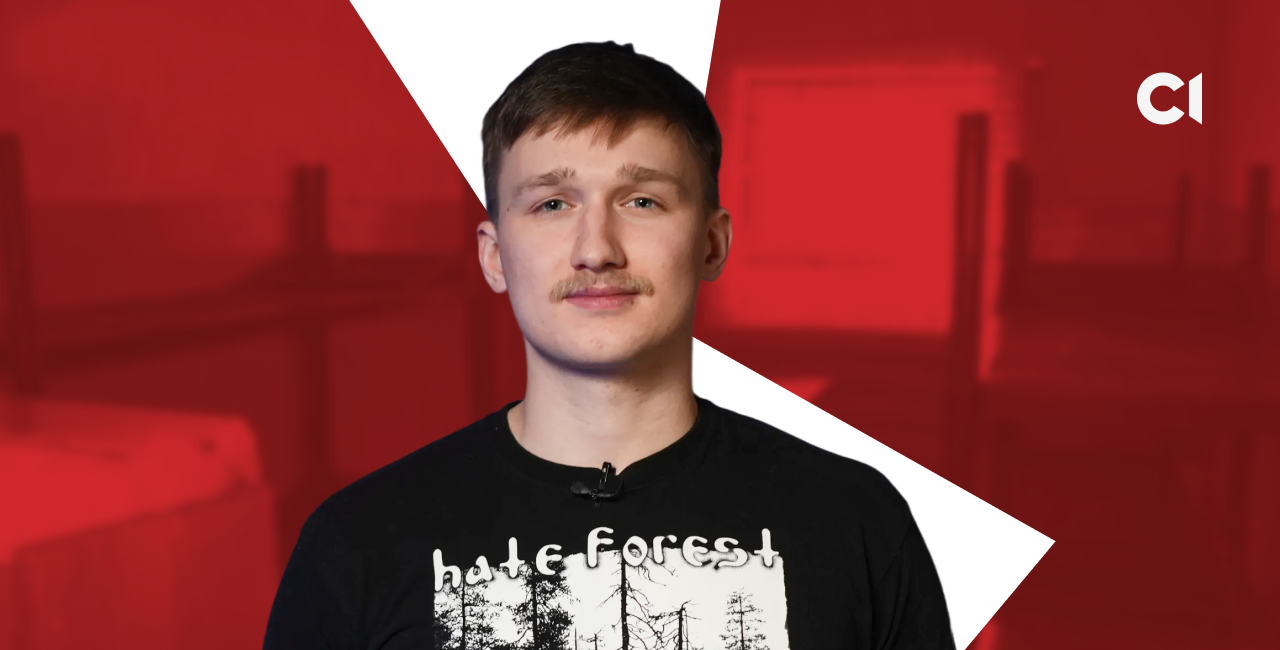
In an interview with Slidstvo.Info, 23-year-old Mykyta Semenov, who was recently released from captivity, stated that while in a Russian detention center, he was offered the chance to join the Russian Armed Forces. They tried to recruit the Azov fighter during the so-called “intake,” when he was beaten for several hours. Detention center staff told Mykyta: “You’ll die here. But you have a choice. You can sign a contract with the Bohdan Khmelnytskyi Battalion.”
Mykita Semenov did not betray his oath; he spent over three years in Russian captivity and returned home in July 2025.
This is reported in an article by “Slidstvo.Info.”
For English subtitles, please enable captions in the video settings and select Auto-translate → English.
Author: Vladyslava Kobko
In an interview with Slidstvo.Info, 23-year-old Mykyta Semenov, who was recently released from captivity, stated that while in a Russian detention center, he was offered the chance to join the Russian Armed Forces. They tried to recruit the Azov fighter during the so-called “intake,” when he was beaten for several hours. Detention center staff told Mykyta: “You’ll die here. But you have a choice. You can sign a contract with the Bohdan Khmelnytskyi Battalion.”
Mykita Semenov did not betray his oath; he spent over three years in Russian captivity and returned home in July 2025.
This is reported in an article by “Slidstvo.Info.”
For English subtitles, please enable captions in the video settings and select Auto-translate → English.
Mykita Semenov is 23 years old. He joined the 12th Special Forces Brigade “Azov” at the age of 18. He defended Mariupol and, following orders, surrendered from Azovstal.
For over three years, Mykyta was held in three different detention facilities: the Olenivka colony in Donetsk Oblast, a pretrial detention center in Taganrog, Rostov Oblast, Russia, and a detention center in Kizel, Perm Krai. At the last pretrial detention center, a lengthy “intake” process awaited the prisoners, accompanied by severe beatings.
“We’re riding in a police van, pulling up to the prison—you can already hear it. I run out, and they immediately put a bag over my head. I run, I fall, they throw me into a pile of people, just like me, being transported. For me, the worst part was when they walk you around, beat you, and force you to recite the ‘Our Father.’ But I don’t know it yet; I don’t know any prayers at all. And so you’re just reciting a prayer there, mumbling something to yourself… And some people simply don’t know it in Russian. There are people like that too. And so I’m mumbling something, mumbling… Whack! Whack! I hear a scream. “It’s like some kind of script, a scene from a horror movie,” says Nikita Semenov.
During the “initiation,” the soldier was beaten so badly that his back was covered in bruises afterward; it was hard to lift his arms, and his legs were swollen: “I didn’t even know that something like this could happen to me. It was about two weeks, and they didn’t go away at all.”
After the beatings, which lasted for hours, the guards offered Nikita Semenov a “choice”—service in the Russian Armed Forces.
“Then they took me away and asked, ‘Which unit?’—‘Azov.’ — “I see. Well, that’s it for you. You’re done for. Someone says, ‘Your country has abandoned you. Do you see where they’ve brought you? You don’t see it, and you don’t know. You’ll die here. You have a choice. You can sign a contract with the Bohdan Khmelnytsky Battalion. I say: ‘I can’t, sir. I took an oath.’ He says: ‘You’re just scared.’ — ‘Me? No.’ — ‘Are you sure you’re not scared?’ And he swung at me—I didn’t see it, but I felt something hit me right next to me,” says Semenov.
According to Russian propaganda, Ukrainian prisoners of war who have defected to Russia serve in the Bohdan Khmelnytsky Battalion. To serve in this unit, prisoners must obtain Russian citizenship, sign a contract with the Russian Ministry of Defense, and swear allegiance to Russia. The battalion is part of the “Kaskad” operational-combat tactical unit of the self-proclaimed “DPR” Ministry of Internal Affairs.
There is no reliable information in open sources regarding how many Ukrainian prisoners of war are actually fighting in the Khmelnytskyi battalion.
It should be noted that the recruitment of Ukrainian prisoners of war to fight against their own country violates the Geneva Convention on Prisoners of War. The document stipulates that no prisoner of war may at any time be sent or held in areas where they may be exposed to the fire of combat operations.
For over three years, Mykyta was held in three different detention facilities: the Olenivka colony in Donetsk Oblast, a pretrial detention center in Taganrog, Rostov Oblast, Russia, and a detention center in Kizel, Perm Krai. At the last pretrial detention center, a lengthy “intake” process awaited the prisoners, accompanied by severe beatings.
“We’re riding in a police van, pulling up to the prison—you can already hear it. I run out, and they immediately put a bag over my head. I run, I fall, they throw me into a pile of people, just like me, being transported. For me, the worst part was when they walk you around, beat you, and force you to recite the ‘Our Father.’ But I don’t know it yet; I don’t know any prayers at all. And so you’re just reciting a prayer there, mumbling something to yourself… And some people simply don’t know it in Russian. There are people like that too. And so I’m mumbling something, mumbling… Whack! Whack! I hear a scream. “It’s like some kind of script, a scene from a horror movie,” says Nikita Semenov.
During the “initiation,” the soldier was beaten so badly that his back was covered in bruises afterward; it was hard to lift his arms, and his legs were swollen: “I didn’t even know that something like this could happen to me. It was about two weeks, and they didn’t go away at all.”
After the beatings, which lasted for hours, the guards offered Nikita Semenov a “choice”—service in the Russian Armed Forces.
“Then they took me away and asked, ‘Which unit?’—‘Azov.’ — “I see. Well, that’s it for you. You’re done for. Someone says, ‘Your country has abandoned you. Do you see where they’ve brought you? You don’t see it, and you don’t know. You’ll die here. You have a choice. You can sign a contract with the Bohdan Khmelnytsky Battalion. I say: ‘I can’t, sir. I took an oath.’ He says: ‘You’re just scared.’ — ‘Me? No.’ — ‘Are you sure you’re not scared?’ And he swung at me—I didn’t see it, but I felt something hit me right next to me,” says Semenov.
According to Russian propaganda, Ukrainian prisoners of war who have defected to Russia serve in the Bohdan Khmelnytsky Battalion. To serve in this unit, prisoners must obtain Russian citizenship, sign a contract with the Russian Ministry of Defense, and swear allegiance to Russia. The battalion is part of the “Kaskad” operational-combat tactical unit of the self-proclaimed “DPR” Ministry of Internal Affairs.
There is no reliable information in open sources regarding how many Ukrainian prisoners of war are actually fighting in the Khmelnytskyi battalion.
It should be noted that the recruitment of Ukrainian prisoners of war to fight against their own country violates the Geneva Convention on Prisoners of War. The document stipulates that no prisoner of war may at any time be sent or held in areas where they may be exposed to the fire of combat operations.
This is an automatic translation generated by DeepL.