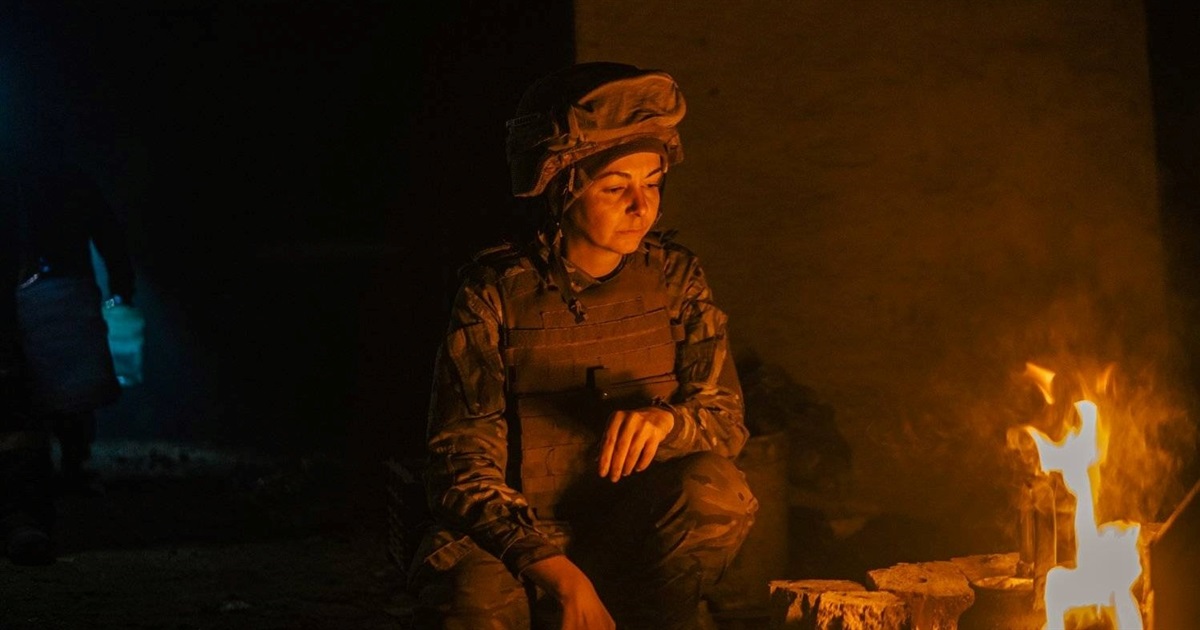
While in captivity, I hoped people were talking about me. "Nava" calls for a fight to free the defenders
Source: Svoi.City
The defenders of Mariupol, who left Azovstal on orders, have been held captive by Russia for 16 months now. Nothing is yet known about their fate or condition. The only thing everyone is certain of is that they are enduring extremely harsh conditions. Just like other defenders of Ukraine who were taken prisoner by Russia while defending the country on other sections of the front. Defender Valeria “Nava” Subotina, who returned to Ukraine as part of an exchange on April 10, shared the story of the struggle to secure her release. But she emphasized that everyone must continue to do everything possible to ensure that all defenders return from Russian captivity.
The Experience of Fighting for “Nava”
Valeria Subotina was already a public figure before the full-scale war began. She served as a press officer and spokesperson for various units. She was friends with journalists.
“There was more than enough information about me online. So, it was also accessible to the enemy. Of course, because of this—and because I’m an officer and served as the deputy commander of one of the units—I received excessive attention while in captivity, which is a downside.”
But, she shares, others are tortured as well.
Some even much more so. And that’s without any publicity whatsoever.
During the defense of Mariupol on the grounds of the Azovstal plant, Valeria married border guard Andriy Subotin. The next day, while carrying out a combat mission, Andriy was killed. Valeria, along with her comrades, left the plant grounds on orders and was taken prisoner by the Russians.
“My husband’s parents didn’t receive any instructions from me—whether to talk about me in the media or not. I only told my father about the order from higher command and that this would be a long captivity for me. That’s what I thought, and that’s exactly what happened.”
They decided on their own that they would speak out about Valeria.
“They took on this responsibility, and I’m grateful to them for that. My mother did everything right—she organized events where my poems were read aloud. She gave very measured and thoughtful interviews. She involved people who were important to me in this effort. They all worked together and supported one another. They communicated with civil society organizations. My parents were constantly in touch with the Coordination Headquarters and international organizations. They also stayed in touch with my unit. I was officially listed as missing. They spoke with the girls who had been exchanged.”
Essentially, Valeria explains, her parents reached out to every possible source. And they also attended every possible protest rally.
Should you publicize the plight of captives
? Valeria says she’s often asked what the right thing to do is. Does publicity help or hurt? How can you get your loved one out?
I’ll say it again—I don’t know. Did the parents’ activism help speed up the exchange? Neither they nor I know for sure. So keep fighting. How exactly—decide for yourselves. Publicly or not. But don’t let us forget those who are now somewhere between life and… Because captivity isn’t quite life
According to Valeria, there is a chance to bring captives back to a real life. Unlike those lost forever.
“Fight. It doesn’t matter if you have someone specific there. Because there are. Those who saved you. The heroes of Mariupol.”
How a public campaign helps those released
Valeria recalls that while in captivity, for nearly a year, she received news of the campaign to free her only twice. And that saved her mentally.
“I was hoping there that people were talking about me. That they were shouting my name. That none of those who knew me had given up. Hadn’t resigned themselves to it. Hadn’t started ‘just living’ while I was there. When I came home and found out that they had been fighting for me—not even in public, but in general—it gave me strength. It meant that they, along with my friends, my acquaintances, and even acquaintances of acquaintances, hadn’t forgotten about me.”
The activist is certain that the cruel treatment she faced was clearly not because her parents were waiting for her and continuing the fight. But, she emphasizes, if you speak out, you need to think about what you’re saying.
“Those who are currently in captivity can’t hear us. But someday they will surely find out who hasn’t forgotten them. May all our names be on that list.”
The defenders of Mariupol, who left Azovstal on orders, have been held captive by Russia for 16 months now. Nothing is yet known about their fate or condition. The only thing everyone is certain of is that they are enduring extremely harsh conditions. Just like other defenders of Ukraine who were taken prisoner by Russia while defending the country on other sections of the front. Defender Valeria “Nava” Subotina, who returned to Ukraine as part of an exchange on April 10, shared the story of the struggle to secure her release. But she emphasized that everyone must continue to do everything possible to ensure that all defenders return from Russian captivity.
The Experience of Fighting for “Nava”
Valeria Subotina was already a public figure before the full-scale war began. She served as a press officer and spokesperson for various units. She was friends with journalists.
“There was more than enough information about me online. So, it was also accessible to the enemy. Of course, because of this—and because I’m an officer and served as the deputy commander of one of the units—I received excessive attention while in captivity, which is a downside.”
But, she shares, others are tortured as well.
Some even much more so. And that’s without any publicity whatsoever.
During the defense of Mariupol on the grounds of the Azovstal plant, Valeria married border guard Andriy Subotin. The next day, while carrying out a combat mission, Andriy was killed. Valeria, along with her comrades, left the plant grounds on orders and was taken prisoner by the Russians.
“My husband’s parents didn’t receive any instructions from me—whether to talk about me in the media or not. I only told my father about the order from higher command and that this would be a long captivity for me. That’s what I thought, and that’s exactly what happened.”
They decided on their own that they would speak out about Valeria.
“They took on this responsibility, and I’m grateful to them for that. My mother did everything right—she organized events where my poems were read aloud. She gave very measured and thoughtful interviews. She involved people who were important to me in this effort. They all worked together and supported one another. They communicated with civil society organizations. My parents were constantly in touch with the Coordination Headquarters and international organizations. They also stayed in touch with my unit. I was officially listed as missing. They spoke with the girls who had been exchanged.”
Essentially, Valeria explains, her parents reached out to every possible source. And they also attended every possible protest rally.
Should you publicize the plight of captives
? Valeria says she’s often asked what the right thing to do is. Does publicity help or hurt? How can you get your loved one out?
I’ll say it again—I don’t know. Did the parents’ activism help speed up the exchange? Neither they nor I know for sure. So keep fighting. How exactly—decide for yourselves. Publicly or not. But don’t let us forget those who are now somewhere between life and… Because captivity isn’t quite life
According to Valeria, there is a chance to bring captives back to a real life. Unlike those lost forever.
“Fight. It doesn’t matter if you have someone specific there. Because there are. Those who saved you. The heroes of Mariupol.”
How a public campaign helps those released
Valeria recalls that while in captivity, for nearly a year, she received news of the campaign to free her only twice. And that saved her mentally.
“I was hoping there that people were talking about me. That they were shouting my name. That none of those who knew me had given up. Hadn’t resigned themselves to it. Hadn’t started ‘just living’ while I was there. When I came home and found out that they had been fighting for me—not even in public, but in general—it gave me strength. It meant that they, along with my friends, my acquaintances, and even acquaintances of acquaintances, hadn’t forgotten about me.”
The activist is certain that the cruel treatment she faced was clearly not because her parents were waiting for her and continuing the fight. But, she emphasizes, if you speak out, you need to think about what you’re saying.
“Those who are currently in captivity can’t hear us. But someday they will surely find out who hasn’t forgotten them. May all our names be on that list.”
This is an automatic translation generated by DeepL.