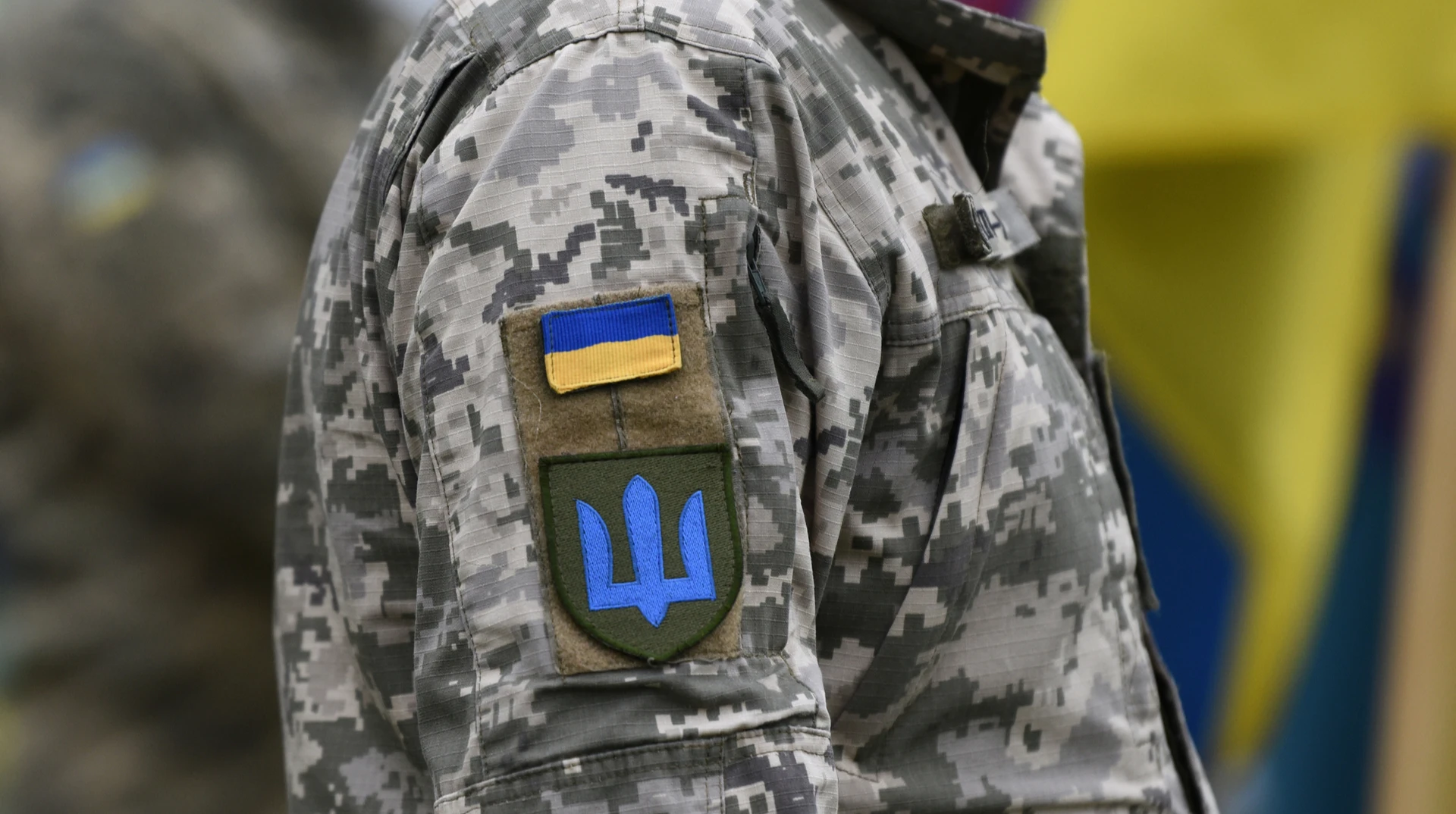
He escaped from captivity twice, but failed the third time. The story of a Mariupol defender who finally returned home
Source: Ukrainska Pravda
Author: Viktoria Andreyeva
52-year-old border guard Oleksiy Bilousov escaped captivity three times in occupied Mariupol. Two attempts were successful, but the third was not. He was captured by a patrol of the so-called “DPR” in mid-April 2022.
The soldier had been serving since 2018, but he first “encountered” the occupiers back in 2014, when they seized his hometown of Debaltseve.
Oleksiy spent nearly two years in captivity—he was exchanged on January 3, 2024. But, as he noted, there was no “wild joy”—instead, there was fatigue, cold, and exhaustion.
“UP.Life” spoke with Oleksiy Bilousov about his service, captivity, and exchange.
At that time, Oleksiy’s family left for relatives in Boryspil, but when they wanted to return in the summer of 2014, they came under heavy Russian fire and changed their minds. The family of the future border guard left their home and moved to the Zaporizhzhia region.
They had to start their lives from scratch. At first, the family lived with relatives; later, they bought a house they could afford. During that time, Oleksiy worked in Poland and spent his free time applying for grants for displaced persons. But that didn’t bring in the income he needed, so in 2018 he signed a contract with the Armed Forces.
His military duty involved a 4-day tour of duty at observation posts in the Donetsk region. After his contract ended, he extended it for another term.
“That’s how the war found me—on duty. I was in Melekine, which is 20 kilometers from Mariupol. Early on the morning of the 24th of 2022, the FSB boats, which were usually 8–15 km from the shore, disappeared.
I heard over the international communication channel: ‘I am a Russian military vessel…’ But it wasn’t even visible on the monitor,” the soldier recalls.
Oleksiy received an order to pack up all the equipment and leave Mariupol. But when the border guard unit reached the Dnipro River, they received another order—to turn back.
On the night of February 27, they drove into the city, which the Russians were storming with every type of weapon.
His wife, along with their three children and her mother, reached government-controlled territory on April 4. She drove 200 km to Zaporizhzhia for a full 18 hours—there were many checkpoints along the way.
“They traveled without their belongings because the Russians wouldn’t let anyone leave permanently. So my wife said they were just going to visit. She burned their documents and clothes. She hid or buried some things, because if the occupiers had figured out that she was the border guard’s wife, the story would have been different,” her husband says.
Communication in besieged Mariupol disappeared almost immediately—as early as March 3, it was impossible to reach anyone by phone. But at headquarters, soldiers were given 10 minutes to talk to their families before heading out on a mission. That’s how Oleksiy received a message from his wife and “breathed a sigh of relief,” because his family was now relatively safe.
Fierce battles were raging in Mariupol.
“We had to go into apartments in high-rises to monitor enemy equipment. People, of course, were outraged that they were being shelled—supposedly because of us. There was a lot of negative and prejudiced attitude. But there was no time to argue with them or try to reason with them—we had orders,” says the soldier.
The occupiers “pounded” houses with tanks to drive out the Ukrainian troops.
Oleksiy notes that in Mariupol, he realized just how important language is. Soldiers use special code words to communicate so the enemy doesn’t understand what they’re talking about. But the guys from Ivano-Frankivsk didn’t invent a code; they just spoke in their own dialect. The Russians didn’t even have a chance to understand them.
But enemy vehicles were burning down neighborhoods—one after another. There were fewer places to defend, and the encirclement was tightening. The soldiers had to retreat to the factories—Azovstal and Illich. Oleksiy ended up at the latter.
For example, a shop clerk tried to persuade the fighters “not to be foolish” and to surrender to the enemy. Oleksiy says she described life under Russian control as heaven on earth. There, she claimed, they would feed them, give them tea, and definitely spare their lives.
“I knew from Debaltseve that you can’t trust the Russians. And captivity is essentially a death sentence. So when I found out that some marines were planning to surrender, I started looking for another way out,” says the border guard.
One of the commanders of the mobile outpost also didn’t share the enthusiasm for captivity. He was with three soldiers: they wanted to leave in civilian clothes and without weapons. The plan was to walk to Zaporizhzhia, join active units, and continue their service.
Oleksiy wanted to go with them, and although the commander refused, the soldier assured him that he wouldn’t be a burden and understood the complexity of the operation.
The first attempt to break out of the encirclement failed due to fog as thick as sour cream. On the night of April 12, they couldn’t even see the road leading out of the Illich Plant.
So Oleksiy, along with the commander and three soldiers, tried again the following night. They got lost and found themselves outside the plant at dusk.
The Russians had orders to shoot anyone without warning at night, so the soldiers were taking a huge risk.
“There were about 40 of them with weapons; they also wanted to get out of the city,” recalls the border guard.
The brigade commander questioned the soldiers, criticized their plan, and assigned them to his group.
Oleksiy says that during their attempt to escape, the soldiers made mistakes. For example, they smoked during breaks (giving themselves away), someone’s smartphone alarm went off, and some spoke loudly.
“And they didn’t notice the field communication cable, which is usually stretched between observation posts. So we kept going and ran right into a Russian checkpoint.
The lights came on, and a Russian voice over a megaphone ordered us to surrender. If we resisted, he was to open fire to kill. There were only a few Russians at that post, so I thought we’d fight. But those guys started laying down their weapons one by one,” he says.
Oleksiy didn’t surrender—he backed away, then ran off along the road and through the trees. He was once again a hair’s breadth from death, because the Russians would have interpreted this as resistance and shot him.
But he was lucky—they didn’t see him. A kilometer or so away, the man stopped and looked around. There was no one around. It was getting dark. It had started snowing, and the mud was sticking to his shoes. The man had no weapon, backpack, or provisions. Among the trees, he found two more empty backpacks belonging to Ukrainian soldiers. Then he chose a comfortable spot, dug a small trench, and spent the night there.
In the distance, Oleksiy saw armored vehicles and thought there were Russians there. But in the morning, it turned out they were damaged.
Despite the border guard’s caution, he was spotted by “DPR” militants patrolling the road. They crept up on him and took him prisoner.
"They blindfolded us with duct tape, but we still managed to pull it back, peeking at our own risk. Shortly before arriving, we saw the sign 'Taganrog Military Police'—that’s how we found out. We were flown to the Ivanovo region, near Moscow.
In captivity, you have no right to know anything—not the day of the week, not the time of day, not your location. We even had to move around the prison with our eyes closed—heads down, hands up,” the border guard recounts.
In the cells, we were often forbidden from sitting during the day—we were only allowed to stand. There was also bullying, interrogations, and exhaustion. For example, the so-called “walk” was torture, because they forced us to do squats, push-ups, and run non-stop for an hour and a half.
Other guards forced us to walk in circles with our arms raised high. But during such “exercises,” your limbs go numb—and within a few minutes, they’re pierced by unbearable pain.
In addition to the psychological pressure during interrogations, the guards constantly played music for supposedly patriotic reasons.
“I was struck by the variety of propaganda and stereotypes in the lyrics. The same Gazmanov, Leps, Kadysheva, and also—contemporary rappers who glorify Lenin one moment, Nicholas II the next, and then, through a song, some mystical Rus. That’s the kind of mess in their heads,” the soldier recalls.
But there is one thing that unites all the Russians Alexei met—a lack of critical thinking. For example, most of the prison staff Alexei had to interact with were convinced that the USSR was a golden age for the state and provided ideal conditions for its citizens.
"They think entirely in terms of these ready-made stereotypes that have been fed to them by television. They don’t have World War II; they only have the Great Patriotic War—they won it, there were no allies, no Lend-Lease, and so on. They’re completely out of touch… But no one argued with them, because as they say, captivity isn’t a place for heroics,” he notes.
Security forces often conducted interrogations to find out about salaries and living standards. It came as a surprise to them that someone could earn a thousand dollars a month on a contract or take a family vacation to Europe.
“As soon as they hear the information, they immediately fall silent. You can see their brains working, processing the data, and confusion on their faces,” Alexei says with a smile.
But his expectations were shattered by the harsh reality—the group of soldiers was transported to the Voronezh region. There, as in every prison, they were “received” by security forces and given a “warm welcome.”
Two months later, the situation repeated itself—Oleksiy was told again: “Get your things and get out.”
“It’s hard to explain, but when physical force has been used against you for nearly two years.
This time I no longer believed in an exchange; on the contrary, I thought they were taking me to a new prison. I was waiting, as if in a capsule, and mentally preparing for the worst,” the border guard recalls.
Oleksiy and several other prisoners were led out of their cells, given a change of clothes, and put on buses. They traveled all night and half a day. The guards began to unquestioningly take the prisoners to the restroom. And this was a sign of an exchange, because treating people humanely is not in their nature. Hope began to flicker in Oleksii and the other soldiers that they would return to Ukraine.
“We were traveling with paper or cloth bags over our heads and blindfolds over our eyes. When we were ordered to remove everything from our faces, I realized—that’s it, we’re finally home. But there was no wild joy,” the soldier says in a calm voice.
He explains that it was an extremely difficult, cold, and at the same time long-awaited journey, which was taken for granted, because soldiers are supposed to return home.
He adds that he never regretted his choice and never saw himself as a victim while in captivity.
“I feel like I was free. Yes, it was hard; I had to bend where necessary so they wouldn’t break me. In captivity, it was important for me to remain human, not to become angry at the whole world.
For me, freedom means taking responsibility and knowing that, in addition to privileges, you’ll have to answer for your actions and pay the price,” the soldier says resolutely.
Author: Viktoria Andreyeva
52-year-old border guard Oleksiy Bilousov escaped captivity three times in occupied Mariupol. Two attempts were successful, but the third was not. He was captured by a patrol of the so-called “DPR” in mid-April 2022.
The soldier had been serving since 2018, but he first “encountered” the occupiers back in 2014, when they seized his hometown of Debaltseve.
Oleksiy spent nearly two years in captivity—he was exchanged on January 3, 2024. But, as he noted, there was no “wild joy”—instead, there was fatigue, cold, and exhaustion.
“UP.Life” spoke with Oleksiy Bilousov about his service, captivity, and exchange.
He was on duty when the full-scale
invasion began
In 2014, Oleksiy “met” the Russians when they invaded his hometown in the Donetsk region. They occupied Debaltseve for several weeks until Ukrainian troops regained control of the town.invasion began
At that time, Oleksiy’s family left for relatives in Boryspil, but when they wanted to return in the summer of 2014, they came under heavy Russian fire and changed their minds. The family of the future border guard left their home and moved to the Zaporizhzhia region.
They had to start their lives from scratch. At first, the family lived with relatives; later, they bought a house they could afford. During that time, Oleksiy worked in Poland and spent his free time applying for grants for displaced persons. But that didn’t bring in the income he needed, so in 2018 he signed a contract with the Armed Forces.
His military duty involved a 4-day tour of duty at observation posts in the Donetsk region. After his contract ended, he extended it for another term.
“That’s how the war found me—on duty. I was in Melekine, which is 20 kilometers from Mariupol. Early on the morning of the 24th of 2022, the FSB boats, which were usually 8–15 km from the shore, disappeared.
I heard over the international communication channel: ‘I am a Russian military vessel…’ But it wasn’t even visible on the monitor,” the soldier recalls.
Oleksiy received an order to pack up all the equipment and leave Mariupol. But when the border guard unit reached the Dnipro River, they received another order—to turn back.
On the night of February 27, they drove into the city, which the Russians were storming with every type of weapon.
Blockaded Mariupol
Oleksiy’s wife and their three children were in a village in the Zaporizhzhia region at the time. They were unable to leave immediately.His wife, along with their three children and her mother, reached government-controlled territory on April 4. She drove 200 km to Zaporizhzhia for a full 18 hours—there were many checkpoints along the way.
“They traveled without their belongings because the Russians wouldn’t let anyone leave permanently. So my wife said they were just going to visit. She burned their documents and clothes. She hid or buried some things, because if the occupiers had figured out that she was the border guard’s wife, the story would have been different,” her husband says.
Communication in besieged Mariupol disappeared almost immediately—as early as March 3, it was impossible to reach anyone by phone. But at headquarters, soldiers were given 10 minutes to talk to their families before heading out on a mission. That’s how Oleksiy received a message from his wife and “breathed a sigh of relief,” because his family was now relatively safe.
Fierce battles were raging in Mariupol.
“We had to go into apartments in high-rises to monitor enemy equipment. People, of course, were outraged that they were being shelled—supposedly because of us. There was a lot of negative and prejudiced attitude. But there was no time to argue with them or try to reason with them—we had orders,” says the soldier.
The occupiers “pounded” houses with tanks to drive out the Ukrainian troops.
Oleksiy notes that in Mariupol, he realized just how important language is. Soldiers use special code words to communicate so the enemy doesn’t understand what they’re talking about. But the guys from Ivano-Frankivsk didn’t invent a code; they just spoke in their own dialect. The Russians didn’t even have a chance to understand them.
But enemy vehicles were burning down neighborhoods—one after another. There were fewer places to defend, and the encirclement was tightening. The soldiers had to retreat to the factories—Azovstal and Illich. Oleksiy ended up at the latter.
Attempts to Break Out of the Encirclement
In April, chaos reigned in Mariupol. The Russians had captured the entire city except for a few factories where Ukrainian troops were stationed. Many local residents held pro-Russian views.For example, a shop clerk tried to persuade the fighters “not to be foolish” and to surrender to the enemy. Oleksiy says she described life under Russian control as heaven on earth. There, she claimed, they would feed them, give them tea, and definitely spare their lives.
“I knew from Debaltseve that you can’t trust the Russians. And captivity is essentially a death sentence. So when I found out that some marines were planning to surrender, I started looking for another way out,” says the border guard.
One of the commanders of the mobile outpost also didn’t share the enthusiasm for captivity. He was with three soldiers: they wanted to leave in civilian clothes and without weapons. The plan was to walk to Zaporizhzhia, join active units, and continue their service.
Oleksiy wanted to go with them, and although the commander refused, the soldier assured him that he wouldn’t be a burden and understood the complexity of the operation.
The first attempt to break out of the encirclement failed due to fog as thick as sour cream. On the night of April 12, they couldn’t even see the road leading out of the Illich Plant.
So Oleksiy, along with the commander and three soldiers, tried again the following night. They got lost and found themselves outside the plant at dusk.
The Russians had orders to shoot anyone without warning at night, so the soldiers were taking a huge risk.
They were unable to avoid
capture
The sky was already turning gray when the group set off along the Mariupol–Donetsk highway. Suddenly, they heard the sound of a car and saw headlights. The soldiers jumped into a ditch, but people poured out of the car toward them. They were fighters from one of the Mariupol brigades.capture
“There were about 40 of them with weapons; they also wanted to get out of the city,” recalls the border guard.
The brigade commander questioned the soldiers, criticized their plan, and assigned them to his group.
Oleksiy says that during their attempt to escape, the soldiers made mistakes. For example, they smoked during breaks (giving themselves away), someone’s smartphone alarm went off, and some spoke loudly.
“And they didn’t notice the field communication cable, which is usually stretched between observation posts. So we kept going and ran right into a Russian checkpoint.
The lights came on, and a Russian voice over a megaphone ordered us to surrender. If we resisted, he was to open fire to kill. There were only a few Russians at that post, so I thought we’d fight. But those guys started laying down their weapons one by one,” he says.
Oleksiy didn’t surrender—he backed away, then ran off along the road and through the trees. He was once again a hair’s breadth from death, because the Russians would have interpreted this as resistance and shot him.
But he was lucky—they didn’t see him. A kilometer or so away, the man stopped and looked around. There was no one around. It was getting dark. It had started snowing, and the mud was sticking to his shoes. The man had no weapon, backpack, or provisions. Among the trees, he found two more empty backpacks belonging to Ukrainian soldiers. Then he chose a comfortable spot, dug a small trench, and spent the night there.
In the distance, Oleksiy saw armored vehicles and thought there were Russians there. But in the morning, it turned out they were damaged.
Despite the border guard’s caution, he was spotted by “DPR” militants patrolling the road. They crept up on him and took him prisoner.
Captivity
The “DPR” militants took Oleksiy to Sartana in the Donetsk region, and then to Olenivka. He stayed there for 5 days, after which the Russians sent groups of prisoners to various prisons."They blindfolded us with duct tape, but we still managed to pull it back, peeking at our own risk. Shortly before arriving, we saw the sign 'Taganrog Military Police'—that’s how we found out. We were flown to the Ivanovo region, near Moscow.
In captivity, you have no right to know anything—not the day of the week, not the time of day, not your location. We even had to move around the prison with our eyes closed—heads down, hands up,” the border guard recounts.
In the cells, we were often forbidden from sitting during the day—we were only allowed to stand. There was also bullying, interrogations, and exhaustion. For example, the so-called “walk” was torture, because they forced us to do squats, push-ups, and run non-stop for an hour and a half.
Other guards forced us to walk in circles with our arms raised high. But during such “exercises,” your limbs go numb—and within a few minutes, they’re pierced by unbearable pain.
In addition to the psychological pressure during interrogations, the guards constantly played music for supposedly patriotic reasons.
“I was struck by the variety of propaganda and stereotypes in the lyrics. The same Gazmanov, Leps, Kadysheva, and also—contemporary rappers who glorify Lenin one moment, Nicholas II the next, and then, through a song, some mystical Rus. That’s the kind of mess in their heads,” the soldier recalls.
But there is one thing that unites all the Russians Alexei met—a lack of critical thinking. For example, most of the prison staff Alexei had to interact with were convinced that the USSR was a golden age for the state and provided ideal conditions for its citizens.
"They think entirely in terms of these ready-made stereotypes that have been fed to them by television. They don’t have World War II; they only have the Great Patriotic War—they won it, there were no allies, no Lend-Lease, and so on. They’re completely out of touch… But no one argued with them, because as they say, captivity isn’t a place for heroics,” he notes.
Security forces often conducted interrogations to find out about salaries and living standards. It came as a surprise to them that someone could earn a thousand dollars a month on a contract or take a family vacation to Europe.
“As soon as they hear the information, they immediately fall silent. You can see their brains working, processing the data, and confusion on their faces,” Alexei says with a smile.
Expectations and the Reality of the Exchange
On November 2, around 10 p.m., Oleksiy was ordered to leave the cell with his belongings. He thought it was for the exchange, because the guys had also been taken away before lights out before.But his expectations were shattered by the harsh reality—the group of soldiers was transported to the Voronezh region. There, as in every prison, they were “received” by security forces and given a “warm welcome.”
Two months later, the situation repeated itself—Oleksiy was told again: “Get your things and get out.”
“It’s hard to explain, but when physical force has been used against you for nearly two years.
This time I no longer believed in an exchange; on the contrary, I thought they were taking me to a new prison. I was waiting, as if in a capsule, and mentally preparing for the worst,” the border guard recalls.
Oleksiy and several other prisoners were led out of their cells, given a change of clothes, and put on buses. They traveled all night and half a day. The guards began to unquestioningly take the prisoners to the restroom. And this was a sign of an exchange, because treating people humanely is not in their nature. Hope began to flicker in Oleksii and the other soldiers that they would return to Ukraine.
“We were traveling with paper or cloth bags over our heads and blindfolds over our eyes. When we were ordered to remove everything from our faces, I realized—that’s it, we’re finally home. But there was no wild joy,” the soldier says in a calm voice.
He explains that it was an extremely difficult, cold, and at the same time long-awaited journey, which was taken for granted, because soldiers are supposed to return home.
Thoughts after the exchange
"In captivity, everyone, with rare exceptions, seeks Faith. They probably find what they were looking for. But at the same time, they rethink their lives,” notes Oleksiy.He adds that he never regretted his choice and never saw himself as a victim while in captivity.
“I feel like I was free. Yes, it was hard; I had to bend where necessary so they wouldn’t break me. In captivity, it was important for me to remain human, not to become angry at the whole world.
For me, freedom means taking responsibility and knowing that, in addition to privileges, you’ll have to answer for your actions and pay the price,” the soldier says resolutely.
Interview with Oleksiy after his return from captivity
The world needs to know exactly how the aggressor state treats prisoners of war and illegally detained civilians, what their fate is, but also that captivity is not a final verdict, and that once released, people will be able to move on with their lives. The latter is especially important for those waiting for their loved ones.
The topic of captivity is a sensitive one. A careless word can cause pain to a person who has been through captivity, to their family and loved ones, and to the thousands of people waiting for their loved ones to return from captivity. By sharing unnecessary information publicly, you can harm those who are still in captivity and undermine the efforts of organizations and individuals who are negotiating for their release and working toward prisoner exchanges.
For English subtitles, please enable captions in the video settings and select Auto-translate → English.
The topic of captivity is a sensitive one. A careless word can cause pain to a person who has been through captivity, to their family and loved ones, and to the thousands of people waiting for their loved ones to return from captivity. By sharing unnecessary information publicly, you can harm those who are still in captivity and undermine the efforts of organizations and individuals who are negotiating for their release and working toward prisoner exchanges.
For English subtitles, please enable captions in the video settings and select Auto-translate → English.
Alexei’s wife and children arrived three days after the exchange and were startled by his appearance. While in captivity, he had lost nearly a third of his body weight—more than 30 kg.
But Alexei was troubled by something else. During that time, he had missed out on part of his sons’ and daughter’s childhood. All three children are from an orphanage. At the time of adoption, they were between 7 months and almost 2 years old.
“I already understood how much we had lost because we hadn’t seen them when they were little—from their very first days. And then I calculated that during my time working in Poland, moving from Debaltseve, serving in the military, and being held captive, I had seen the children for 4.5 years less than my wife had. I wasn’t afraid that they would forget me, but I regretted the time slipping away like sand,” says Oleksiy.
But Alexei was troubled by something else. During that time, he had missed out on part of his sons’ and daughter’s childhood. All three children are from an orphanage. At the time of adoption, they were between 7 months and almost 2 years old.
“I already understood how much we had lost because we hadn’t seen them when they were little—from their very first days. And then I calculated that during my time working in Poland, moving from Debaltseve, serving in the military, and being held captive, I had seen the children for 4.5 years less than my wife had. I wasn’t afraid that they would forget me, but I regretted the time slipping away like sand,” says Oleksiy.
This is an automatic translation generated by DeepL.