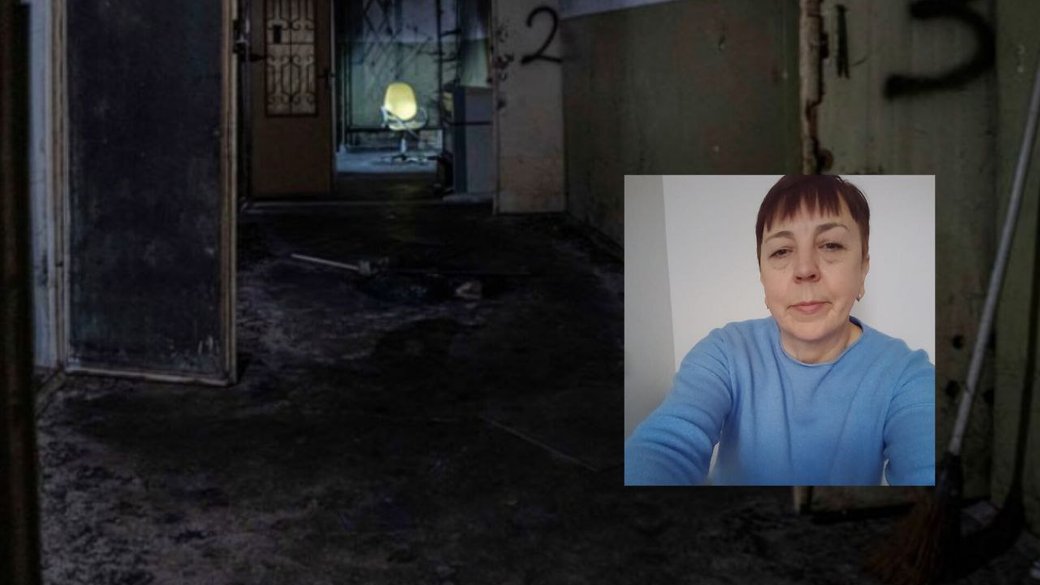
After the interrogations, I just sat in the basement for another week, freezing, starving, and going crazy. The story of a teacher from Kherson
Source: Suspilne
Author: Tamila Ivanova
She reported on everything happening in occupied Kherson, livestreamed from the city’s streets, and, together with friends, collected humanitarian aid for those who couldn’t take care of themselves. In just one month, the number of followers on TikTok for Olena Naumova, a teacher from Kherson, grew from 15,000 to 80,000. Her activism did not sit well with the Russian military. They took her from her home and held her for 14 days. Ms. Naumova spoke to Suspilne about the occupation, her captivity by the Russians, and her disappearance afterward.
If you prefer to watch the video with subtitles in another language, go to YouTube Settings → Subtitles → Auto-translate and select the language of your choice.
Author: Tamila Ivanova
She reported on everything happening in occupied Kherson, livestreamed from the city’s streets, and, together with friends, collected humanitarian aid for those who couldn’t take care of themselves. In just one month, the number of followers on TikTok for Olena Naumova, a teacher from Kherson, grew from 15,000 to 80,000. Her activism did not sit well with the Russian military. They took her from her home and held her for 14 days. Ms. Naumova spoke to Suspilne about the occupation, her captivity by the Russians, and her disappearance afterward.
If you prefer to watch the video with subtitles in another language, go to YouTube Settings → Subtitles → Auto-translate and select the language of your choice.
Olena Naumova describes herself as an ordinary preschool teacher, and in her city she is known as a TikToker who, before the full-scale invasion began, used to film fun and educational videos with her students, and during the occupation, she reported on everything happening in Kherson.
“Before the full-scale war, I had only 15,000 followers. When disaster struck our home, Kherson, I had to go silent for a while. Everyone was in despair; everyone was in shock over what was happening. It was very scary. So I didn’t film anything for two months. But then I decided there was a platform where I could speak out. And my audience grew very rapidly—to 80,000,” Olena recalls.
Everyone was interested in the situation in Kherson, she says; the city was blockaded: no information, no humanitarian corridors, and a lack of medicine and food. Everyone was interested in how the people of Kherson were surviving at that time, Olena says. She recalls that it was then that she and her blogger friends decided to keep filming to support their fellow townspeople. Later, they began providing material support to those who couldn’t take care of themselves.
“There were so many people like that, so I went to work on TikTok three times a day. Everyone knew—at 8 a.m., 1 p.m., and 8 p.m.—I was on duty. We’d convert a portion of the earnings into cash because pensioners had push-button phones and couldn’t do it themselves. We gave them cash. We bought groceries and medicine, and we helped the children at our regional hospital—because there were little ones in intensive care, and there were abandoned children there,” recalls Naumova.
“It turned out that the enemy is so treacherous and cruel that he spares no one.”
During that time, she received many threats, Olena says, but there were more people who supported her. That’s why, she says, she felt confident and didn’t believe she would attract the attention of the Russian military.
“You know, I didn’t believe it… I thought, well, it’s war, it’s occupation. But I thought it was a fight between soldiers. I thought, ‘Surely they wouldn’t target a civilian, a peaceful resident, a woman, a teacher, or an ordinary blogger—of whom there were dozens and hundreds of us in Kherson.’ But it turned out that the enemy is so treacherous and cruel that it spares no one,” the woman says.
They began actively searching for her when, at one of the rallies—where she had decided to show her support for the people of Kherson—she stepped into the center of the square (the rally was taking place near the Shevchenko monument) and sang the song “In the City of Kherson” by the band “Spiv Brativ.” That “performance” was then shown on a telethon.
“They sent me a clip from the telethon where I’m singing this song: ‘In the city of Kherson, oh, sleepless nights, our boys are taking down the Russians.’ My brother called me and said, ‘Len, you’re doing great, of course, but maybe you could stay with us for two or three days?’ I ended up staying with my brother for a week,” the teacher recalls.
Then Russian police officers came to her place, ostensibly to warn her about thefts in the area, but Olena realized it was a check to see if she actually lived there. She had to go into hiding again. She told people she’d gone to visit relatives in the region, but she actually went up to a room on the second floor and continued streaming from there. That’s how they tracked her down.
“A beat-up white ‘Zhiguli’ pulled up, and at my gate I saw three orcs in balaclavas. Or rather, I heard them: my dog never barked at Ukrainians—he was such a good dog. But here he was barking very loudly. I walked up to the gate. ‘We’re here to see you—can we come in?’ Well, what could I say—‘No’? They came into the house and, without warning, started searching the entire house from the basement to the very roof, the whole yard, the kitchen—everything. After they searched everything, they said, “Where are the weapons? Where are the symbols?” I said, “What weapons? What are you talking about? I’m a teacher—where would I get a weapon?” “Fine, take your phone, some water, and some cookies with you—‘we’ll drive over and talk.’ I said, ‘About what?’ ‘You know what, Olena Vyacheslavivna.’” Well, I thought I was pretty smart—I’d prepared a second phone just in case,” Elena says.
“They took me away on August 23—Ukrainian Flag Day. And they released me on September 2 on the condition that I apologize to the Russian military for calling on them to kill.”
She says the Russian military quickly figured out that it wasn’t the right phone and, through threats, “forced” her to reveal where her main one was. Then, the woman recalls, there was a different conversation.
“When they put me in the car, they asked me two questions. ‘How do you feel about the SMO?’ I said, ‘What’s an SMO?’ ‘Special Military Operation.’ I said, ‘I’m against any military actions that lead to the deaths of civilians.’ ‘Do you love Ukraine?’ they asked again. ‘Ukraine is my homeland. Do you love your homeland?” I asked. They replied, “Yes!” I said, “Well, I love my homeland too,”” Olena
recounted They put a bag over her head and took her to an unknown location; she only recently found out that she had been held in the basement of Ukragropromproekt at 15 Pylyp Orlyk Street. The next day, they took her friends.
“The interrogations lasted four days. Then I just sat in the basement for another week, freezing, starving, going crazy. They took me away on August 23—Ukrainian Flag Day. And they released me on September 2 on the condition that I apologize to the Russian Armed Forces for calling on people to kill them. Because during my livestreams, I often sang the song ‘An Orc’s body will lie in the ground, it will help the Armed Forces of Ukraine,’" Olena said.
“Before the full-scale war, I had only 15,000 followers. When disaster struck our home, Kherson, I had to go silent for a while. Everyone was in despair; everyone was in shock over what was happening. It was very scary. So I didn’t film anything for two months. But then I decided there was a platform where I could speak out. And my audience grew very rapidly—to 80,000,” Olena recalls.
Everyone was interested in the situation in Kherson, she says; the city was blockaded: no information, no humanitarian corridors, and a lack of medicine and food. Everyone was interested in how the people of Kherson were surviving at that time, Olena says. She recalls that it was then that she and her blogger friends decided to keep filming to support their fellow townspeople. Later, they began providing material support to those who couldn’t take care of themselves.
“There were so many people like that, so I went to work on TikTok three times a day. Everyone knew—at 8 a.m., 1 p.m., and 8 p.m.—I was on duty. We’d convert a portion of the earnings into cash because pensioners had push-button phones and couldn’t do it themselves. We gave them cash. We bought groceries and medicine, and we helped the children at our regional hospital—because there were little ones in intensive care, and there were abandoned children there,” recalls Naumova.
“It turned out that the enemy is so treacherous and cruel that he spares no one.”
During that time, she received many threats, Olena says, but there were more people who supported her. That’s why, she says, she felt confident and didn’t believe she would attract the attention of the Russian military.
“You know, I didn’t believe it… I thought, well, it’s war, it’s occupation. But I thought it was a fight between soldiers. I thought, ‘Surely they wouldn’t target a civilian, a peaceful resident, a woman, a teacher, or an ordinary blogger—of whom there were dozens and hundreds of us in Kherson.’ But it turned out that the enemy is so treacherous and cruel that it spares no one,” the woman says.
They began actively searching for her when, at one of the rallies—where she had decided to show her support for the people of Kherson—she stepped into the center of the square (the rally was taking place near the Shevchenko monument) and sang the song “In the City of Kherson” by the band “Spiv Brativ.” That “performance” was then shown on a telethon.
“They sent me a clip from the telethon where I’m singing this song: ‘In the city of Kherson, oh, sleepless nights, our boys are taking down the Russians.’ My brother called me and said, ‘Len, you’re doing great, of course, but maybe you could stay with us for two or three days?’ I ended up staying with my brother for a week,” the teacher recalls.
Then Russian police officers came to her place, ostensibly to warn her about thefts in the area, but Olena realized it was a check to see if she actually lived there. She had to go into hiding again. She told people she’d gone to visit relatives in the region, but she actually went up to a room on the second floor and continued streaming from there. That’s how they tracked her down.
“A beat-up white ‘Zhiguli’ pulled up, and at my gate I saw three orcs in balaclavas. Or rather, I heard them: my dog never barked at Ukrainians—he was such a good dog. But here he was barking very loudly. I walked up to the gate. ‘We’re here to see you—can we come in?’ Well, what could I say—‘No’? They came into the house and, without warning, started searching the entire house from the basement to the very roof, the whole yard, the kitchen—everything. After they searched everything, they said, “Where are the weapons? Where are the symbols?” I said, “What weapons? What are you talking about? I’m a teacher—where would I get a weapon?” “Fine, take your phone, some water, and some cookies with you—‘we’ll drive over and talk.’ I said, ‘About what?’ ‘You know what, Olena Vyacheslavivna.’” Well, I thought I was pretty smart—I’d prepared a second phone just in case,” Elena says.
“They took me away on August 23—Ukrainian Flag Day. And they released me on September 2 on the condition that I apologize to the Russian military for calling on them to kill.”
She says the Russian military quickly figured out that it wasn’t the right phone and, through threats, “forced” her to reveal where her main one was. Then, the woman recalls, there was a different conversation.
“When they put me in the car, they asked me two questions. ‘How do you feel about the SMO?’ I said, ‘What’s an SMO?’ ‘Special Military Operation.’ I said, ‘I’m against any military actions that lead to the deaths of civilians.’ ‘Do you love Ukraine?’ they asked again. ‘Ukraine is my homeland. Do you love your homeland?” I asked. They replied, “Yes!” I said, “Well, I love my homeland too,”” Olena
recounted They put a bag over her head and took her to an unknown location; she only recently found out that she had been held in the basement of Ukragropromproekt at 15 Pylyp Orlyk Street. The next day, they took her friends.
“The interrogations lasted four days. Then I just sat in the basement for another week, freezing, starving, going crazy. They took me away on August 23—Ukrainian Flag Day. And they released me on September 2 on the condition that I apologize to the Russian Armed Forces for calling on people to kill them. Because during my livestreams, I often sang the song ‘An Orc’s body will lie in the ground, it will help the Armed Forces of Ukraine,’" Olena said.
The woman recalls that during her interrogations, she was often asked, “Did you call the Russians orcs?” and “Did you call them pig-dogs?” She replied that she did, saying there was no point in hiding anything—they had seen all her livestreams.
“What did they want to know? They wanted to know which other Ukrainian bloggers support the people of Kherson, who volunteers, and who I work for. ‘Is the Ukrainian Armed Forces paying you? The Security Service of Ukraine?’—‘For what?’—‘Well, there’s money moving through your account.’ And there really was a lot of money moving through it,” says Olena.
She and her friends and followers raised half a million hryvnias during the occupation. They distributed every last hryvnia to help the people of Kherson.
“It was hard for them to prove that I wasn’t an underground activist, a partisan, or an organizer of any rallies—just a person who loves Ukraine and supports her fellow countrymen. They didn’t believe me.”
The Russian occupiers forced the woman and her friends to record a video apology. They then edited it into a program that was broadcast for a month in the temporarily occupied territories, in Crimea, and in Russian regions bordering Ukraine.
“Of course, when they presented me with an ultimatum—either go back to the basement and rot there until the end, or we’ll release you to government-controlled territory and deport you, provided you apologize— Then they couldn’t let me go for a long time—they didn’t know what to do with me,” Olena recalls.
Russian military personnel gave her instructions: within three days, she had to find a transporter and 70,000–80,000 hryvnias. They said the money would be needed to settle in territory controlled by Ukraine, but everyone knew by then, Olena says, that this was the price for leaving. They never let her leave; they gave various reasons, and instead of three days of house arrest, they held her for two weeks.
“Every day I waited for them to come, for them to give the go-ahead to leave. But they didn’t show up until September 19. By the way, on that day, our ‘patriots’ took our uncle Grisha to Zaporizhzhia, because there was such a wave of arrests… And they came in already so angry: ‘Did you pack your bag?’ ‘Yes.’ ‘You’ll leave at the end of the week.’ I said, “For what date should I buy tickets?” “We’ll take you out ourselves.” “Oh yeah, take me out—to the woods and shoot me?” I saw him flinch, his eyes darting around: “Everything will be fine. Maybe you’ll even leave in the middle of the week.” And then they left,” Olena recalls.
That’s when she realized something was going on; she thought the Russian occupiers would soon leave Kherson and would be covering their tracks, eliminating witnesses. Leaving the city or staying behind was dangerous for Olena. She was saved by people she didn’t know: Olena was hidden in a safe house, and one of the conditions was that she couldn’t contact anyone.
“People I didn’t know at all, but they were our own, dear Ukrainians—they hid me for eight weeks. They brought me food and supported me. And I sat behind closed curtains, afraid to look out. Every sound from the Ural—the rumbling of doors, the clanging, the explosions—kept me on edge. All the way until November 11, when we finally saw our people. Then we were finally able to go out into the square and breathe in the air of freedom to our hearts’ content, to embrace our liberators, our dear little cats,” Olena recalls.
After the de-occupation of Kherson, when the city came under heavy shelling, Olena Naumova left for Kyiv. She works remotely at her preschool, streams live, films videos, and raises money to help the deoccupied villages and the Kherson border guards.
“You know, this war has taught me to look at life in a completely different way. We used to live like that, not appreciating what we had; we all had our problems and hardships. Only now do you realize that we were actually happy back then. Everyone was alive, everyone was at home, in this wonderful country. I’m very proud that through such hardship, such aggression, and such losses, we’ve come to realize that our people are simply incredible. I’m very proud of the people of Kherson. I bow deeply to everyone who liberated the Kherson region, to everyone who fought during the occupation. People, together we are strong. Onward to victory! Only together! Glory to Ukraine!” said Olena.
“What did they want to know? They wanted to know which other Ukrainian bloggers support the people of Kherson, who volunteers, and who I work for. ‘Is the Ukrainian Armed Forces paying you? The Security Service of Ukraine?’—‘For what?’—‘Well, there’s money moving through your account.’ And there really was a lot of money moving through it,” says Olena.
She and her friends and followers raised half a million hryvnias during the occupation. They distributed every last hryvnia to help the people of Kherson.
“It was hard for them to prove that I wasn’t an underground activist, a partisan, or an organizer of any rallies—just a person who loves Ukraine and supports her fellow countrymen. They didn’t believe me.”
The Russian occupiers forced the woman and her friends to record a video apology. They then edited it into a program that was broadcast for a month in the temporarily occupied territories, in Crimea, and in Russian regions bordering Ukraine.
“Of course, when they presented me with an ultimatum—either go back to the basement and rot there until the end, or we’ll release you to government-controlled territory and deport you, provided you apologize— Then they couldn’t let me go for a long time—they didn’t know what to do with me,” Olena recalls.
Russian military personnel gave her instructions: within three days, she had to find a transporter and 70,000–80,000 hryvnias. They said the money would be needed to settle in territory controlled by Ukraine, but everyone knew by then, Olena says, that this was the price for leaving. They never let her leave; they gave various reasons, and instead of three days of house arrest, they held her for two weeks.
“Every day I waited for them to come, for them to give the go-ahead to leave. But they didn’t show up until September 19. By the way, on that day, our ‘patriots’ took our uncle Grisha to Zaporizhzhia, because there was such a wave of arrests… And they came in already so angry: ‘Did you pack your bag?’ ‘Yes.’ ‘You’ll leave at the end of the week.’ I said, “For what date should I buy tickets?” “We’ll take you out ourselves.” “Oh yeah, take me out—to the woods and shoot me?” I saw him flinch, his eyes darting around: “Everything will be fine. Maybe you’ll even leave in the middle of the week.” And then they left,” Olena recalls.
That’s when she realized something was going on; she thought the Russian occupiers would soon leave Kherson and would be covering their tracks, eliminating witnesses. Leaving the city or staying behind was dangerous for Olena. She was saved by people she didn’t know: Olena was hidden in a safe house, and one of the conditions was that she couldn’t contact anyone.
“People I didn’t know at all, but they were our own, dear Ukrainians—they hid me for eight weeks. They brought me food and supported me. And I sat behind closed curtains, afraid to look out. Every sound from the Ural—the rumbling of doors, the clanging, the explosions—kept me on edge. All the way until November 11, when we finally saw our people. Then we were finally able to go out into the square and breathe in the air of freedom to our hearts’ content, to embrace our liberators, our dear little cats,” Olena recalls.
After the de-occupation of Kherson, when the city came under heavy shelling, Olena Naumova left for Kyiv. She works remotely at her preschool, streams live, films videos, and raises money to help the deoccupied villages and the Kherson border guards.
“You know, this war has taught me to look at life in a completely different way. We used to live like that, not appreciating what we had; we all had our problems and hardships. Only now do you realize that we were actually happy back then. Everyone was alive, everyone was at home, in this wonderful country. I’m very proud that through such hardship, such aggression, and such losses, we’ve come to realize that our people are simply incredible. I’m very proud of the people of Kherson. I bow deeply to everyone who liberated the Kherson region, to everyone who fought during the occupation. People, together we are strong. Onward to victory! Only together! Glory to Ukraine!” said Olena.
This is an automatic translation generated by DeepL.