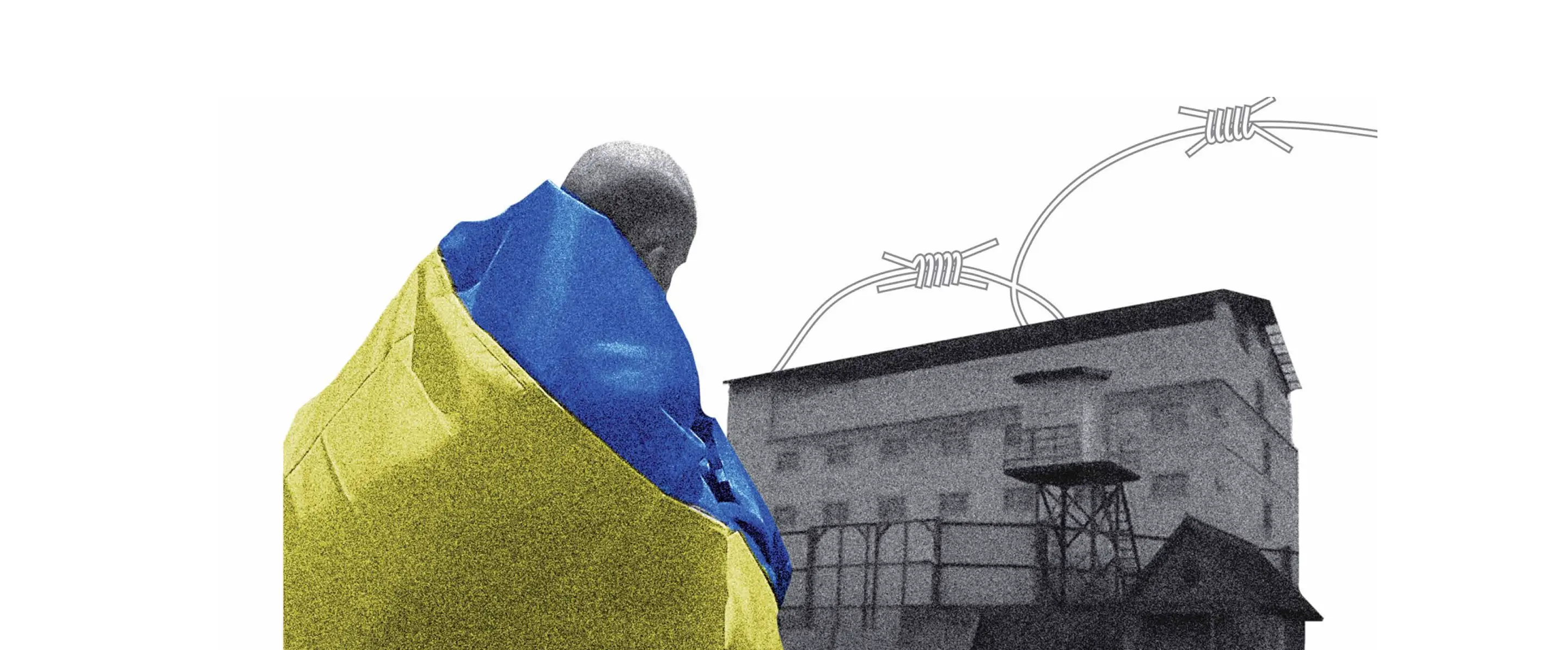
Accounting and return of civilians illegally detained in the Russian Federation: which state bodies of Ukraine are responsible for this
Source: Zmina
Author: Alona Lunova
The analytical note “TRACKING AND RETURN OF CIVILIANS ILLEGALLY DETAINED IN THE RUSSIAN FEDERATION: WHICH UKRAINIAN GOVERNMENT AGENCIES ARE RESPONSIBLE FOR THIS” is an attempt to create a map of governmentauthorized to carry out measures for the registration and facilitation of the return of civilians unlawfully detained on the territory of the Russian Federation and/or in the temporarily occupied territories of Ukraine.
In addition to examining the powers of the relevant entities, this analytical note analyzes how the relatives of persons deprived of their liberty as a result of the armed aggression against Ukraine perceive communication with the authorized entities.
This brief study contains both an analysis of the powers of specific entities—such as the Ministry for the Reintegration of Temporarily Occupied Territories, the National Information Bureau, the Coordination Headquarters for the Treatment of Prisoners of War, the Ukrainian Parliament Commissioner for Human Rights, and others—as well as an analysis of how these powers are exercised in practice, primarily from the perspective of the relatives of “civilian hostages.”
The analysis is available in Ukrainian and English.
Author: Alona Lunova
The analytical note “TRACKING AND RETURN OF CIVILIANS ILLEGALLY DETAINED IN THE RUSSIAN FEDERATION: WHICH UKRAINIAN GOVERNMENT AGENCIES ARE RESPONSIBLE FOR THIS” is an attempt to create a map of governmentauthorized to carry out measures for the registration and facilitation of the return of civilians unlawfully detained on the territory of the Russian Federation and/or in the temporarily occupied territories of Ukraine.
In addition to examining the powers of the relevant entities, this analytical note analyzes how the relatives of persons deprived of their liberty as a result of the armed aggression against Ukraine perceive communication with the authorized entities.
This brief study contains both an analysis of the powers of specific entities—such as the Ministry for the Reintegration of Temporarily Occupied Territories, the National Information Bureau, the Coordination Headquarters for the Treatment of Prisoners of War, the Ukrainian Parliament Commissioner for Human Rights, and others—as well as an analysis of how these powers are exercised in practice, primarily from the perspective of the relatives of “civilian hostages.”
The analysis is available in Ukrainian and English.
This is an automatic translation generated by DeepL.