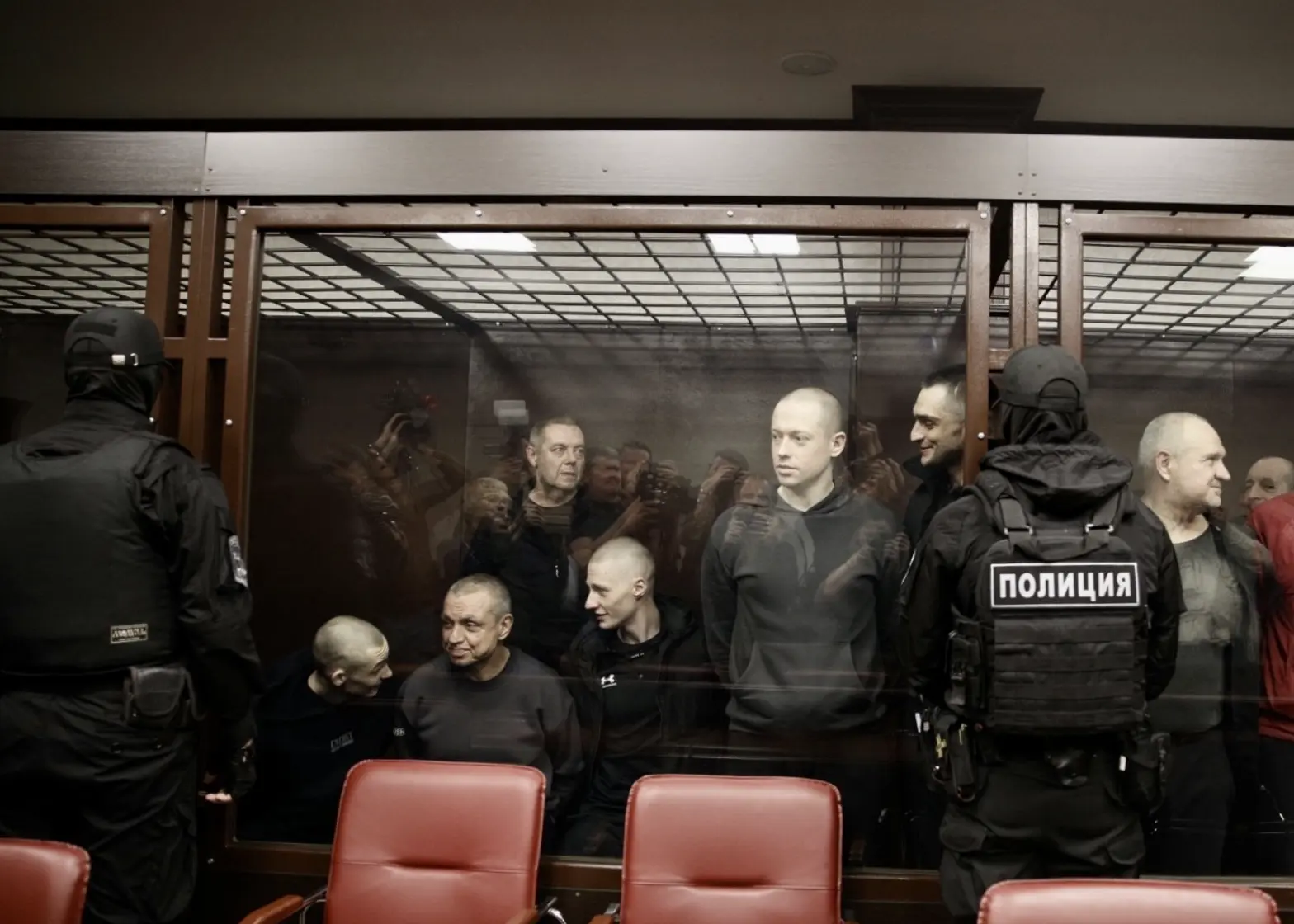
Denial of a fair trial as an atrocity crime during Russia’s war against Ukraine: context, practice, law and perspectives /
Source: Zmina, МІПЛ, Ґрати
Since the beginning of Russia’s armed aggression and occupation of the Crimean peninsula and certain parts of the Donetsk and Luhansk regions, the occupation authorities have introduced systematic practices of persecuting Ukrainian citizens, including mostly civilians, who resist the occupation, disagree with the occupation or are perceived as such by the Russian Federation. One of the tools of such persecution was the hundreds of criminal cases initiated by the occupation authorities against Ukrainian civilians and prisoners of war on trumped-up charges.
The results of monitoring and reports by Ukrainian human rights organisations and data from international organisations indicate systemic problems with violations of the right to a fair trial in such criminal cases. At the same time, the full-scale Russian invasion of Ukraine in February 2022 resulted in a significant increase in such cases and the expansion of this practice not only to civilians but also to Ukrainian prisoners of war. It is likely that such measures to deploy Russia’s policy of judicial persecution against Ukrainian citizens were dictated by the need to suppress resistance to the occupation and justify the goals of the Russian Federation’s aggression against Ukraine, as stated by the authorities. Currently, human rights organisations report at least 1,800 civilians and more than 6,000 prisoners of war held by Russia and subject to prosecution in courts under its control.
The teams of human rights organisations the Media Initiative for Human Rights (MIHR), the Human Rights Centre ZMINA, as well as the online publication Graty and the NGO Crimean Process, have joined efforts to launch systematic monitoring, collection and publication of information on such illegal judicial persecution of Ukrainian civilians and prisoners of war in Russian-controlled courts, in particular after the start of the full-scale invasion in February 2022. These are cases against prisoners of war for actual participation in the armed conflict (participation in so-called terrorist organisations or illegal armed groups, etc.); civilians for their pro-Ukrainian position, resistance to the occupation and cooperation with Ukraine (accused of espionage, treason, sabotage, weapons possession, etc.).
View the document ➚
Since the beginning of Russia’s armed aggression and occupation of the Crimean peninsula and certain parts of the Donetsk and Luhansk regions, the occupation authorities have introduced systematic practices of persecuting Ukrainian citizens, including mostly civilians, who resist the occupation, disagree with the occupation or are perceived as such by the Russian Federation. One of the tools of such persecution was the hundreds of criminal cases initiated by the occupation authorities against Ukrainian civilians and prisoners of war on trumped-up charges.
The results of monitoring and reports by Ukrainian human rights organisations and data from international organisations indicate systemic problems with violations of the right to a fair trial in such criminal cases. At the same time, the full-scale Russian invasion of Ukraine in February 2022 resulted in a significant increase in such cases and the expansion of this practice not only to civilians but also to Ukrainian prisoners of war. It is likely that such measures to deploy Russia’s policy of judicial persecution against Ukrainian citizens were dictated by the need to suppress resistance to the occupation and justify the goals of the Russian Federation’s aggression against Ukraine, as stated by the authorities. Currently, human rights organisations report at least 1,800 civilians and more than 6,000 prisoners of war held by Russia and subject to prosecution in courts under its control.
The teams of human rights organisations the Media Initiative for Human Rights (MIHR), the Human Rights Centre ZMINA, as well as the online publication Graty and the NGO Crimean Process, have joined efforts to launch systematic monitoring, collection and publication of information on such illegal judicial persecution of Ukrainian civilians and prisoners of war in Russian-controlled courts, in particular after the start of the full-scale invasion in February 2022. These are cases against prisoners of war for actual participation in the armed conflict (participation in so-called terrorist organisations or illegal armed groups, etc.); civilians for their pro-Ukrainian position, resistance to the occupation and cooperation with Ukraine (accused of espionage, treason, sabotage, weapons possession, etc.).
View the document ➚