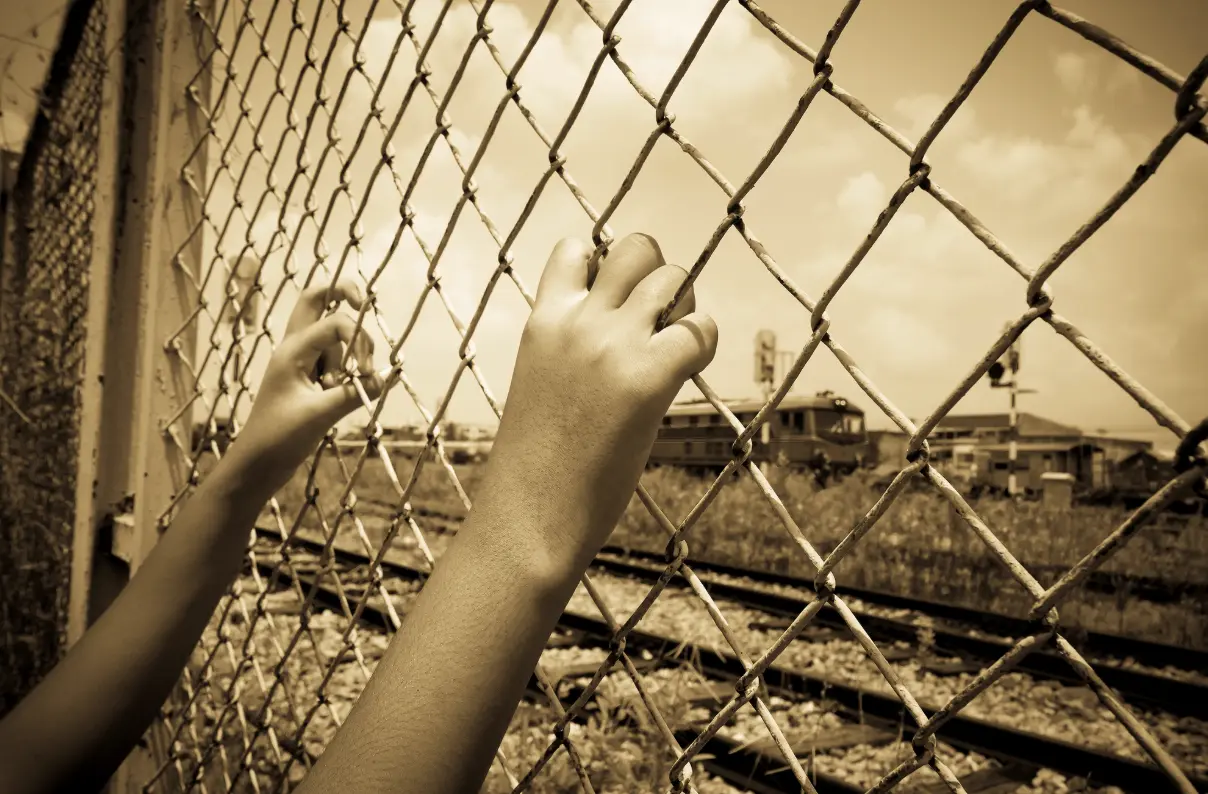
Abduction of Ukrainian women and girls
Source: Kharkiv Human Rights Protection Group (KHPG)
The Memorial Human Rights Center and the Kharkiv Human Rights Protection Group submitted an analytical report to the UN Committee on Enforced Disappearances. We are publishing the full text of the report.
About the submission: In response to a request from the UN Committee on Enforced Disappearances, the Memorial Human Rights Center and the Kharkiv Human Rights Protection Group submitted an analytical report concerning the enforced disappearances of Ukrainian women and girls in areas of military operations and in territories of Ukraine temporarily occupied by Russia. This report, along with other materials from various human rights organizations, will be taken into account by the Committee in preparing General Comment No. 2 on this topic.
The authors drew on their experience documenting and analyzing Russia’s war crimes against Ukraine during the ongoing war of aggression from 2014 to the present. The report identifies several categories of victims of enforced disappearances and describes their particular vulnerability and situations of heightened risk. Specific risks for women and girls in situations of enforced disappearance during war include the loss of future reproductive capacity due to torture and inhumane conditions of detention; issues related to women’s health and physiology in detention (lack of hygiene supplies, pregnancy, childbirth, abortions, etc.); the risk of sexual violence and exploitation; and various risks during filtration. A pressing issue is the return of abducted children (including girls) in situations where abductors conceal information, alter the children’s personal data, indoctrinate them, and change their identities.
Among the recommendations from the Memorial Human Rights Center and the Kharkiv Human Rights Group:
Background Information for General Comment No. 2 of the UN Committee on Enforced Disappearances on “Women, Girls, and Enforced Disappearances”
July 15, 2025
The authors prepared this material based on their experience documenting and analyzing Russian war crimes committed against Ukraine during the aggressive war, from 2014 to the present.
The Kharkiv Human Rights Group is a leading Ukrainian human rights organization that collects and analyzes databases on people who have suffered from war crimes committed by the Russian army. The organization has records of tens of thousands of cases, a significant portion of which can be classified as enforced disappearances. In some cases, the victims’ fates have been determined, so the enforced disappearance was of a temporary nature; in other cases, the victims are considered missing, as there is no information about them. The HRC’s databases contain information on the enforced disappearances of women and children, including girls.
The Anti-Discrimination Center “Memorial” — Brussels — is a human rights organization specializing in the rights of vulnerable groups in Eastern Europe and Central Asia (ethnic minorities, indigenous peoples, LGBTI+, migrants, stateless persons, children in vulnerable situations, and parents with children, with a particular focus on the rights of women and girls). Since the start of Russia’s military aggression against Ukraine, the Memorial Human Rights Center has been monitoring the situation of vulnerable groups affected by the war (see the reports “Roma and War” (2015); “Roma from Ukraine: A Year of War and Refugee Life” (2023); “A Year of Monitoring the Situation of Minorities and Migrants” (2023); “Violations of LGBTI+ Rights in Crimea and Donbas: The Problem of Homophobia in Territories Not Controlled by Ukraine” (2017), and others).
General Remarks
According to a report by the Verkhovna Rada Commissioner for Human Rights, Dmytro Lubinets (May 1, 2025, presentation of the Annual Report), over 16,000 Ukrainian civilians are considered missing; approximately 1,800 of them are known to be unlawfully detained in Russia. At the time of writing, there are approximately 80 Ukrainian women known to be held in pretrial detention centers in Russia and in the occupied territories of Ukraine; 20 of them have minor children, and 5 of them are mothers of multiple children. It is known that 28 cases involving Ukrainian women have been referred to Russian courts (the list is maintained by the Memorial Human Rights Center). The database of the T4P (“Tribunal for Putin”) project contains information on over 350 Ukrainian women who are victims of enforced disappearances; at least 25 of them are minors; at least one has a severe disability.
In the territories occupied by Russia, the practice of short-term and long-term enforced disappearances—arbitrary detentions without due process—has become normalized. Government officials refuse to acknowledge the fact of detention and conceal information about the whereabouts of those deprived of their liberty. It can take anywhere from a few days to several years from the time victims disappear until information emerges about their detention or charges are brought. During this entire period, victims remain at risk of mistreatment or the use of unlawful coercive methods; they are held, among other places, in unofficial detention facilities.
Hanna Y. was abducted in December 2022 in Kherson and held for two years in Simferopol’s Pretrial Detention Center No. 2 in complete isolation—without any contact with relatives and without access to a lawyer. In October 2024, the Crimean FSB stated that Anna Y. had been detained on suspicion of espionage.
Specific risks for women and girls in situations of enforced disappearance during wartime include the loss of future reproductive capacity due to torture and inhumane conditions of detention; issues related to women’s health and physiology in detention (lack of hygiene products, pregnancy, childbirth, abortions, etc.); the risk of sexual violence and exploitation; and various risks during the screening process. The problem of returning abducted children (including girls) is particularly acute given that abductors conceal information, alter the children’s personal data, indoctrinate them, and change their identities. A specific method of pressuring women has been the threat to take their children away and send them to orphanages in Russia.
Drawing on their combined experience in documentation and analysis, the KHPG and the Memorial Human Rights Center consider it important to take into account certain categories of victims of enforced disappearances, situations of particular risk, and their specific vulnerability in the forthcoming General Comment No. 2. The examples cited in this report are drawn from KHPG’s databases as well as from open sources. The victims’ full names are provided if their cases received extensive media coverage and generated significant public attention.
The Memorial Human Rights Center and the Kharkiv Human Rights Protection Group submitted an analytical report to the UN Committee on Enforced Disappearances. We are publishing the full text of the report.
About the submission: In response to a request from the UN Committee on Enforced Disappearances, the Memorial Human Rights Center and the Kharkiv Human Rights Protection Group submitted an analytical report concerning the enforced disappearances of Ukrainian women and girls in areas of military operations and in territories of Ukraine temporarily occupied by Russia. This report, along with other materials from various human rights organizations, will be taken into account by the Committee in preparing General Comment No. 2 on this topic.
The authors drew on their experience documenting and analyzing Russia’s war crimes against Ukraine during the ongoing war of aggression from 2014 to the present. The report identifies several categories of victims of enforced disappearances and describes their particular vulnerability and situations of heightened risk. Specific risks for women and girls in situations of enforced disappearance during war include the loss of future reproductive capacity due to torture and inhumane conditions of detention; issues related to women’s health and physiology in detention (lack of hygiene supplies, pregnancy, childbirth, abortions, etc.); the risk of sexual violence and exploitation; and various risks during filtration. A pressing issue is the return of abducted children (including girls) in situations where abductors conceal information, alter the children’s personal data, indoctrinate them, and change their identities.
Among the recommendations from the Memorial Human Rights Center and the Kharkiv Human Rights Group:
- support (psychological, social, medical, etc.) for women who are victims of enforced disappearances and for women survivors who are searching for their abducted relatives;
- cooperation between government agencies and NGOs searching for abducted women and girls;
- maintaining disaggregated statistics on cases of enforced disappearances, incorporating gender aspects and taking into account different categories of women (ethnicity, affiliation with the military, professional activities (journalists, human rights defenders, activists, civil servants, teachers));
- Inclusion in the monitoring and investigation of cases of enforced disappearances of all possible places of detention, both institutional and those spontaneously created by aggressors during armed conflict/war.
Background Information for General Comment No. 2 of the UN Committee on Enforced Disappearances on “Women, Girls, and Enforced Disappearances”
July 15, 2025
The authors prepared this material based on their experience documenting and analyzing Russian war crimes committed against Ukraine during the aggressive war, from 2014 to the present.
The Kharkiv Human Rights Group is a leading Ukrainian human rights organization that collects and analyzes databases on people who have suffered from war crimes committed by the Russian army. The organization has records of tens of thousands of cases, a significant portion of which can be classified as enforced disappearances. In some cases, the victims’ fates have been determined, so the enforced disappearance was of a temporary nature; in other cases, the victims are considered missing, as there is no information about them. The HRC’s databases contain information on the enforced disappearances of women and children, including girls.
The Anti-Discrimination Center “Memorial” — Brussels — is a human rights organization specializing in the rights of vulnerable groups in Eastern Europe and Central Asia (ethnic minorities, indigenous peoples, LGBTI+, migrants, stateless persons, children in vulnerable situations, and parents with children, with a particular focus on the rights of women and girls). Since the start of Russia’s military aggression against Ukraine, the Memorial Human Rights Center has been monitoring the situation of vulnerable groups affected by the war (see the reports “Roma and War” (2015); “Roma from Ukraine: A Year of War and Refugee Life” (2023); “A Year of Monitoring the Situation of Minorities and Migrants” (2023); “Violations of LGBTI+ Rights in Crimea and Donbas: The Problem of Homophobia in Territories Not Controlled by Ukraine” (2017), and others).
General Remarks
In the territories occupied by Russia, the practice of short-term and long-term enforced disappearances—arbitrary detentions without due process—has become normalized. Government officials refuse to acknowledge the fact of detention and conceal information about the whereabouts of those deprived of their liberty. It can take anywhere from a few days to several years from the time victims disappear until information emerges about their detention or charges are brought. During this entire period, victims remain at risk of mistreatment or the use of unlawful coercive methods; they are held, among other places, in unofficial detention facilities.
Hanna Y. was abducted in December 2022 in Kherson and held for two years in Simferopol’s Pretrial Detention Center No. 2 in complete isolation—without any contact with relatives and without access to a lawyer. In October 2024, the Crimean FSB stated that Anna Y. had been detained on suspicion of espionage.
Specific risks for women and girls in situations of enforced disappearance during wartime include the loss of future reproductive capacity due to torture and inhumane conditions of detention; issues related to women’s health and physiology in detention (lack of hygiene products, pregnancy, childbirth, abortions, etc.); the risk of sexual violence and exploitation; and various risks during the screening process. The problem of returning abducted children (including girls) is particularly acute given that abductors conceal information, alter the children’s personal data, indoctrinate them, and change their identities. A specific method of pressuring women has been the threat to take their children away and send them to orphanages in Russia.
Drawing on their combined experience in documentation and analysis, the KHPG and the Memorial Human Rights Center consider it important to take into account certain categories of victims of enforced disappearances, situations of particular risk, and their specific vulnerability in the forthcoming General Comment No. 2. The examples cited in this report are drawn from KHPG’s databases as well as from open sources. The victims’ full names are provided if their cases received extensive media coverage and generated significant public attention.
Women and girls belonging to traditional ethnic and/or religious communities (Roma, Muslim women)
Women who have survived enforced disappearances may face discrimination within their communities, as being in the presence of unrelated men or simply in a different environment, along with suspicions or known instances of sexual violence against these women, may be perceived as “defiling” the women, evidence of their immoral behavior, or a shame brought upon themselves. Family members of such women, including children born as a result of violence, may also face discrimination. There is a particular risk of “honor killings,” infanticide, and reproductive violence (forced abortions, gynecological surgeries).
Female military personnel; women associated with the military:
In the context of the Russian-Ukrainian war, the specific nature of the enforced disappearances of female service members lies in the fact that, while effectively taken captive, they do not acquire the status of prisoners of war, are held in places of confinement in incommunicado detention, and have no chance of being exchanged as prisoners of war. This is particularly true for women performing humanitarian and civilian functions within the military (medical care, food preparation, administrative work, etc.), as well as civilian women who have family ties to military personnel.One of the reasons for the abduction of women of any age is the service of their close relatives (husbands, sons) in Ukraine’s security forces. Often, long after their abduction (ranging from several months to several years), such women are found in Russian pretrial detention centers, where, following an investigation, they are charged with collaborating with a foreign state, espionage, or treason.
Experts and survivors of enforced disappearances in this category report that, in places of detention, female military personnel and women associated with military personnel suffer from particular cruelty and abuse at the hands of guards, investigators, and special services personnel.
Olga Ch., the mother of a Ukrainian Armed Forces servicemember, was abducted in May 2023. During interrogations, she was brutally tortured; her entire body was covered in bruises and burns. Due to the torture, she began bleeding, and the bleeding did not stop for several months. For over a year, her family knew nothing of Olga’s whereabouts; a criminal case was only opened in August 2024. On December 12, 2024, under Article 276 of the Russian Criminal Code (“Espionage”), Olga Ch. was sentenced to 13 years in a penal colony.
Alla, a 52-year-old resident of Izyum and the mother of an SBU officer, was abducted along with her husband from their home on July 1, 2022, during the occupation of Izyum. They were held for 10 days in a shed, where her husband was beaten and Alla was subjected to sexual violence to extract information about her son.
Cases of enforced disappearances have been documented in which victims—civilians—were coerced into providing information about the Ukrainian army, the locations of Ukrainian military units, and so on.
In March 2022, 15-year-old girls Liza and Nastya were abducted in the middle of the street in Snigurivka, Mykolaiv Oblast, during the occupation. They were taken to the basement of a grain elevator, where they were demanded to provide information on the locations of Ukrainian troops, while being threatened that their fingers would be cut off if they remained silent. On the fourth day of their captivity without food or water, the girls managed to break down the door and escape.
Girls/women abducted because of their gender
The abduction of Ukrainian children to Russia is a widely known and well-documented war crime that served as the basis for the ICC warrant against Russian President Putin and Children’s Ombudsman Lvova-Belova. Children, especially younger ones, who have no means of resisting abduction, are forcibly disappeared: their whereabouts are unknown to the Ukrainian side; they are transported to distant regions of Russia and placed in institutions; if adopted into Russian foster families, their personal data (name, date, and place of birth) are altered. In a number of cases, there is reason to believe that abducted children are being adopted based on gender preference. For example, the first documented case of adoption (rather than temporary guardianship) of an abducted child involved a girl adopted by a high-ranking Russian official.Sergey Mironov, a 70-year-old lawmaker and political party leader, and his wife adopted a 10-month-old girl from the Kherson region in 2022. Initially, Mironov’s wife selected two children at the Kherson orphanage—this girl and a 2-year-old boy. Using her administrative influence, she took them to Moscow. However, only the girl was adopted, and her documents were altered to change her first name, patronymic, last name, and place of birth. All that is known about the boy’s fate is that he received a new birth certificate a year after moving to the Moscow region. Presumably, the preference for adopting the girl specifically may be related to gender.
In a war situation, there is a high risk of women and girls being drawn into trafficking and sexual exploitation, including by military personnel who abuse their power in occupied territories.
One of the victims of human trafficking was Olena Yagupova, a civil servant from the city of Kamianka-Dniprovska in the Zaporizhzhia region. She was abducted from her home as the wife of a Ukrainian Armed Forces soldier on October 6, 2022. She was then illegally detained at a local “police” station and later transferred to a temporary detention center in the village of Velyka Bilozerka. On January 18, 2023, she and other abduction victims were taken to Vasylivka, where a verdict of “deportation” was read aloud and they were filmed walking toward Ukraine. However, it turned out to be a staged event, and all the captives were handed over to a Russian engineer corps commander who was overseeing the development of the second line of defense in the Zaporizhzhia sector. The captives were subjected to forced labor: the men dug trenches, while the women were exploited in menial labor and subjected to torture and sexual violence. During two months of illegal detention and exploitation, Olena Yagupova was subjected to torture, rape, and psychological pressure. As a result of what she endured, she was diagnosed with a traumatic brain injury to the occipital region of the head, injuries to the hip and shoulder joints, and post-traumatic stress disorder.
LGBTI
While the risk of any kind of violence, including sexual violence, is very high for women who are victims of enforced disappearances, it increases even further if they are LGBTI. It is important to highlight the issues surrounding the detention of transgender individuals in places of confinement, where they may be held in the same cell as people of a different gender and subjected to psychological, physical, and sexual violence.Female journalists and women who are visible due to their appearances in the media and on social media
In wartime, a specific risk for this category of women is the criminalization of journalistic work and the dissemination of information, as well as accusations of espionage and other crimes.The case of Viktoria Roshchina, a Ukrainian journalist who was detained in the summer of 2023 by Russian military personnel while gathering information in the Russian-occupied territory of Zaporizhzhia Oblast, became widely known. For nine months, nothing was known about her; in May 2024, the Russian Ministry of Defense confirmed her detention without specifying what she was suspected or accused of. While in detention, specifically at SIZO-2 in Taganrog, Roshchina was subjected to torture. She was on the list for exchange, but in September 2024, she died in SIZO (according to Russian authorities, while being transferred from Taganrog to Moscow). Her body was returned to Ukraine without several organs, making it difficult to determine the cause of death. There are grounds to believe that she was murdered.
In addition to Viktoria Roshchina, at least eight female journalists have been victims of enforced disappearances. Some of them disappeared for several days and were later released (Crimean Tatar journalists Edie Muslimova and Lutfiye Zudieva); the fate of others became known (Iryna Danilovich and Iryna Gorobtsova were tried and sentenced; Anastasia Glukhovskaya and Yana Suvorova were charged, but their whereabouts at the time of this report are unknown; nothing is known about the fate of journalists Irina Levchenko (disappeared on May 6, 2023) and Zhanna Kiselova (abducted on June 27, 2024)).
Women and girls with disabilities and health issues
Women and girls with health issues (injuries, illnesses, disabilities) face particular risks in situations of enforced disappearance. In the context of the Russian-Ukrainian war, this pertains, in particular, to the relocation of hospitals, boarding schools, nursing homes, and other institutions to Russian territory.Anzhela N., born in 1980, a resident of Melitopol, was abducted; she suffers from a rare chronic condition—Raynaud’s syndrome—and her two-year-old son needs surgery. News of her abduction came to light through court records; On January 27, 2024, she was sentenced to actual imprisonment under Part 2 of Article 280 of the Criminal Code of the Russian Federation (“Public calls to engage in extremist activity”) and Part 2 of Article 205.2 of the Criminal Code of the Russian Federation (justification of terrorism on the Internet).
Iryna K., born in 1971, from the Zaporizhzhia region, was abducted in October 2023. She was held incommunicado for about 20 days; her abduction only became known when the trial began. Iryna suffers from Parkinson’s disease, and her condition is deteriorating because she is not receiving the necessary medical care in the pretrial detention center. During the trial, it was evident that she had uncontrolled hand movements, and she complained that she could not sleep.
Abducted women held in places of detention: a systemic problem of torture, sexualized violence, and abuse
Cases of women who have been victims of enforced disappearances and were held in places of detention, documented by the KHPG and known from other sources, indicate that abducted and imprisoned Ukrainian women are subjected to brutal torture, abuse, and sexualized violence on a massive, widespread, and systematic basis. Unlike the standard practice in regular prisons and penal colonies, where female guards conduct searches of female prisoners and other regulated procedures, Ukrainian women are supervised by men, who force them to strip naked, walk around naked, and be blindfolded. Torture and abuse with a distinctly sexualized component are widely used (for example, women are forced to sit on a bottle, driving it into their genitals).These forms of torture and cruel treatment are applied en masse to abducted Ukrainian women in a wide variety of places of detention (prisons, penal colonies, pretrial detention centers, basements, including during the filtration process). There is every reason to believe that such treatment of abducted and imprisoned women is sanctioned by the Russian authorities and aims to break resistance and demoralize not only the women themselves and their relatives, who suffer because the enforced disappearance has directly affected their families, but also Ukrainian society as a whole.
Since February 24, 2022, the UN monitoring group has documented 484 cases of conflict-related sexual violence committed by representatives of the Russian state against civilians and captured military personnel, including 119 women and 13 girls. These include gang rapes, attempted rapes, mutilating operations on genitalia, forced undressing, beatings, or the application of electric shocks to the genitals, as well as threats of rape (Report on the Human Rights Situation in Ukraine, December 1, 2024 – May 31, 2025).
Natalia Vlasova, mother of a 9-year-old girl. In 2019, she was detained at a checkpoint on her way to Donetsk. Her whereabouts became known during a court trial in June 2024. As Natalia recounted in court, she was tortured for four months in the Donetsk prison “Izolyatsia”: she was subjected to gang rape by up to 15 people, her teeth were filed down with a file, she was beaten, doused with water, tortured with electric shocks, and locked up at night to stand in a “glass box” (a narrow room). A military court sentenced her to 18 years in a penal colony under the charge of “terrorism.”
Since February 2022, the OHCHR has documented the deaths of 32 Ukrainian civilians (including 7 women) as a result of torture, inadequate medical care, or inhumane conditions of detention in official and unofficial places of detention in the occupied territory and in the Russian Federation.
Among the recommendations:
- support (psychological, social, medical, etc.) for women who are survivors of enforced disappearances and women searching for their abducted relatives;
- cooperation between government agencies and NGOs searching for abducted women and girls;
- maintaining disaggregated statistics on cases of enforced disappearances, incorporating gender aspects and taking into account different categories of women (ethnicity, affiliation with the military, professional activities (journalists, human rights defenders, activists, civil servants, teachers);
- Including all possible places of detention—both institutional and those spontaneously created by aggressors during armed conflict or war—in the monitoring and investigation of cases of enforced disappearance.
This is an automatic translation generated by DeepL.